The Incredible Flutist (1938)
The Incredible Flutist is a 1938 ballet score by Walter Piston, his only work written for the stage, built on a libretto he wrote with Hans Wiener. The story is set in a marketplace where a travelling circus arrives; a flutist charms both a snake and the local women, a widow's flirtation with a merchant is exposed and resolved, and the circus departs. It belongs in the catalogue less because a specific choreography has survived to us through this article than because Piston structured the ballet, and later his own orchestral suite, as a sequence of discrete dance numbers.
What it contains
- Minuet — Minuet - Dance of the Widow and Merchant · The suite movement titled 'Minuet - Dance of the Widow and Merchant', corresponding to the widow-and-merchant flirtation scene in the libretto — A courtly duet form for the widow and merchant; the minuet is used here as a character number for a flirtation between two named figures rather than an abstract dance. Source: "Minuet – "Dance of the Widow and Merchant""
What is danced
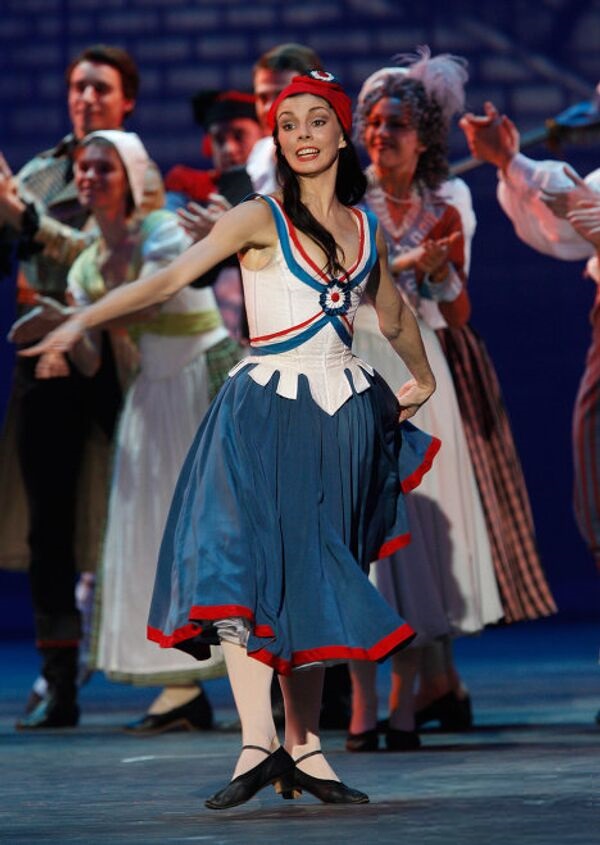
The article does not name a choreographer or describe steps in performance terms, but the thirteen-movement suite Piston drew from the ballet is itself a map of danced numbers keyed to the marketplace plot: an entrance for vendors, a dance for vendors, an entrance of customers, a tango for the merchant's four daughters, a circus march, a solo for the flutist, a minuet for the widow and merchant, a Spanish waltz, a siciliano for the flutist and the merchant's daughter, and a polka before the finale. Two of these carry titles that match historic ballroom/theatrical dance forms directly on offer in this taxonomy - the Minuet ('Dance of the Widow and Merchant') and the Polka - and can be coded on that basis, understood as character numbers for named couples rather than abstract concert dances. The tango, Spanish waltz and siciliano are equally clearly intended as danced set pieces but have no exact match among the codes available here and are flagged below as taxonomy gaps rather than forced into a near neighbour.
Context
Piston wrote this as incidental/ballet music in the late 1930s for an American concert-hall ballet culture in which composers such as Piston, Copland and Thomson were being drawn into stage commissions from orchestras and dance companies rather than opera houses, producing scores built from legible dance-form movements (minuet, waltz, polka, tango) laid over a folkloric or generic 'anywhere' setting. Elliott Carter's remark, quoted in the article, that Piston deliberately avoided a geographically specific musical 'pastiche' so the marketplace could be 'any village,' points to a broader mid-century American tendency to use recognizable European social-dance forms as stylized character shorthand rather than as ethnographic quotation.
How to watch it
Watch for the way each social-dance form is assigned to a specific pair or group - the widow and merchant get a minuet, the merchant's daughters a tango, the flutist and the merchant's daughter a siciliano - so the vocabulary of each borrowed dance form is doing characterization work, not just decoration. The circus frame (arrival march, flutist's solo, departure) brackets these social dances with a more theatrical, presentational vocabulary suited to a snake-charmer/circus performer figure.
Structure
- IntroductionOpening movement of the suite, no danced action specified.
- Siesta Hour in the Marketplace and Entrance of the VendorsThe marketplace comes to life as vendors enter.
- Dance of the VendorsA dance number for the marketplace vendors.
- Entrance of the CustomersCustomers arrive in the marketplace.
- Tango of the Four DaughtersThe merchant's four daughters dance a tango.
- Arrival of Circus and Circus MarchThe travelling circus arrives with a march.
- Solo of the FlutistThe flutist, acting as snake charmer, performs a solo.
- Minuet - Dance of the Widow and MerchantThe widow flirts with the merchant in a minuet.
- Spanish WaltzA Spanish waltz number within the marketplace scene.
- Eight O'Clock StrikesA time-marking transitional movement.
- Siciliano - Dance of the Flutist and the Merchant's DaughterThe flutist dances with the merchant's daughter.
- PolkaA polka number late in the ballet.
- FinaleThe circus leaves the square; closing movement.
Structure read from an encyclopaedia article, not from a libretto or score we hold. Confirm against a programme before treating the numbering as authoritative.
Credits
- composer: Walter Piston
In the same lineage
Other staged works in the register connected to this one by author or lineage.