www.kremlin.ru — http://eng.kremlin.ru/photo?page=11 · CC BY 4.0
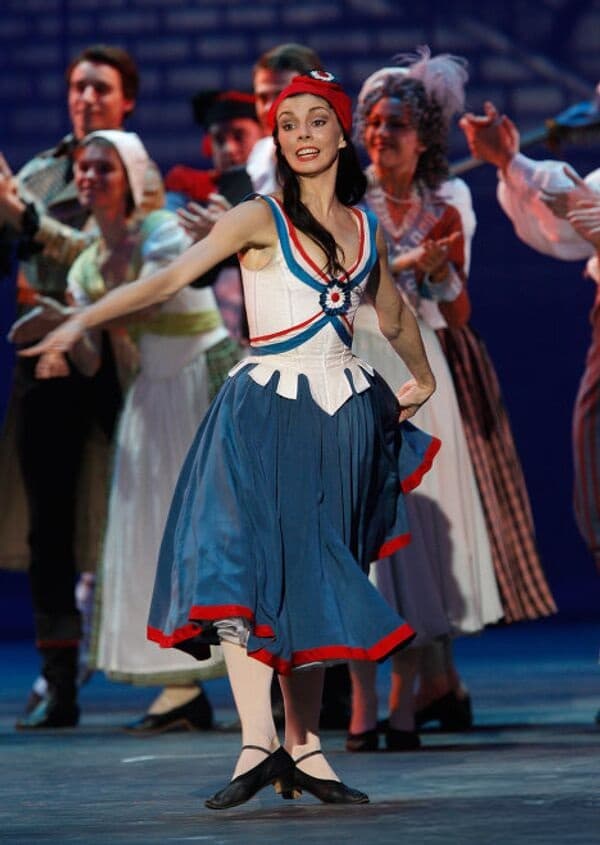
Flames of Paris is a full-length Soviet ballet in four acts, choreographed by Vasily Vainonen (with stage director Sergei Radlov) to a score by Boris Asafyev built from songs of the French Revolution. It dramatizes the storming of the Tuileries and the revolutionary march on Paris, adapted from Felix Gras's 1896 Provençal novel Li Rouge dou Miejour, and was premiered at the Kirov Theatre, Leningrad, on 7 November 1932.
What it contains
- Classical Ballet · Versailles court scene, pas de deux for the actors Mireille de Poitiers and Antoine Mistral, and the parallel pas de deux for Jérôme/Philippe and his bride — A Petipa-derived display pas de deux with variations and coda, danced by virtuoso principals (Dudinskaya/Sergeyev originally), later expanded with a corps de ballet of up to 32 for the finale. Source: "the two characters dance a pas de deux which although is reminiscent of Petipa choreographic manner, is distinctly more modern and is heroic for the male"
- Minuet · Versailles palace scene, amid the mime sequences — Mireille de Poitiers performs a set minuet, described as a distinct piece of choreography set against surrounding pantomime. Source: "Mireille de Poitiers dances a minuet, which is a beautiful piece of choreography in itself"
What is danced
The ballet deliberately mixes registers: classical pas de deux work, character dance rooted in folk movement, court dance and pantomime, all held together by crowd and corps-de-ballet scenes. The clearest classical set piece is the pas de deux for the Marseillais hero (Jérôme/Philippe) and his bride, described as recalling Petipa's manner but pitched more modern and heroic for the male dancer — a role built to showcase virtuoso technique within a plot about insurrection. A second classical vehicle is the invented pair of court actors, Mireille de Poitiers and Antoine Mistral, whose palace performance gives Vainonen an excuse for a display pas de deux (originated by Dudinskaya and Sergeyev); after Mistral's death, Mireille is absorbed into the revolutionary crowd for a finale of variations and codas danced against a corps that swells to 32.
Against this, the role of Thérèse was built specifically around character dancer Nina Anisimova, whose 'strong, expressive folk movements' represent the temper of the mob rather than any individual — this is Soviet kharakterny (character) dancing standing in explicit contrast to the academic vocabulary given to the aristocratic and theatrical characters. The palace scene also contains a notated minuet for Mireille de Poitiers amid otherwise heavy mime, giving a rare instance of a historical court dance form embedded intact within the Soviet ballet's vocabulary. Group and pantomime work carries most of the narrative (the prison-storming, the Versailles banquet, the assault on the palace staircase), with the danced set pieces reserved for the named principals.
Context
The ballet was made in the early 1930s as a flagship of Soviet 'revolutionary' ballet, a movement that searched world history for subjects that could be read as prefiguring the October Revolution while keeping the apparatus of academic classical dance intact. Its combination of Petipa-derived pas de deux, folk-inflected character roles, and crowd pantomime was a template for how Soviet choreographers tried to make nineteenth-century ballet technique serve mass, political narrative rather than court romance.
Staging history
The Kirov premiere (1932) starred Dudinskaya, Chabukiani, Jordan, Anisimova and Sergeyev; the Bolshoi mounted its own production the following year with Yermolayev, Abramova, Kapustina and Semenova, conducted by Yuri Fayer. Vainonen himself revised the ballet for the Bolshoi in 1947, and this later version underpins Mikhail Messerer's 2013 three-act reconstruction for the Mikhailovsky Theatre. Alexei Ratmansky staged a new production for the Bolshoi in 2008 that retains some original Vainonen choreography but alters the plot outline; it is available on DVD with Ivan Vasiliev and Natalia Osipova, who also appear in a separate 2010 Bolshoi recording.
How to watch it
Watch for the deliberate split in vocabulary: the aristocratic theatre-within-the-theatre and the Jérôme/Philippe pas de deux use recognisably Petipa-derived classical steps, while Thérèse's material is built from folk-rooted character dance meant to read as the voice of the crowd. The minuet danced by Mireille de Poitiers at the Versailles banquet is worth isolating as an intact historical court-dance quotation inside an otherwise mimed scene, and the finale's swelling corps (24 then 32 dancers) is the clearest instance of the work's mass-scene ambitions.
Credits
- composer: Boris Asafyev
Related works
Other staged works in the register connected to this one by author or lineage.
 The Golden AgeBallet · 1930Vainonen · video
 The Fountain of BakhchisaraiBalletMusic by Asafyev · video
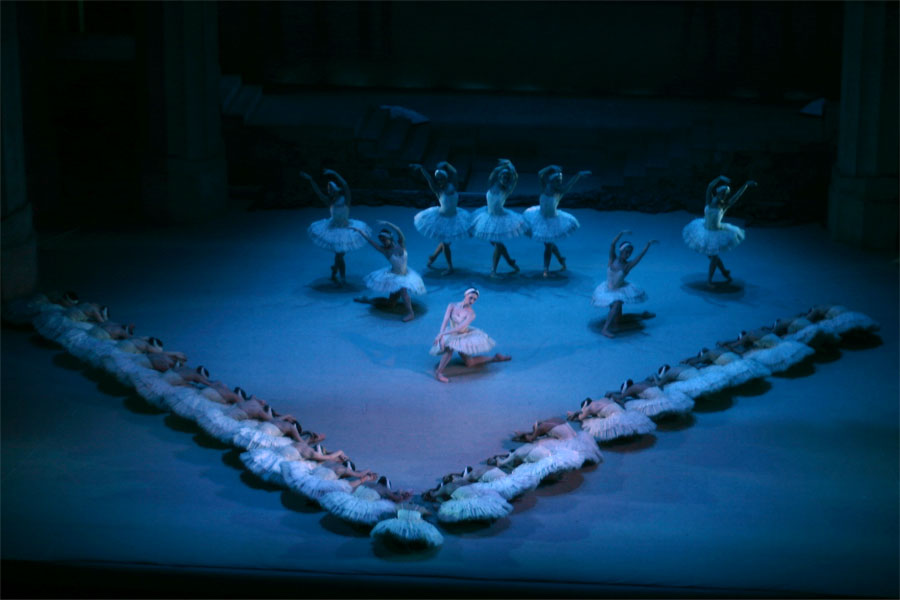 Swan LakeBallet · 1877Same lineage · video
 The NutcrackerBallet · 1892Same lineage · video
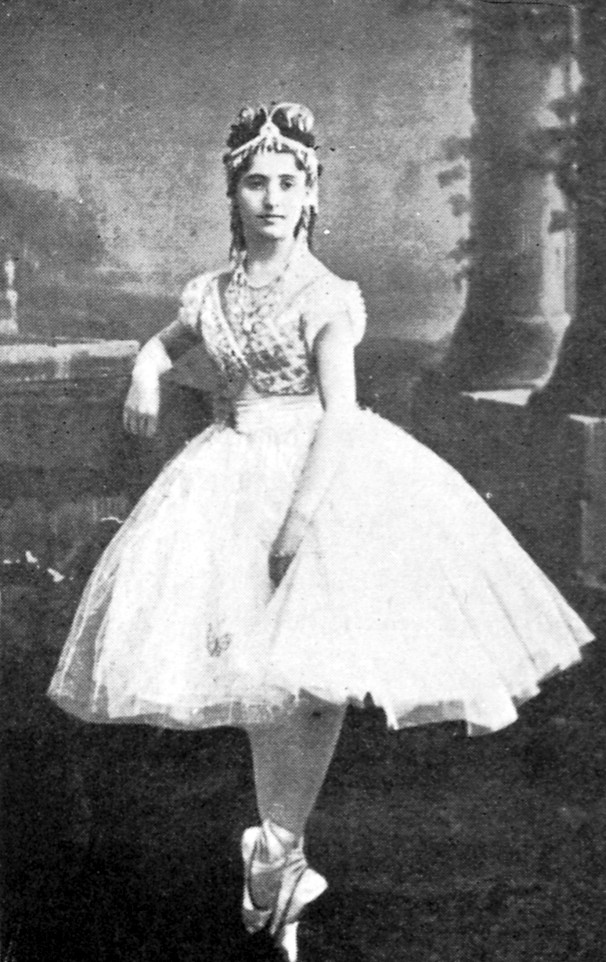 CoppéliaBallet · 1870Same lineage · video
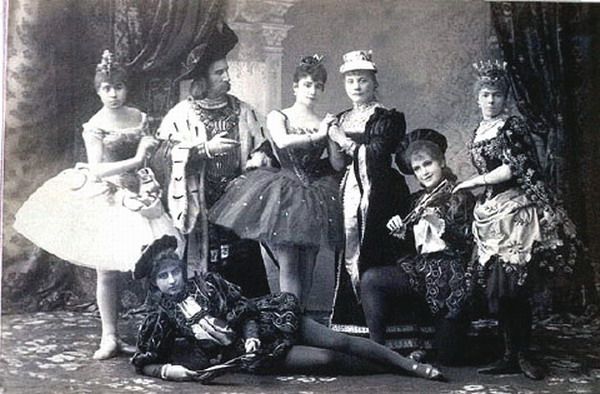 The Sleeping BeautyBallet · 1890Same lineage · video
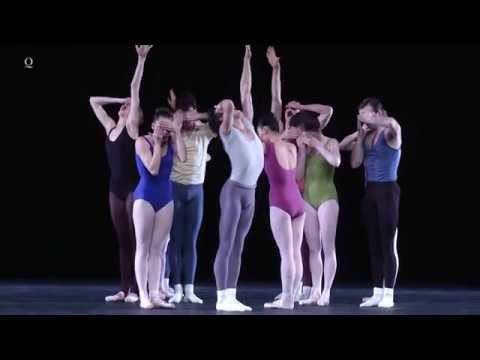 MovesBallet · 1959Same lineage · video
- The Incredible FlutistThe Incredible FlutistBallet · 1938Same lineage