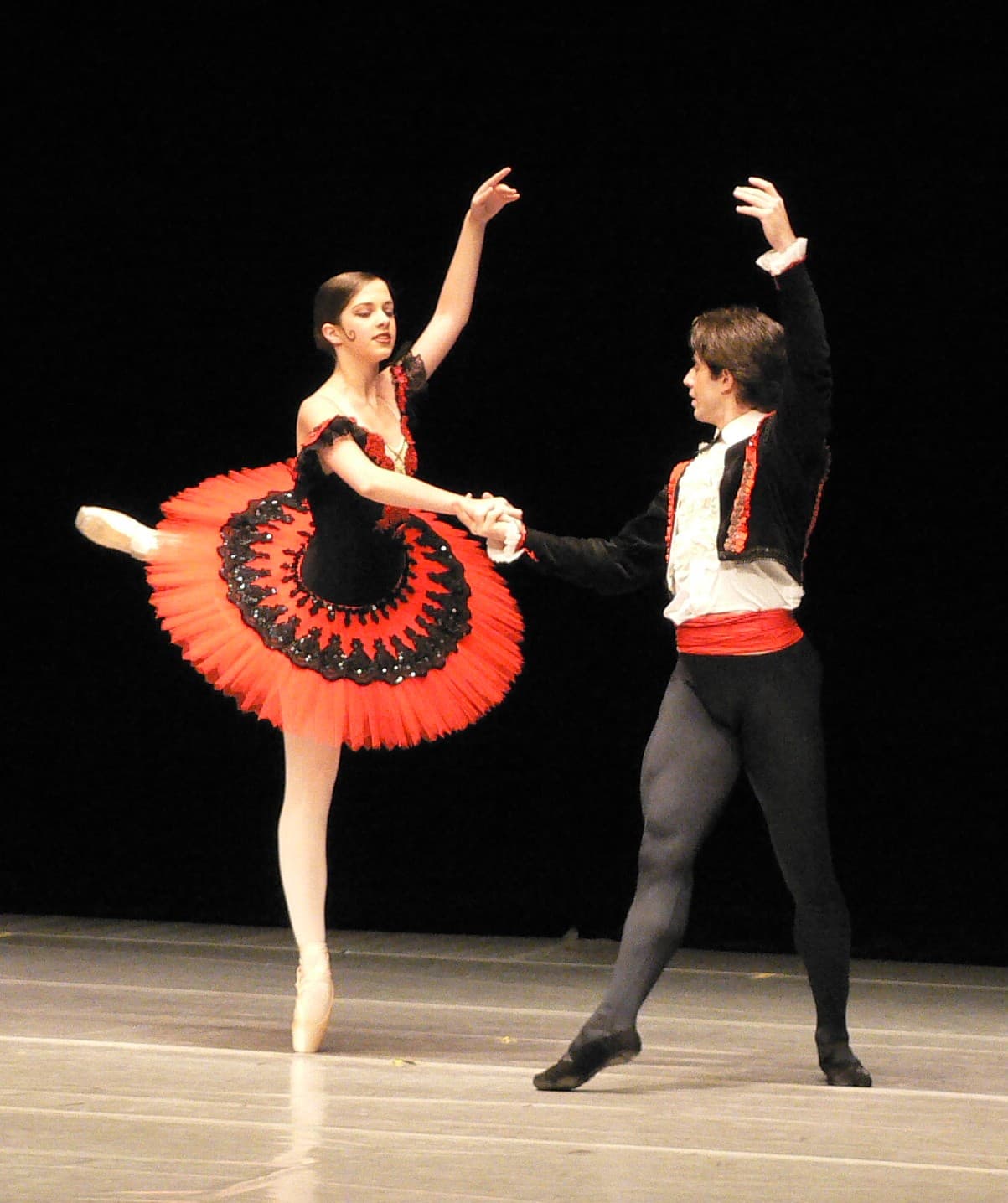
jeff from denver, US — from Don Quixote · CC BY-SA 2.0
This is Marius Petipa's ballet Don Quixote, set to a score by Ludwig Minkus, drawn from two comic episodes of Cervantes' novel rather than an attempt to stage the whole book. It began life at the Bolshoi Theatre in Moscow, was expanded into a grander five-act version for the Imperial Ballet in St Petersburg, and survives today almost entirely through Alexander Gorsky's 1900/1902 revisions rather than Petipa's own text, which is largely lost.
What it contains
- Classical Ballet · the ballet as a whole, across its 19th-century Russian imperial stagings — a full-length Petipa/Minkus narrative ballet with soloist variations, corps ensembles and a climactic grand pas de deux, described by the article as among the great classics of the classical ballet repertoire Source: "and is considered to be among the great classics of the ballet."
- Minuet · Act I, the market-square scene — a partnered minuet danced by Don Quixote and Kitri as he attempts to woo her, a stylised court-dance number set within the crowd scene Source: "Don Quixote attempts to woo her by partnering her in a minuet."
What is danced
The ballet is built around Kitri and Basilio's courtship, framed by Don Quixote's delusions, and it mixes narrative pantomime scenes (the market, the puppet theatre, the windmill attack, Sancho tossed in a blanket) with set-piece dance numbers. Named numbers recorded in the article include a minuet danced by Don Quixote as he woos Kitri in the Act I market square, Gypsy dances at the gypsy camp preceding the puppet-theatre entertainment, and a Grand Pas des toréadors, a piece of bullfighter/Spanish-flavoured character dance that entered the ballet by the early 1880s and is still danced in modern productions. The enchanted-garden dream scene brings on fairies, gnomes, monsters and dryads presided over by a Queen of the Dryads and Amor, giving the corps a fantastical vision-scene of the kind Petipa built elsewhere (Kingdom of the Shades, Kingdom of Sweets).
The work's single most exported piece of vocabulary is the Grand Pas de Deux from the final scene, later ballerinas' addition of a Variation of Kitri with a fan, and the corresponding Dulcinea variation for the dream scene — bravura classical set pieces (soloist variations plus a coda) that are still performed independently in galas, separate from the full three-hour ballet. Later revivals layered on more named dances: Gorsky added a variation for the Queen of the Dryads and a mistresses' dance, plus an extra Spanish dance for the final scene; Lopukhov's 1923 Leningrad revival introduced new choreography specifically for a fandango number; Nina Anisimova introduced further new dances in 1946. The article gives no technical detail (no mention of pointe work, turnout, or specific step vocabulary), so movement description here rests on the numbers it names rather than on how they were executed.
Context
Don Quixote belongs to the high imperial period of Russian ballet under Petipa, when full-evening narrative works combining mime, national/character divertissements and grand classical set pieces were the dominant form at the Bolshoi and Mariinsky theatres. It followed a lineage of earlier Cervantes-based ballets going back to Franz Hilverding's 1740 Vienna production and continuing through Noverre, Didelot, D'Egville and the Taglionis, none of which survive in performance; Petipa's version is the one that displaced all its predecessors and became the standard.
Staging history
Petipa's own text barely survives: what is performed today under his name almost universally descends from Alexander Gorsky's re-choreographed 1900 Bolshoi and 1902 Mariinsky productions, which added new dances (a Dryad Queen variation, a mistresses' dance, an extra Spanish dance) and for which the ballerina Mathilde Kschessinskaya interpolated the now-famous fan variation for Kitri. The ballet stayed in the Soviet repertoire after 1917 through productions by Zakharov and Goleizovsky at the Bolshoi (1940, with added Soloviev-Sedoy music) and Lopukhov and Gusev at the Kirov (1923 and 1946). It reached the West piecemeal — Pavlova's company toured an abridged Gorsky version from 1924, the Grand Pas de Deux circulated separately from the 1940s via Ballet Russe de Monte-Carlo, Ninette de Valois made a wholly new staging for the Royal Ballet in 1950, and Ballet Rambert gave the first full Western revival of the Russian original in 1962. Nureyev staged his own version in Vienna in 1966 and filmed it with the Australian Ballet in 1973; Baryshnikov's 1980 American Ballet Theatre production has since been widely adopted, alongside newer stagings by Carlos Acosta (Royal Ballet) and Tómasson/Possokhov (San Francisco Ballet, 2003). Separately, Michael Pink created a substantially reworked narrative three-act version for Northern Ballet in 1987, later restaged for Milwaukee Ballet; and George Balanchine made an entirely unrelated ballet also called Don Quixote for New York City Ballet in 1965, to music by Nicolas Nabokov, which has nothing to do with the Minkus score.
How to watch it
Watch for the shift in register between the pantomime scenes built around Don Quixote and Sancho's comic business and the danced set pieces built around Kitri and Basilio — the market-square ensemble and minuet, the toreadors' Spanish-flavoured character work, the gypsy camp dances, and the fantastical dryad/gnome vision scene. The evening's technical peak is saved for the final Grand Pas de Deux, where the added fan variation and Dulcinea's dream variation function as detachable bravura showpieces, a convention typical of how 19th-century Russian grand ballets built toward a closing display number.
Structure
- Act PrologueDon Quixote, dreaming over tales of chivalry and his imagined beloved Dulcinea, resolves to set out as a knight-errant with Sancho Panza as his squire.
- Act IIn a Barcelona market square, Kitri and Basilio's courtship is opposed by her father in favour of the nobleman Gamache; village dancing includes toreadors and a minuet danced by Don Quixote with Kitri.
- Act II · Scene 1At a gypsy camp among windmills, Kitri disguised as a boy joins a troupe of travelling actors.
- Act II · Scene 2 · The Puppet TheatreThe gypsy chief stages a mock-royal reception and entertainment for Don Quixote, opening with Gypsy dances followed by a marionette performance which the knight attacks, mistaking it for real danger.
- Act II · Scene 3 · The WindmillsDon Quixote, mistaking the moon for Dulcinea and a windmill for a giant, tilts at the windmill and is flung into the air.
- Act II · Scene 4The wounded Don Quixote is brought to rest in a forest by Sancho and falls into troubled dreams.
- Act II · Scene 5 · The enchanted Garden of DulcineaIn Don Quixote's dream vision, fairies, gnomes and monsters give way to a garden of dryads presided over by the Queen of the Dryads and Amor, where Dulcinea appears to him.
- Act IIIBack in the square, Basilio fakes suicide to force Lorenzo's consent to his marriage with Kitri, which is granted before the trick is revealed.
- Act IVAt a tavern feast, Don Quixote is defeated in a duel by the disguised Sanson Carrasco and vows to give up knight-errantry for a year.
Structure read from an encyclopaedia article, not from a libretto or score we hold. Confirm against a programme before treating the numbering as authoritative.
Credits
- composer: Ludwig Minkus
More from Marius Petipa
Other staged works in the register connected to this one by author or lineage.
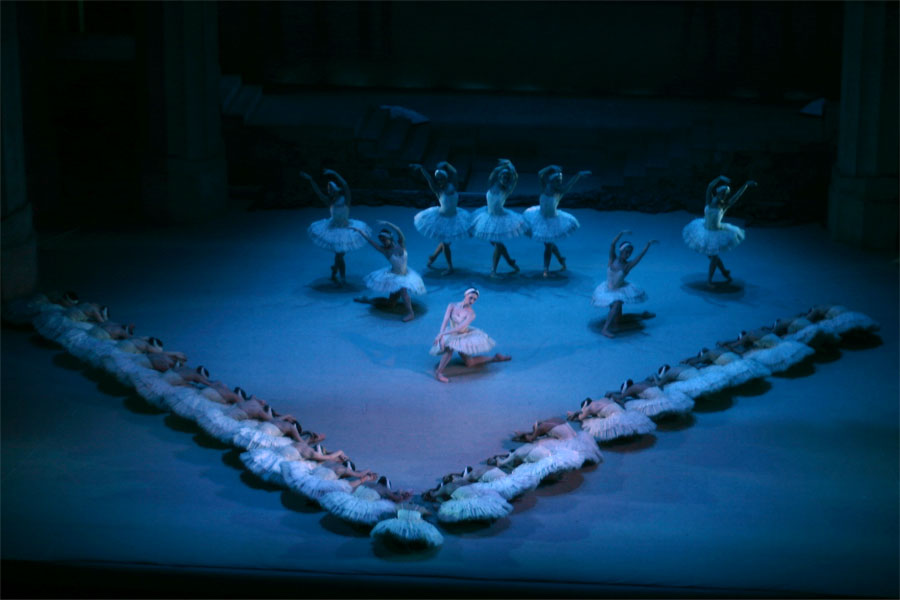 Swan LakeBallet · 1877Petipa · video
 The NutcrackerBallet · 1892Petipa · video
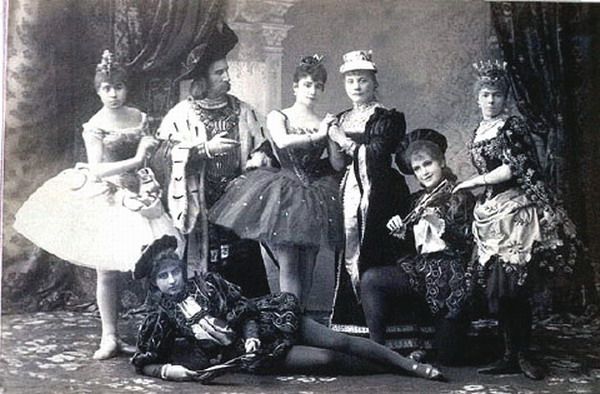 The Sleeping BeautyBallet · 1890Petipa · video
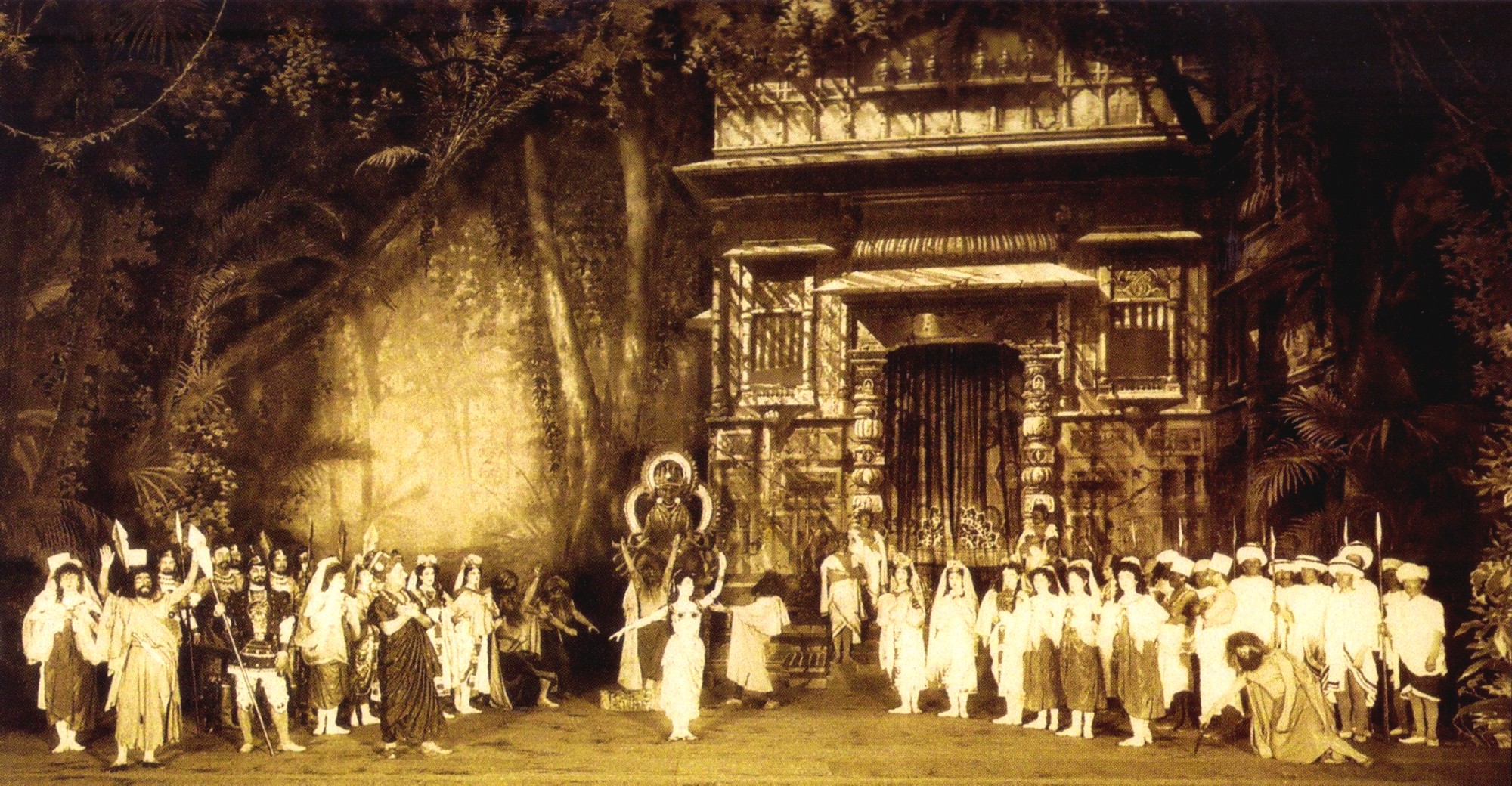 La BayadèreBallet · 1877Petipa · video
 RaymondaBallet · 1898Petipa · video
 PaquitaBallet · 1846Petipa · video
 Square DanceBallet · 1957Same lineage · video
 Les RendezvousBallet · 1933Same lineage · video