Dance Fitness & Movement Wellness
Group-exercise formats that use dance vocabulary as their primary training tool. Fitness-first rather than performance-first, these branded and generic classes borrow steps from Latin, hip-hop, ballet, jazz and South Asian dance, prioritising cardiovascular work, muscular endurance and long-term adherence over technique, partnering or stagecraft.
7 dance styles in this genre
Historical Origins
Two threads converge here. In 1959 Lotte Berk, a German-born dancer who had fled to England in 1938, opened a London basement studio applying ballet barre work to rehabilitation. In 1969 Judi Sheppard Missett, teaching jazz technique in Evanston, Illinois, turned her back to the mirror and coached recreational students through routines as a workout instead of a class, creating Jazzercise. The aerobics boom of the late 1970s and 1980s industrialised both ideas. Nia followed in 1983, Masala Bhangra in 1999, Zumba's corporate launch in 2001, and a boutique dance-cardio and barre expansion through the 2010s.
Cultural Significance
For a very large number of adults, a dance-fitness class is their only sustained contact with dance, and the platform treats that contact as real. The family is also unusual in business history: Jazzercise, Pure Barre, Physique 57, Barre3, 305 Fitness and Masala Bhangra were all founded or co-founded by women, and several became major franchise systems at a time when fitness ownership was overwhelmingly male. The formats raise genuine questions about cultural sourcing — Latin, Punjabi and hip-hop movement is licensed and sold by companies often far from the communities that made it — and Masala Bhangra is a notable counter-example, founded from inside the tradition.
Musical Characteristics
Playlists rather than live music, generally 125-150 BPM and cut to fit 32-count choreographic blocks. Zumba is built on four Latin rhythms — salsa, merengue, cumbia and reggaetón. Cardio hip-hop uses commercial rap and R&B; Masala Bhangra rides the dhol pulse of Punjabi bhangra and Bollywood playback; barre uses pop and remix tracks whose tempo governs the pulse count rather than the steps; Nia works with world, ambient and acoustic music. Music licensing is a real structural feature: Jazzercise and Zumba both distribute cleared tracks with choreography, which is part of what instructors pay for.
Core Movement Principles
Repetition over refinement. Choreography is layered in short blocks, cued visually and non-verbally so a first-timer can join mid-song, and repeated enough times per class to build aerobic load rather than performance quality. Instructors face the group and mirror it instead of correcting individual alignment. Almost everything is solo and self-referential, with no partner, no travelling through space, and low-impact and high-impact options shown simultaneously. Barre inverts the emphasis toward small-range isometric holds and high-repetition pulses; Nia inverts it toward sensation-led improvisation. Across the family, the training target is heart rate and muscular endurance, not line, musicality or technique.
Modern Usage
Delivered through franchise systems, instructor licensing networks, gym group-exercise schedules, community and senior centres, and since 2020 heavily through streaming and hybrid on-demand libraries. Certification is a live market: most formats run their own instructor training, often accredited by bodies such as ACE or AFAA, and many instructors hold several. Adapted versions exist for older adults, chair-based and seated participants, children, prenatal students and clinical referral populations. Yoga and Pilates typically share the same studio schedules and marketing, and are frequently confused with barre, but they are separate practices and are not part of this dance lineage.
Dance Styles
Jazzercise
Also known as: Jazz Dance for Fitness, Jazzercise Dance Mixx
The founding dance-fitness format, created in 1969 by jazz dancer Judi Sheppard Missett, who reframed her technique class as a follow-along workout for recreational students.
Barre
Also known as: Barre Fitness, Ballet Barre Workout, Lotte Berk Method
Ballet-derived conditioning built on small-range isometric pulses at a fixed barre, traced to Lotte Berk's 1959 London studio and franchised across the United States from 1971 onward.
Nia Technique
Also known as: Nia, Non-Impact Aerobics, Neuromuscular Integrative Action
A barefoot, sensation-led movement practice created in 1983 by Debbie Rosas and Carlos AyaRosas, blending martial arts, dance arts and healing arts into a non-impact class.
Dance Cardio
Also known as: Cardio Dance, Dance Fitness, Cardio Dance Party
The generic, unbranded studio format in which choreographed dance sequences serve as the delivery mechanism for sustained aerobic work, with no single founder or trademark.
Zumba
Also known as: Zumba Fitness, Zumba Dance Fitness
The world's most widely distributed dance-fitness brand, built by Colombian choreographer Beto Perez on four Latin rhythms and licensed to instructors rather than sold to gyms.
Cardio Hip-Hop
Also known as: Hip-Hop Cardio, Hip Hop Aerobics, Hip-Hop Fitness
Hip-hop dance vocabulary adapted for aerobic group exercise, arranged into repeatable counts and taught without the battle, cypher or freestyle context of the source form.
Masala Bhangra
Also known as: The Masala Bhangra Workout, Masala Bhangra Bollywood Style
A trademarked dance-fitness program created by Sarina Jain in 1999, built on Punjabi bhangra and Bollywood movement and the first Indian dance format to enter US fitness at scale.
Legends of Dance Fitness & Movement Wellness
Dancers, choreographers and teachers whose work shaped the styles in this genre.
Dance Fitness & Movement Wellness on screen
Films and television where dance fitness & movement wellness appears, with the sequences worth watching for.
 Heavenly Bodies (1984)4 sequences indexedHeavenly Bodies high-energy studio class · chor. Brian FoleyDebbie’s Sporting Life workout · chor. Brian FoleySamantha’s empty television-studio solo · chor. Brian Foley
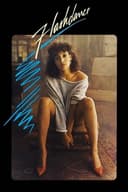 Flashdance (1983)1 sequence indexedAlex, Tina, and Jeanie’s workout · chor. Jeffrey Hornaday
Poster artwork from TMDB.
 This site uses TMDB and the TMDB APIs but is not endorsed, certified, or otherwise approved by TMDB.
Related Genres
Dance Fitness & Movement Wellness FAQs
Dance Fitness & Movement Wellness in art
Browse the gallery →Works our catalogue identifies as depicting dance fitness & movement wellness.
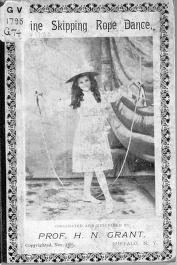
Irine skipping rope dance,
Unknown artist · 1895
Public Domain