Boogaloo
Also known as: Electric Boogaloo
History & Cultural Context
Boogaloo is a funk style closely tied to popping, emphasizing fluid, rolling, soft movements—hip rolls, head and neck isolations, angles, and continuous illusion—contrasting with the sharp hits of popping. Associated with Oakland and the Bay Area and codified within the Electric Boogaloos' vocabulary, it is foundational to the broader popping/funk-styles world.
Cultural Significance
A foundational Bay Area funk style; part of the named West-Coast funk lineage.
Characteristic Movement & Technique
Rolls (hip/knee/head), angles, fluid transitions, and illusion integrated with popping.
Partnering Dynamics
Solo; battle.
Competitive Context
Featured in popping battles and crew routines.
Regional Variations
Bay Area roots; worldwide practice.
Common Misconceptions
'Boogaloo' the funk style is distinct from the 1960s Latin boogaloo music genre of the same name.
Boogaloo — In Depth
Boogaloo is a freestyle funk dance of Oakland, California, built on continuous rolling motion through the hips, knees, neck and head, on angles held and broken rather than steps counted, and on illusion: the dancer appears to move in a way a body should not. It is danced solo, most often in competition against another dancer.
Origins and the disagreement about them. The sources we hold do not tell one story, and this page states both. Wikipedia's article on the funk dance, drawing on Robert Pruter's Chicago Soul (1992, p. 204), describes an earlier and separate thing: a social dance in the African American community in Chicago, current between 1965 and 1966, in which "the entire body moved in a pulsating motion from side to side", carried by records including Tom and Jerrio's "Boo-Ga-Loo" and James Brown's "James Brown's Boogaloo" (1966). The same article dates the Oakland work that this page is about to the middle 1960s: John Murphy imitating the robot from the 1954 film Tobor the Great in 1964 and carrying the Robot into East Oakland school talent shows, and Larry Thompson creating an Oakland boogaloo style in 1966 out of the social dance, James Brown, the Temptations and Fred Astaire. Against that, the KQED account of the If Cities Could Dance episode on Oakland boogaloo (Eric Arnold and Spencer Wilkinson, January 15, 2021) presents it as a "1970s art form" and as "a dance form invented by African American youth in Oakland", giving no year for the origin and no basis for the Oakland claim. Both readings are on the record; this page does not choose between them.
What is firmly dated is the crew era. Will Randolph and classmates at Elmhurst Junior High in East Oakland named themselves the Black Resurgents in 1971, inspired, in the KQED account, by the Black Panthers and the social justice movements of the post-civil-rights years; their chief rivals were the Black Messengers, also of East Oakland, formed in 1972 and televised as "Mechanical Device". S.S. Enterprise and Derrick and Company came out of West Oakland. The dancing lived at Castlemont and McClymonds high schools, at Arroyo Park and Mosswood Park, and at the Oakland Auditorium. Television followed: the Black Resurgents on KEMO's Jay Payton Show in 1976, Granny and the Robotroids on The Gong Show the same year, the Black Messengers winning it as Mechanical Device in 1977 and again in 1978.
Related styles, and which way the lineage runs. Oakland boogaloo is the parent of two neighboring city styles rather than a branch of either: San Francisco strutting, which Wikipedia dates to a 1975 San Francisco talent show by the Oakland Robotroids, and Richmond robottin'. Together they are what the wider dance world calls the funk styles. Popping, the Fresno style boogaloo is most often confused with, came afterwards and out of boogaloo: popping "would be eventually adapted from earlier Boogaloo movements to influence dancers in Fresno, California, in the late 1970s", by way of the West Coast Relays, and the technique it grew from, "Posing Hard", is credited to Black Messengers dancers in the early 1970s. KQED records a second claim of descent, that boogaloo's "movement vocabulary was adopted-some say appropriated-into the Southern California dance known as locking, eventually widely recognized as pop-locking".
Misconceptions. Three are worth naming. Boogaloo the Oakland funk dance is not the 1960s Latin boogaloo music genre, which shares only the word. It is not the 1960s Chicago social dance described above, which the Oakland dancers themselves distinguished: Jerry Rentie, "When we were Bug'n, we meant Boogaloo in the term of our dance style, but it was not the James Brown Boogaloo anymore." And it is not electric boogaloo, the later Fresno style, nor a sub-genre of popping; treating "electric boogaloo" as simply another name for this dance is the erasure the Oakland originators in the KQED piece are arguing against.
The dance today. It declined in the middle 1980s as hip-hop and breaking took the national stage, and it is maintained deliberately: Randolph founded the BRS Alliance in 2000 with Ralph "Plik Plok" Montejo of Richmond and Lonnie "Pop Tart" Green of San Francisco, and an Original Boogaloo Reunion Barbeque has been held at Oakland's Middle Harbor Shoreline Park since 2011. Turf dancing came out of the same Oakland streets in the late 1990s and early 2000s; in Randolph's words, "Turfing in the millennium is what boogaloo was in the '70s."
Music, stated as a gap. We hold no tempo band, time signature or example tracks for this dance from any source, and this page prints none rather than estimating one. Wikipedia names records the dance is done to -- James Brown's "Cold Sweat" and "There Was a Time", the Average White Band's "Pick up the Pieces", Parliament-Funkadelic's "Flashlight", Cameo's "Rigor Mortis" -- and says boogaloo "relies on the swing and groove of live funk records", but gives no tempo figure. The 4/4 figure in the same article belongs to the Chicago social dance, not to this one.
Sources: Wikipedia, "Boogaloo (funk dance)", read 2026-11-06, itself citing Robert Pruter, Chicago Soul (University of Illinois Press, 1992), p. 204; Thomas Guzman-Sanchez, Underground Dance Masters (2012); and Mitch Higa and Mark Wiggins, "Electric Kingdom", Rap Pages, September 1996. Eric Arnold and Spencer Wilkinson, "Reclaiming the Legacy of Oakland's Boogaloo Dance Culture", KQED Arts, January 15, 2021, the If Cities Could Dance episode on Oakland boogaloo. Quotations from Will Randolph, William "Boogaloo Bill" Bilal, Johnny "Johnny 5" Lopez and Traci Bartlow are from that piece; the Jerry Rentie quotation is from the Wikipedia article. Uncertainties: the origin date and whether the form is Chicagoan or Oakland-born are unresolved between these two sources; Eric Arnold's PBS SoCal cut of the same episode, which this library holds and marks a primary source, could not be retrieved on 2026-11-06 and has not been read.
Boogaloo Playlists
Curated collections on the LODance YouTube channel — performances to watch, lessons to learn from, and the right music to practice with. Tap a collection to play.
▶ Performances · Open on YouTube →
Boogaloo Music & Tempo
Drawn from 20 Boogaloo tracks in the LODance music library.
Example tracks at practice tempo
- Soul Power (Part 1) — James Brown104 BPM
- Street Dance - Original Version 1984 — Break Machine116 BPM
- Pop It — One Way Featuring Al Hudson113 BPM
- Dance Floor — Zapp111 BPM
- Unfinished Business — The Blackbyrds123 BPM
- Cold Sweat, Pt. 1 — James Brown & The Famous Flames112 BPM
Legends of Boogaloo
Dancers, choreographers and teachers whose work shaped this style.
Boogaloo on screen
Films and television where Boogaloo appears, with the sequences worth watching for.
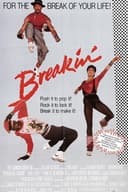
Poster artwork from TMDB.
 This site uses TMDB and the TMDB APIs but is not endorsed, certified, or otherwise approved by TMDB.
Sources & Further Reading
Cultural & Historical Context
Boogaloo emerged from Oakland / Bay Area, California, United States during the 1970s—present day. Understanding the cultural roots, musical traditions, and social circumstances of this era enriches appreciation for the dance's characteristics and significance.
Primary Source Documents
The Library of Dance contains public-domain primary sources for dance history. Copyrighted modern syllabi are indexed with purchase links to their respective copyright owners. Search by dance name or codifier to discover primary source documents.
Last reviewed: November 2026 — This dance profile synthesizes historical research, cultural documentation, and contemporary practice knowledge to provide authoritative context.
Related Dances
More in Street & Funk Styles
Locking
Funk-era street style of sudden freezes ('locks'), exaggerated points, and comic charisma created by Don Campbell in early-1970s LA.
Popping
Funk style based on the 'hit'—quick muscle contractions snapped to the beat—developed in 1970s California, with many sub-styles.
Gliding & Floating
Illusion footwork of the popping family that makes the dancer appear to float or slide frictionlessly—home of the move popularly called the 'moonwalk.'
Krumping
Explosive, expressive, highly energetic street dance from early-2000s LA built on chest pops, stomps, arm swings, and emotional release.
Continue Exploring
Lineage of Dance
500 years of dance evolution
Champions of Dance
Winners of marquee national & world titles
Language of Dance
161 dance terms & translations
Listening of Dance
Tempo, timing & musicality tools
Gallery of Dance
5,700+ artworks from museum collections
Attire of Dance
Evolution of dance dress across eras
Keep the thread going
Dance history, technique, and the occasional rabbit hole — in your inbox. Thoughtful, infrequent, unsubscribe anytime.
Free. No spam. One click to leave.