Irish Step Dance
The solo percussive step dance of Ireland—from the improvised, low-to-the-floor sean-nós of the Gaeltacht, through the rigid-armed competitive style codified by An Coimisiún le Rincí Gaelacha (1927), to the theatrical hard-shoe spectacle popularized worldwide by Riverdance from 1994.
3 dance styles in this genre
Historical Origins
Solo Irish step dance took shape in the 18th and 19th centuries through the work of itinerant dancing masters who travelled rural Ireland teaching and gradually formalizing steps. The older regional practice, sean-nós ('old style'), survives especially in the western Gaeltacht: it is improvised, close to the floor, with relaxed arms and individual personality. The characteristic competitive posture—torso erect, arms held rigidly at the sides—emerged around the turn of the 20th century, reportedly to focus attention on intricate footwork. The Gaelic League's promotion of Irish culture led, in 1927, to the founding of An Coimisiún le Rincí Gaelacha (CLRG, the Irish Dancing Commission), which standardized steps, certified teachers (TCRG/ADCRG), and organized the feis (competition) system and championships; other bodies, including An Comhdháil and the World Irish Dance Association (WIDA), later organized parallel circuits. The form reached a global mass audience through Riverdance, which began as a 1994 Eurovision interval act (Michael Flatley and Jean Butler) and expanded into full-length touring shows, spawning Lord of the Dance and a wave of theatrical Irish-dance productions.
Cultural Significance
Irish step dance is a core expression of Irish cultural identity, tied to the Gaelic revival and sustained both at home and across the Irish diaspora in Britain, North America, Australia, and beyond. The feis system makes it one of the most highly organized competitive dance cultures in the world, with regional, national, and World Championships (Oireachtas Rince na Cruinne) and elaborate costuming and wig conventions. Sean-nós, by contrast, represents an older, looser, community-rooted tradition that has seen a revival as a counterpoint to the standardized competitive style. Set dancing and céilí dancing are related Irish social forms—group figure dances for couples in squares or lines—distinct from solo step dance, though they share repertoire and music.
Musical Characteristics
Irish step dance is performed to traditional Irish dance tunes in characteristic meters: reels (4/4) and jigs—single, double, slip (9/8), and hop jigs—plus hornpipes (a dotted 4/4) and set dances. Soft-shoe dances (reel, light jig, slip jig, single jig) emphasize lift and elevation with near-silent footwear (ghillies/pumps), while hard-shoe dances (hornpipe, treble/heavy jig, traditional set dances) use fiberglass-tipped shoes to make rhythmic percussion an audible part of the music. Tempo is regulated in competition so that dancers across a circuit perform to comparable speeds.
Core Movement Principles
Competitive Irish step dance is defined by an erect, still upper body and motionless arms held to the sides, with all movement and expression concentrated in fast, precise, turned-out footwork performed high on the toes, with crossed feet and pointed toes prized for line. Soft-shoe technique emphasizes elevation, ballet-like extension, and lightness; hard-shoe technique emphasizes clear, rhythmic, percussive sound (trebles, clicks, stamps). Sean-nós reverses several of these conventions—low to the ground, loose arms, relaxed posture, improvised 'battering' rhythms, and a strong sense of personal style and groove.
Modern Usage
Irish step dance is taught and competed worldwide through CLRG, An Comhdháil, WIDA, and other organizations, with a dense annual calendar of feiseanna culminating in World Championships, and remains a vibrant part of Irish diaspora communities. The theatrical hard-shoe style established by Riverdance and its successors continues to tour internationally and has made Irish dance globally recognizable, while sean-nós sustains the older improvised tradition in festivals and community settings.
Dance Styles
Sean-nós Dance
Also known as: Old-style step, Sean-nos
The older, improvised Irish solo step style—low to the floor, with relaxed arms and strong personal groove—surviving especially in the western Gaeltacht.
Competitive Irish Step Dance
Also known as: Feis dancing, Modern Irish step
The standardized, rigid-armed solo style codified through the Gaelic League and An Coimisiún le Rincí Gaelacha (1927), competed in the global feis system in soft and hard shoes.
Theatrical Irish Step (Riverdance era)
Also known as: Stage Irish dance, Riverdance-style
The theatrical hard-shoe spectacle—line ensembles, amplified rhythm, and staged production—popularized worldwide by Riverdance from 1994 and its successors.
Legends of Irish Step Dance
Dancers, choreographers and teachers whose work shaped the styles in this genre.
Irish Step Dance on screen
Films and television where irish step dance appears, with the sequences worth watching for.
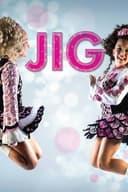 Jig (2011)6 sequences indexedJulia O’Rourke and Brogan McCay prepare for their first WorldsGirls Under 11 World Championship: Julia O’Rourke and Brogan McCayJohn Whitehurst trains with John CareyLord of the Dance: Dangerous Games (2014)3 sequences indexedTriple-beat unison Irish-step ensemble · chor. Michael FlatleyPrize-belt theft and cyborg Dark Lord confrontation · chor. Michael FlatleyMichael Flatley's screen-and-stage finale · chor. Michael Flatley
Poster artwork from TMDB.
 This site uses TMDB and the TMDB APIs but is not endorsed, certified, or otherwise approved by TMDB.