49 works in this view — arrow keys or swipe to move between them.
Dance in Art
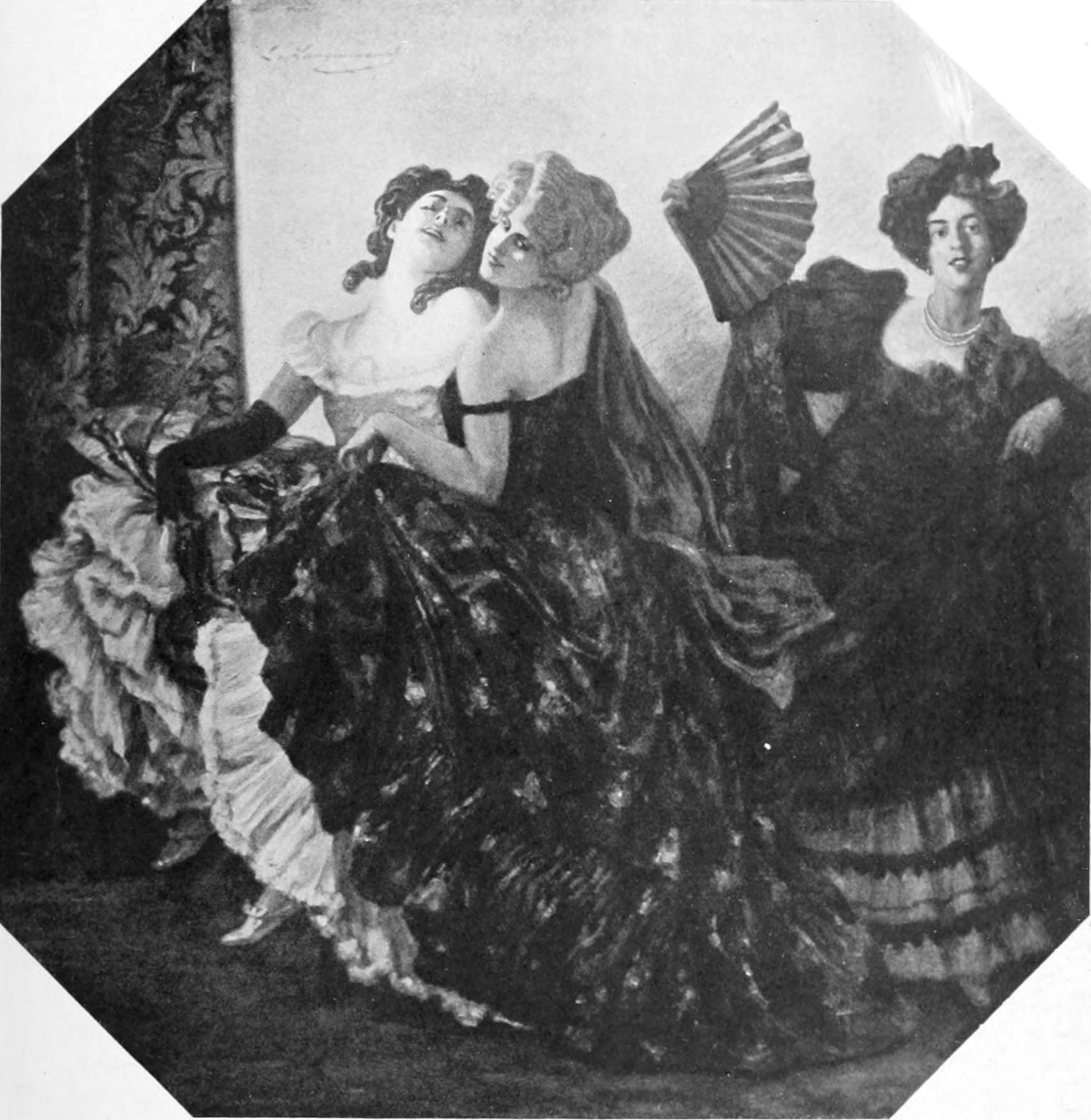
Ludwig von Langenmantel - Danseuses
Ludwig von Langenmantel
- Medium:
- Oil Painting
- Source:
- Wikimedia Commons
- Rights:
- Public domain — free to use, share and adapt.
- Recorded as:
- Public Domain
The painting reveals the gap between the title *Danseuses* and the reality of what is shown—a gap that tells us something important about how dance was marketed and imagined in the nineteenth century. The work shows that paintings of dancers were not always about active performance; they were often about the social identity, elegance, and desirability associated with the dancing woman. For historians of dance, costume, and gender, this image is valuable as a record of how female dancers (or women in dancer-adjacent social roles) dressed, composed themselves, and interacted in private spaces.
What you are looking at
Four elegantly dressed women occupy a dimly lit interior space, their figures emerging from shadow in a composition that emphasizes theatrical drama. The nearest pair—one in a pale, low-cut gown and the other in darker drapery with an ornate headdress—lean together in an attitude of intimate conversation or conspiratorial closeness, their heads nearly touching as they gaze upward. To their right stands a woman holding a large, stiffly pleated fan that reads as a bold geometric accent, her posture erect and observant. A fourth figure in darker dress occupies the far right. The setting is sparse: a heavily patterned curtain or wall hanging is barely visible at the left edge. The lighting is chiaroscuro, with faces and upper bodies catching a cool, steady light while lower garments and the background dissolve into shadow. The overall mood is one of late-nineteenth-century salon intimacy—a moment of leisure, gossip, or theatrical display frozen between action.
The dancing
The women are not dancing but posed in attitudes of social interaction. The foremost pair displays a close, tilted-head engagement; their torsos are nearly upright but the heads incline toward each other in a gesture of intimacy or secrecy. The fan-holder's spine is straight, her shoulders held back in a posture of contained elegance. None of the figures displays weight transfer, flexed knees, or the dynamic lift associated with active dance. The composition is vertical and static rather than kinetic, emphasizing poise and presentation over movement.
The dance depicted
This is not a representation of active dance, but rather a social scene in which dance may be imminent or contextual. The dress—formal gowns, elaborate headdresses, the fan—and the interior setting evoke the ballroom or salon culture of the 1880s–1890s. The title *Danseuses* may refer to professional dancers at rest, or to women in a social setting where dancing was a expected activity, but nothing in the image shows bodies in motion or performing choreography. The absence of musicians, a dance floor, or any visible partnering suggests this is a portrait of female sociability rather than a documentation of dance itself.
How it was made
This is an oil painting, executed in a realist or academic style typical of late-nineteenth-century salon portraiture. The artist has used chiaroscuro—strong contrast between lit faces and darkened surroundings—to create psychological intimacy and direct the viewer's attention. The soft modeling of flesh and fabric, combined with the muted palette of blacks, pale skin tones, and grays, suggests training in academic life drawing. Oil paint allowed the artist to build translucent layers and capture the fine textures of lace and silk, which would have been important to viewers accustomed to seeing such works in exhibitions and private collections.
About this work
This work is a late-nineteenth-century oil painting of four fashionably dressed women in an interior salon setting. Although titled *Danseuses*, it depicts not active dance but a moment of social leisure and intimate conversation among women of evident refinement. The work belongs in a dance art gallery not because it shows choreography in motion, but because it documents the visual culture and social contexts in which theatrical dance and ballroom dance were embedded: the dress codes, the interior spaces, the codes of feminine presentation and interaction that shaped both professional and social dance of the period. It is a document of how dancers lived and appeared when not performing, and of the worlds they inhabited.
How to look at it
Attend to the stillness. Despite the title, no one is moving. The artist has chosen a moment of pause, of social intimacy rather than performance. Notice the interplay of light and shadow: the faces are illuminated with clarity while the bodies below fade into darkness, focusing attention on expression and interaction rather than physical action. The fan is the only object that suggests narrative or implied movement—it is a prop of display and social power. The composition is intimate and close; we are invited into a private moment, not observing a stage or public spectacle.
The artist
Ludwig von Langenmantel (1808–1893) was a German painter known for genre scenes and portrait work in the academic style. He trained in Munich and was active in the mid-to-late nineteenth century, producing works that catered to bourgeois collectors and salon exhibition audiences. His subjects typically depicted scenes of leisure, intimacy, and refined domesticity, often featuring fashionably dressed women. He worked at a moment when salon painting—particularly scenes of female social life and courtship—was highly commercially successful.
The period
This painting dates to the era of the Romantic ballet's decline and the rise of the can-can, operetta, and ballroom dancing as forms of public entertainment and social practice. The 1880s–1890s were a period of intense interest in female performers and the spaces they occupied—both theatrical stages and fashionable salons. Academic salon painting of this period frequently depicted women as objects of aesthetic contemplation, often in states of leisure, undress, or semi-theatrical display. The vogue for paintings titled with French terms like *Danseuses* reflects the cultural prestige of French taste and the association of dancing and elegance with French style.
Where it lives
The work is recorded in Wikimedia Commons, a digital collection of public-domain and openly licensed images. No holding collection, accession number, or current location is recorded in the catalogue.
Questions about this work
The title says 'Danseuses' but no one is dancing. Why?
The title refers to the social identity and profession of the women, not necessarily to an active moment of performance. Nineteenth-century salon paintings often depicted dancers or performers at rest, in social settings, or in states of display. This reflects how the category 'danseuse' was understood not just as a performer but as a kind of woman—elegant, refined, objects of male aesthetic interest. The painting documents the social world dancers inhabited, not always the dance itself.
What is the fan for?
The fan was a essential accessory of female fashion and social ritual in the nineteenth century. In ballroom and salon culture, the fan was both a practical tool (for cooling) and a symbol of status, elegance, and refined femininity. It could also be used in coded communication and social display. Its presence here, held prominently, signals the woman's participation in fashionable society and theatrical or performative modes of self-presentation.
When was this painted?
The catalogue record does not provide a date. However, the style of dress, the interior setting, the painting technique, and the salon aesthetic all point to the 1880s–1890s. The work is consistent with late-nineteenth-century academic salon painting in Germany and Austria.
Is this a portrait of real people?
The catalogue record does not identify the women depicted. It is likely a commission or salon piece created for exhibition and sale, treating the figures as types—fashionable women, dancers or performer-adjacent women—rather than as identifiable individuals. The work documents a social role and aesthetic ideal more than specific persons.
More dance artwork