49 works in this view — arrow keys or swipe to move between them.
Dance in Art
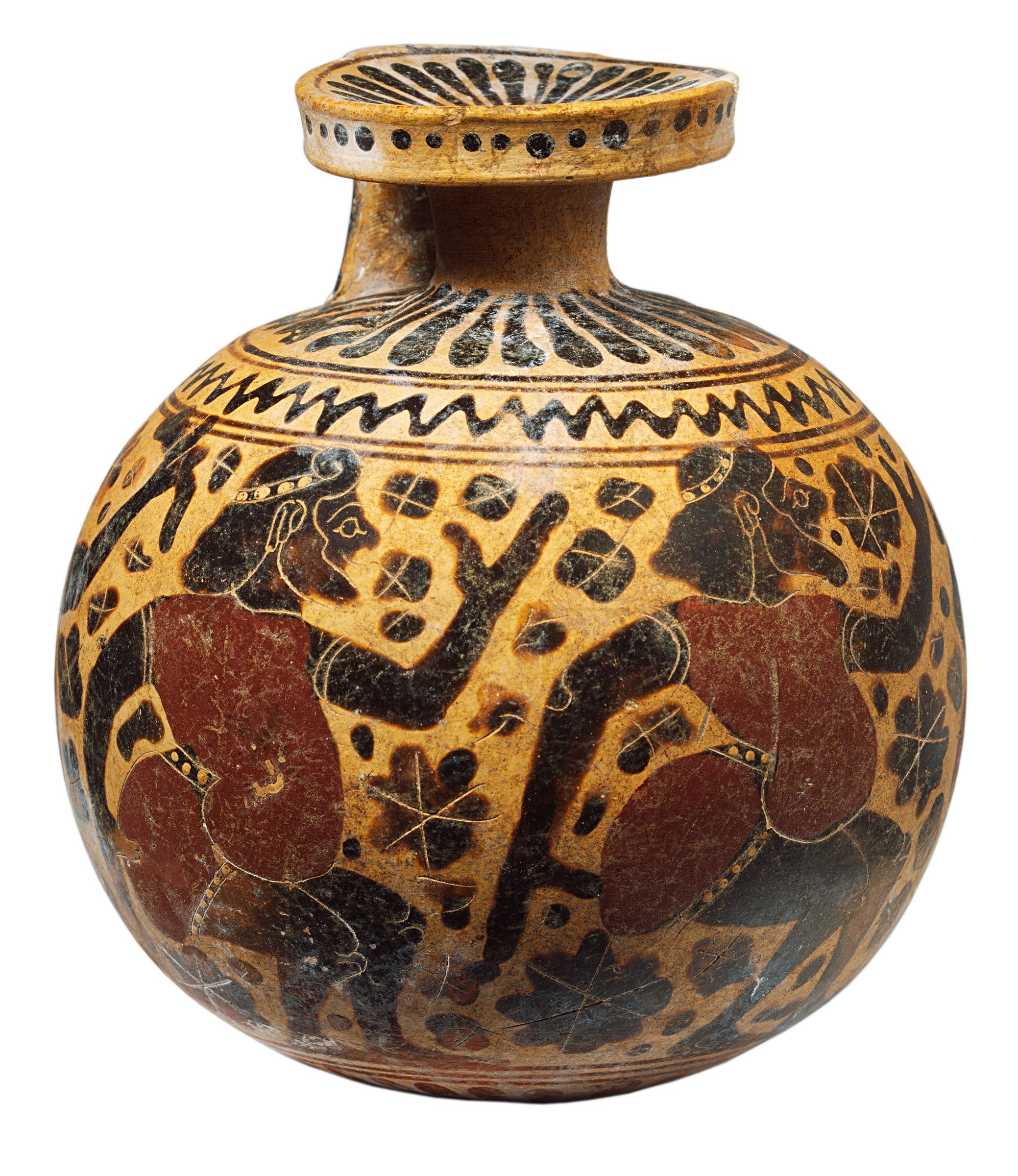
Terracotta aryballos (oil flask) MET DP119901 white-balanced white-bg
New York Comast Painter
- Medium:
- Oil Painting
- Source:
- Wikimedia Commons
- Rights:
- Public domain — free to use, share and adapt.
- Recorded as:
- CC0
Komasts are among the earliest documented secular performers in Western culture, and this vessel is direct visual testimony to how their bodies were perceived and caricatured. The black-figure technique required the artist to distill movement and character into silhouette, making every line of the padded torso and extended limb carry meaning about performance, status, and entertainment.
What you are looking at
A terracotta flask with a wide, bulbous body and narrow neck depicts komasts in a honey-gold ground with black-figure silhouettes. Three padded male dancers occupy the main field, each rendered in profile with exaggerated rounded bellies created by thick padding or costume, characteristic of komos entertainment. The figures have small heads, stocky limbs, and stride across the vessel in a frieze. Between and around the dancers are geometric ornaments: a row of dots runs horizontally at the widest point, and above sits a band of radiating lines resembling a fan or sunrise. The rim and shoulder are decorated with linear patterns—zigzag borders and dot sequences—in the strict geometric style of Early Corinthian pottery. The flask is designed to hold scented oil; its narrow mouth and flat lip suggest practical use. The painted surface shows age and wear, with some pigment loss, but the figures remain bold and legible.
The dancing
Each komast is shown in a striding, animated posture—legs bent slightly as if mid-step or leap, arms raised or extended in emphatic gesture. The padding around the torso is rendered as a prominent rounded mass, often with cross-hatching or dot patterns to suggest texture. The heads are small and simplified, sometimes with indications of hair or a cap. The three figures face the same direction, suggesting forward motion or a processional rhythm, though their relative positions and arm gestures hint at interaction. The exaggerated proportions—massive belly, spindly limbs—appear intentional, suited to comedy or grotesque performance.
The dance depicted
These are komasts, male performers from Corinthian symposia (drinking parties) of the archaic period, roughly 620–590 BCE. Komos was a raucous, often bawdy form of entertainment performed by padded male dancers, typically in the context of elite male gatherings. The padding visible here was both comedic and practical, allowing performers to dance with uninhibited energy while maintaining a grotesque, phallic silhouette. The striding, exuberant posture suggests vigorous, unstructured movement rather than the formal steps of later Greek dance. This vessel's depiction is among the earliest visual records of komasts, showing them as celebratory, satirical figures central to Corinthian leisure culture.
How it was made
This is a black-figure terracotta vessel, made by hand-modeling the clay and painted with a black slip that fused with the clay body during firing, leaving the reserved ground in the natural terracotta orange-gold. The painter incised details into the black slip to create highlights and texture. The technique demanded precision and quick brushwork; corrections were impossible once the vessel dried. Early Corinthian aryballoi were luxury objects, often exported throughout the Mediterranean, suggesting the maker's confidence in the market for such figured wares. The small scale and practical form indicate this was a prestige good—scented oil poured from this flask was a valued commodity, and the decorated surface advertised the owner's wealth and taste.
About this work
This small terracotta oil flask from Early Corinthian Greece (c. 620–590 BCE) is painted in the black-figure technique with three striding, padded male dancers—komasts—who entertained at symposia. The artist (conventionally attributed to the New York Comast Painter, named after vessels in the Metropolitan Museum) captured a moment of raucous, carnivalesque performance, rendering the dancers with exaggerated proportions that emphasize their comic, phallic padding and energetic posture. The vessel itself was a luxury object, circulated as a container for expensive scented oils and likely owned by an elite male drinker who appreciated both the practical utility and the risqué humor of the painted scene.
The work is rare documentary evidence of archaic Greek entertainment culture and the role of the body in comedy and spectacle. It shows komasts not as anonymous revelers but as named performers worthy of artistic attention, their vigorous, uninhibited movement captured at a moment when Greek black-figure painting was still finding its visual vocabulary for human motion.
How to look at it
Notice the exaggerated padding around the torso: it is not anatomical but costume, a visual shorthand for the performer's role and the transgressive comedy he embodied. The stride of the figures suggests forward momentum, but the stiffness of the silhouette—characteristic of black-figure technique—creates a sense of repetition, as if the dance were cyclical or processional. The small heads and ornate geometric borders frame the dancers, making the body the center of interest. The cross-hatching and dot patterns within the padding were incised after the slip dried, adding texture and visual interest to an area that could otherwise read as a flat black mass.
The artist
The painter is conventionally named after the vessel type and subject matter rather than any signature. The "New York Comast Painter" was a Corinthian black-figure specialist working in the early Archaic period, known for a distinctive approach to komast imagery. Corinthian painters of this era were among the earliest to develop a consistent figurative vocabulary on small vessels, exporting their wares widely and establishing conventions that influenced later Greek vase painting. The specificity of the komast scenes suggests the painter had direct knowledge of performance practice or worked to commission for patrons who valued such subjects.
The period
Early Corinth (620–590 BCE) was a period of economic expansion and cultural innovation in Greece. Black-figure pottery had recently been developed in Corinth and was the dominant medium for figurative narrative. Komos was a living tradition at this time, part of the sympotic culture that defined elite male identity in archaic Greece; the performative, transgressive energy of komasts made them popular subjects for vessels used in those very gatherings. Corinthian painters were the first to depict komasts with regularity, and the subject became a marker of Corinthian identity and humor. These vessels circulated throughout the Mediterranean, spreading Corinthian aesthetic and cultural values.
Where it lives
The object is identified as held by the Metropolitan Museum of Art (accession DP119901). The image here is derived from the museum's public domain photography, cropped and white-balanced for digital publication. It is one of several known vessels attributed to the New York Comast Painter, most of which are in major collections.
Questions about this work
What is an aryballos?
An aryballos is a small, bulbous terracotta flask with a narrow neck, designed to hold and dispense scented oil, perfume, or salve. Wealthy Greeks carried these at the gymnasium or used them in bathing and grooming rituals. The narrow opening and stopper allowed precise pouring. Aryballoi were practical objects, but decorated versions—especially those with figurative scenes—were luxury goods that displayed the owner's status and taste.
Who were the komasts and what did they do?
Komasts were male performers who entertained at sympotic gatherings (drinking parties) in archaic Greece, particularly Corinth. They wore padding or special costumes that exaggerated the body, often with a grotesque or phallic emphasis, and performed vigorous, uninhibited dancing and acrobatic movement. Komos was transgressive and comic entertainment, tolerated (or celebrated) in the context of all-male elite gatherings. Komasts occupied a social space between respectability and transgression, making them popular subjects for the vessels used in those same gatherings.
Why does the padding look so strange?
The padding was intentional costume, not a depiction of corpulent bodies. It served multiple purposes: it allowed performers to move freely while appearing grotesque or ridiculous, it emphasized the body as a site of comedy and transgression, and it likely had phallic significance in the context of symposiac entertainment. The exaggerated silhouette was recognizable and instantly communicable in the medium of black-figure painting.
How do we know this depicts real performance?
The specificity of the costume, the consistent depiction of komasts across multiple vessels and painters, and the context of use (these were vessels for sympotic drinking) all suggest that the image reflects actual performance practice. Komasts are also mentioned in literary sources, including plays. However, the black-figure technique stylizes and simplifies movement; the painting is not a documentary record but an artistic interpretation of a living tradition.
More dance artwork