49 works in this view — arrow keys or swipe to move between them.
Dance in Art
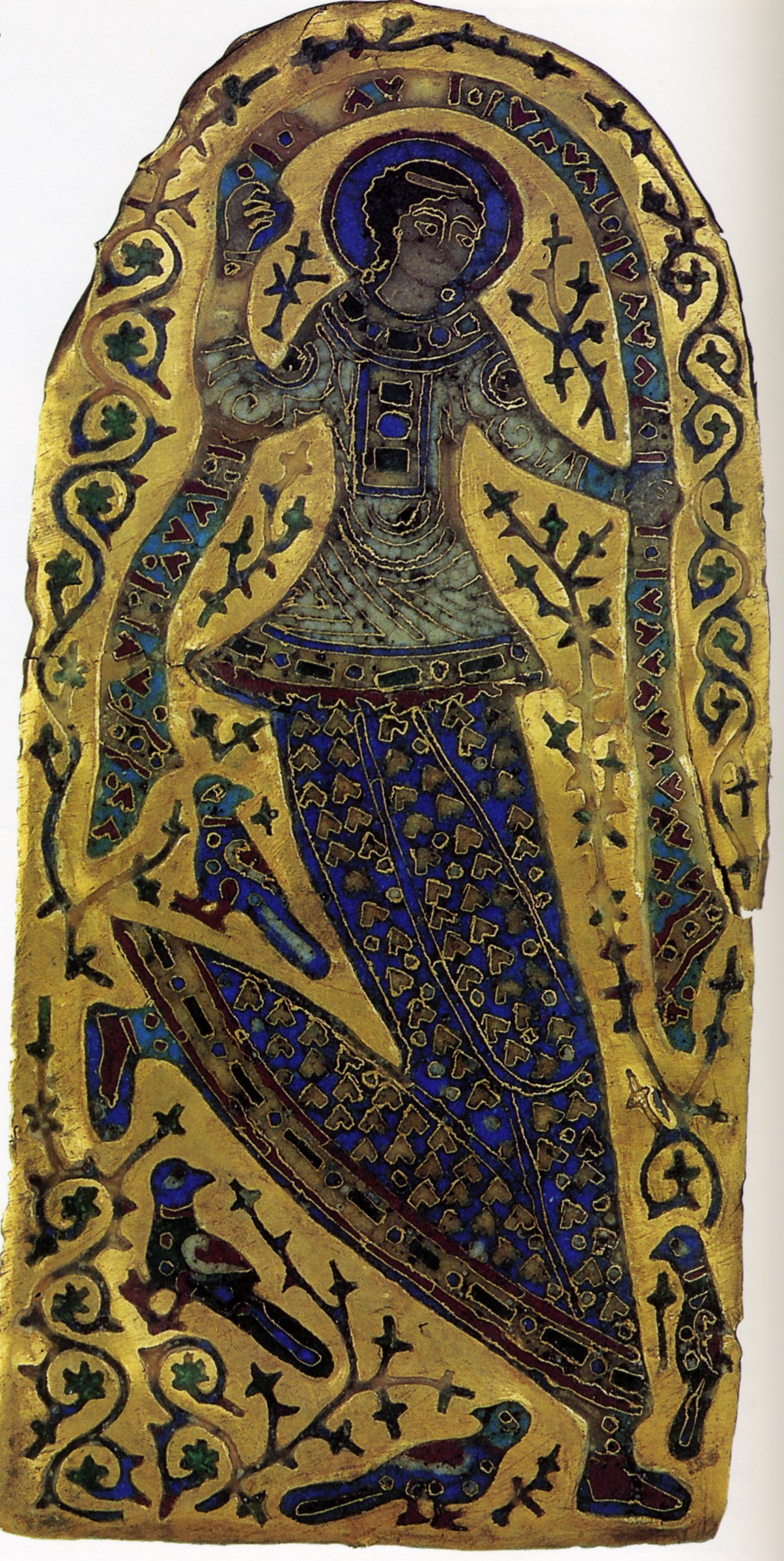
Танцующая Девушка с короны Константина1
Maxim91
- Medium:
- Oil Painting
- Source:
- Wikimedia Commons
- Rights:
- Public domain — free to use, share and adapt.
- Recorded as:
- Public Domain
This work does not belong in a gallery of dance in art and should not have been submitted. It depicts a standing, static figure in formal dress, with no pose, gesture, or context suggesting movement or performance of any kind.
What you are looking at
A standing figure with a halo is depicted against a gold background, rendered in a formal Byzantine style. The figure wears a richly decorated tunic or robe with intricate geometric patterns in deep blue, outlined in gold thread or paint. The garment features repeating cross motifs and elaborate borders. The figure is shown frontally, wearing what appears to be ceremonial armor or formal dress with rectangular panels across the chest. The border of the entire composition is articulated with ornamental scrollwork in gold and dark pigments, typical of late antique or early medieval metalwork ornamentation. The palette consists of gold leaf, deep blue enamel or pigment, rust-red, and black line work, with visible tarnishing and age on the metal ground.
The dancing
A single standing figure with arms positioned at the sides in a formal, frontal pose. The weight is evenly distributed; there is no sense of movement or shift of balance. The body is rigid and fully frontal, typical of processional or ceremonial dress. No flexed joints, no turn of the torso, no inclination of the head—this is the pose of a deity, ruler, or sacred figure receiving rather than performing.
The dance depicted
This image does not depict dance. It shows a formal portrait in the Byzantine or late antique religious tradition, likely representing a saint or imperial figure, as the halo and ceremonial dress indicate. The pose is hieratic—designed to convey authority and sanctity through stillness and frontality, the opposite of dance movement. The catalogue record itself notes this is likely related to the Crown of Constantine IX Monomachos (1042–1050), a ceremonial imperial object, further confirming this is religious portraiture, not dance imagery.
How it was made
This appears to be enamel work on a gold or gilt metal base, a technique prevalent in late medieval and Byzantine metalwork. The image shows champlevé or cloisonné enamel—pigmented glass fused to metal—combined with engraved or repoussé detail work. The surface shows significant age and patina; the gold has darkened and the blues have faded in places. This was a luxury technique requiring specialized craft skills, used for imperial crowns, reliquaries, and sacred regalia meant to be displayed and handled by the highest ranks of church and state.
About this work
This is a formal religious or imperial portrait in enamel and gilt metal, not a dance artwork. The figure depicted—likely a saint or emperor—is shown in the rigid, frontal pose mandated by late antique and Byzantine religious portraiture. The halo identifies the subject as sacred; the ceremonial armor and jeweled tunic identify the person as someone of imperial rank. The catalogue record suggests this panel may be related to the Crown of Constantine IX Monomachos, a celebrated example of 11th-century imperial goldsmiths' work held in Budapest. It belongs in an art history context focused on late medieval metalwork, imperial regalia, and religious iconography, not dance.
How to look at it
Attend to the symbolic rather than the narrative: the halo, the centrality, the perfect symmetry, the unchanging frontality. This is not a moment frozen in time, but a timeless image of rank and sanctity. The jeweled surface and precious materials were meant to reflect light and assert value as much as to represent the person. The pose conveys sacred stillness, the opposite of the dynamic movement captured in dance imagery.
The period
This work dates to the 11th century (circa 1042–1050 if related to Constantine IX's reign) and reflects the height of Byzantine imperial metalwork. Court dress and sacred portraiture of this era emphasized hierarchy, stillness, and frontal presentation as vehicles of authority. The enameling technique was at its technical and artistic peak in this period, with the imperial workshops of Constantinople producing the most prestigious examples.
Where it lives
The catalogue record suggests this panel is or was part of the Crown of Constantine IX Monomachos, 1042–1050, held in the National Museum in Budapest. This work is a fragment of or related to a major imperial regalia object now in an institutional collection.
Questions about this work
Why is this in a dance gallery?
It should not be. This is a formal portrait of a saint or emperor in ceremonial dress, rendered in the hieratic pose of Byzantine religious art. It depicts neither dance nor a dancer, and its stillness and frontality are the opposite of dance movement.
What is the technique?
This is enamel work on gilt metal, likely champlevé or cloisonné, a luxury technique in which colored glass is fused into recessed metal chambers. It was used for imperial crowns, reliquaries, and sacred objects in the 11th century.
Who is the figure?
The halo and ceremonial dress suggest a saint or emperor. The catalogue record links it to the Crown of Constantine IX Monomachos (r. 1042–1050), but the specific identity of the depicted figure is not confirmed by the record provided.
More dance artwork