49 works in this view — arrow keys or swipe to move between them.
Dance in Art · 2019
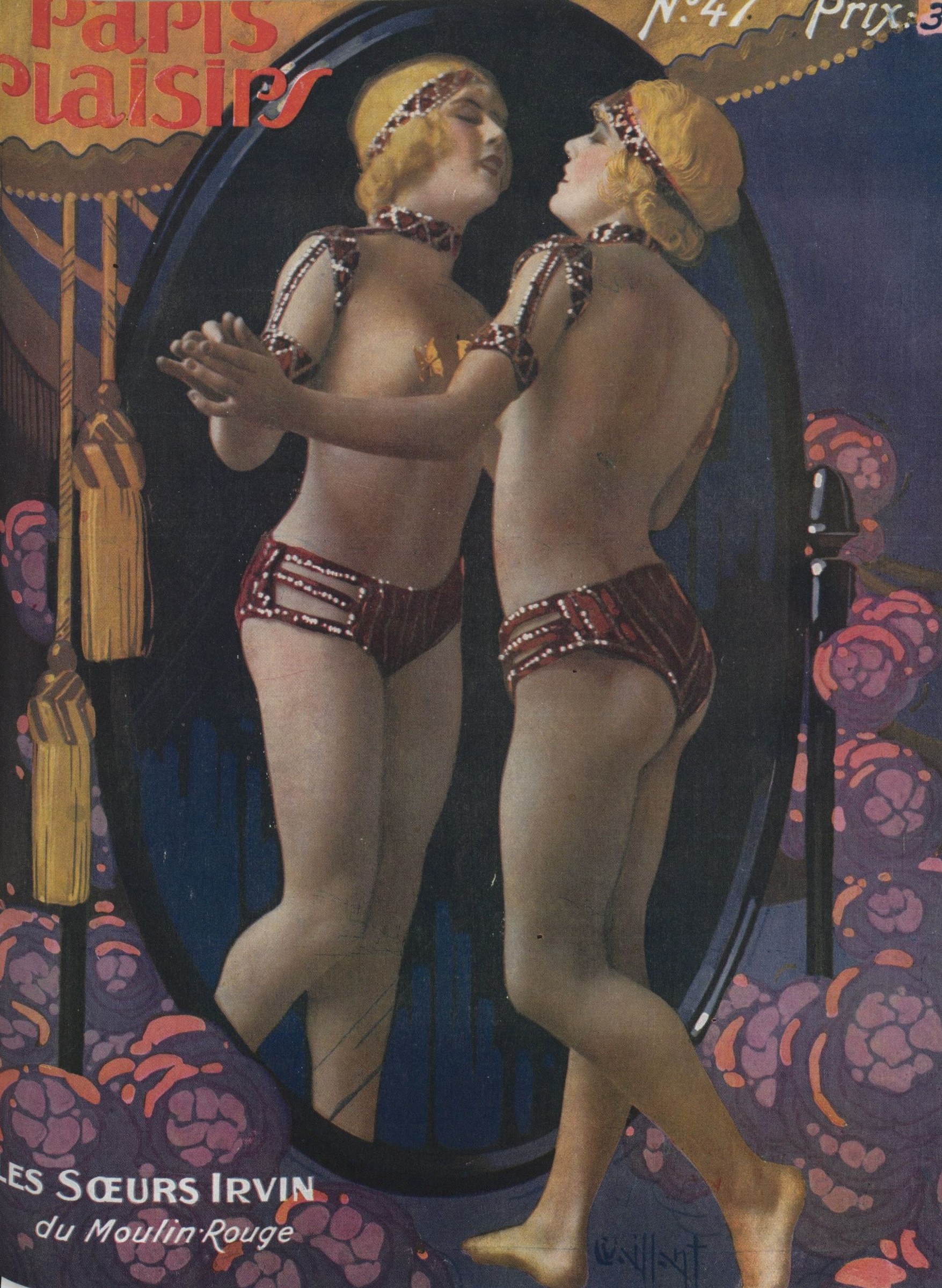
Les sœurs Irvin du Moulin-Rouge
Unknown
- Medium:
- Oil Painting
- Source:
- Wikimedia Commons
- Rights:
- Public domain — free to use, share and adapt.
- Recorded as:
- Public Domain
This work is crucial evidence for the visual culture and marketing of 1920s Paris cabaret, a context in which dance, variety performance, and fashion were inseparable. It shows how performers were presented to audiences and advertisers, and it documents the Irvin Sisters as specific historical figures working in one of the era's most famous venues. The painting's style and finish also exemplify how theatrical art in this period served the double function of creating glamour and facilitating commercial circulation of the performers' images.
What you are looking at
Two young performers, identifiable as the Irvin Sisters from the lower left inscription, stand facing each other in a theatrical interior. Both have pale blonde hair styled in finger waves and wear coordinated costumes: beaded or jeweled headbands, minimal upper bodies, and decorative hip wraps or skirts in deep red or burgundy with metallic beading. The setting is a stylized interior suggested by draped fabrics—a gold-fringed curtain or column to the left, and ornate floral or scrollwork patterns in red and mauve tones on the right, implying a cabaret or revue stage. Their bare feet and elongated, idealized figures are characteristic of 1920s theatrical illustration. The composition is symmetrical and intimate, the two figures nearly touching at shoulder height, their gaze directed toward each other or slightly upward in a moment of connection or performance consciousness rather than actual physical contact.
The dancing
Both figures stand upright with weight evenly distributed and feet together or close together. Their arms are relaxed and loosely positioned; neither figure is in a closed ballroom hold, partnered frame, or extended arm position. The overall posture is contemplative and decorative rather than kinetically engaged. The painting stylizes and elongates the body forms in the manner of 1920s fashion illustration, prioritizing elegance and silhouette over anatomical accuracy or dynamic movement. There is no visible footwork, weight transfer, or technical dance position.
The dance depicted
This is not a depiction of a specific choreographed dance style. Rather, it is a theatrical portrait of two performers in cabaret costume, likely from a revue or variety show. The Irvin Sisters were performers at the Moulin-Rouge in Paris in the 1920s, and this image documents their appearance and stage personas rather than a particular dance technique or style. The costume—minimal dress with emphasis on jewelry, headdresses, and decorative hip wear—is consistent with the exotic or 'jazz age' revue aesthetic of that era, but the figures are posed rather than captured in motion.
How it was made
This is an oil painting, as stated in the record. The work employs smooth, refined painting technique with attention to skin tones, fabric textures (especially the gloss of the beading and the drape of fabrics), and the subtle gradation of the background. The composition and style are consistent with 1920s theatrical art and commercial illustration—a mode of image-making designed to promote performers and the venues in which they worked. Oil paint allowed for the luminous skin tones and jeweled effects that make these figures glamorous and theatrical, and the finished surface suggests a work intended for reproduction or exhibition rather than a quick study.
About this work
This oil painting is a theatrical portrait of two performers, the Irvin Sisters, costumed for performance at the Moulin-Rouge cabaret in Paris, dated to May 1926 based on its publication in the magazine Paris-plaisirs. The work is not a documentation of choreographed dance but rather a portrait in costume, part of the visual culture of 1920s Paris cabaret and variety entertainment. The painting captures the aesthetic ideology of the revue stage—exoticism, glamour, and the presentation of the female form as spectacle—at a moment when Paris was the international capital of such entertainment. It belongs in a gallery of dance in art because it documents the contexts and visual culture within which dance was performed and promoted, even when the painting itself does not depict a dance step or technique.
How to look at it
Attend to the painting's prioritization of costume, adornment, and visual presentation over movement or technical virtuosity. The figures are posed to display themselves and their jewelry rather than captured in a moment of kinetic action. Notice the symmetry of the composition and the way it mirrors and echoes the two bodies, creating a visual harmony that appeals to taste and style rather than narrative or dramatic tension. The painting asks you to admire the performers as objects of beauty and spectacle, a fundamental principle of the revue aesthetic.
The artist
The artist is recorded as unknown. The style and finish are consistent with commercial theatrical art and magazine illustration of the 1920s, a domain in which artists often worked unsigned or anonymously, creating work for the cabaret and entertainment industries of Paris rather than for fine-art institutions.
The period
The 1920s were the height of the Paris cabaret and music-hall tradition, epitomized by venues like the Moulin-Rouge. This period saw the rise of the revue as a major form of entertainment, blending dance, music, comedy, and visual spectacle, often with exoticist or primitivist themes. Simultaneously, the fashion and beauty industries were undergoing rapid change, with the 'flapper' aesthetic and modernist visual culture reshaping how the female body was presented and consumed. The imagery of performers like the Irvin Sisters circulated widely through mass media—postcards, magazines, advertisements—making them visual commodities as much as stage performers.
Where it lives
The work is documented as appearing in Paris-plaisirs, issue no. 47, May 1926. The painting was accessed via Wikimedia Commons; no current holding collection is recorded in the catalogue.
Questions about this work
Were the Irvin Sisters real dancers?
Yes. The inscription identifies them as performers at the Moulin-Rouge, one of Paris's most celebrated cabarets. They were part of the entertainment culture of 1920s Paris, though detailed historical records about their careers are sparse. This painting is primary evidence of their existence as performers and of their stage presentation.
What is the dance being shown here?
No specific dance style is being depicted. This is a theatrical portrait of two performers in costume, not a choreographic documentation. The work records how the Irvin Sisters presented themselves visually to audiences, rather than how they danced technically.
Why is this relevant to dance history?
The work documents the visual culture of 1920s cabaret entertainment, a major context for dance performance and presentation in that era. It shows how dancers and performers were marketed, costumed, and circulated as images in mass media. Understanding this visual and commercial context is essential to understanding how dance was produced and consumed in the period.
What does 'Paris-plaisirs' mean?
Paris-plaisirs (Paris Pleasures) was a magazine published in Paris in the 1920s, devoted to entertainment, nightlife, theater, and cabaret. It was a major vehicle for promoting performers and venues, and its illustrations and photographs circulated images of stage performers widely among Parisian audiences and tourists.
More dance artwork