25 works in this view — arrow keys or swipe to move between them.
Dance in Art
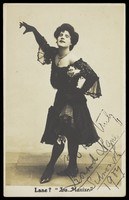
Leonard Lane, dressed as a woman, dancing. Photographic postcard, 1907.
Unknown artist
- Dance:
- Tango
- Source:
- Wellcome Collection
- Rights:
- Rights vary by item — check the source record before reusing this image. Source record ↗
- Recorded as:
- Check
This image documents gender presentation and cross-dressed performance in theatrical contexts before modern drag or contemporary ballroom culture codified those practices. It shows how early twentieth-century theatre used costume and body language to create character, and it preserves a moment of how a specific performer—Leonard Lane—was marketed to audiences, offering insight into the visual culture of Edwardian music halls.
What you are looking at
A full-length figure in theatrical drag costume stands against a plain background, captured in a photographic postcard format typical of early twentieth-century vaudeville and music-hall publicity. The subject wears a dark dress or costume with fitted bodice and a voluminous skirt, complemented by a wide-brimmed feathered hat. The pose is theatrical and animated: one arm is raised expressively across the body, the other extended, and the body is angled to suggest movement or gesture mid-performance. The figure's stance conveys pantomime or character work rather than technical dance: the weight appears shifted, the posture rakish and playful. The lighting is flat and frontal, typical of studio photography, and the plain background focuses all attention on the figure and costume.
The dancing
A single figure dominates the frame, posed in profile-to-camera rather than frontal address. The raised arm and extended opposite limb suggest theatrical pantomime or character comedy work rather than balletic or rhythmic dance technique. There is no visible footwork detail, and the posture reads as a held dramatic gesture or comedic attitude rather than a moment captured from flowing movement. The body is relatively still and posed rather than caught in kinetic flow.
The dance depicted
The image appears to document a vaudeville or music-hall performer in character costume, specifically a male performer presenting as a woman for comedic effect. The catalogue record labels this as tango, but nothing in the visual evidence supports that identification. There is no partner, no frame, no hold, no footwork visible, no Latin American styling, and no tango posture. The work reads instead as character comedy or pantomime—a tradition of cross-dressed performance that was common in variety theatre of this period. The theatrical drag presentation and the still, posed nature of the gesture suggests this documents a character or costume act rather than a ballroom or Latin dance.
How it was made
This is a photographic postcard, a common format for theatrical promotion in the early 1900s. The medium allowed theatre companies and performers to mass-produce and distribute images of their acts to audiences and promote tours and engagements. The flat, even lighting and plain studio background are standard for theatrical portraiture of the period. Postcards of this type circulated widely and represent how performers chose to be seen and remembered—in this case, in full costume and character.
About this work
This is a promotional photograph of a vaudeville or music-hall performer, Leonard Lane, documented in drag costume. The image records a moment of theatrical character work rather than ballroom or Latin dance, despite the catalogue's tango attribution. It belongs to the broader history of theatrical cross-dressing and gender performance in early twentieth-century variety theatre, a tradition that predates and exists parallel to ballroom dance documentation. The postcard format speaks to how such performers promoted themselves and how performances were circulated to audiences beyond the theatre.
How to look at it
Notice the stillness of the pose: this is not a frozen moment from dance movement, but a held theatrical attitude or character gesture, designed to be read in a single glance. The raised arm and angled body convey personality and attitude rather than technical skill or partnered choreography. The costume—the dress, hat, and feathered trim—is the primary message. This is a document of theatrical costume and character work, not of dance technique.
The artist
The photographer is not recorded. The postcard appears to be a commercial studio production, likely created by a theatre company or a commercial photographic firm specializing in theatrical promotion. Such postcards were often made without formal artist attribution, treating the performer as the primary subject.
The period
In the early 1900s, cross-dressed performance was an established feature of music-hall and vaudeville theatre across Europe and America. Male performers in female dress appeared in sketches, comedy numbers, and character acts; this was distinct from ballroom dancing or theatrical ballet, though both existed in the same theatrical landscape. The postcard as a medium was at its peak of popularity for theatrical promotion during this period, allowing performers to maintain visibility between performances and to sell images at the stage door.
Where it lives
The image is held in the Wellcome Collection. It entered the Wellcome as part of its broader holdings on the history of theatre, performance, and visual culture. The specific history and journey of this postcard within the collection are not recorded.
Questions about this work
Why does the catalogue say tango when this doesn't look like tango?
The tango label in the catalogue record does not match the visual evidence. There is no partner, no closed hold, no footwork, and no Latin styling visible. The image documents theatrical costume and character work, not ballroom or Latin dance. The label may reflect an error in cataloguing or a misunderstanding of the image's content. The Wellcome Collection's records are diverse and occasionally contain such misattributions.
What is a photographic postcard and why were performers documented this way?
A photographic postcard was a small printed photograph in postcard format, usually 3.5 by 5.5 inches, that could be mailed or sold. Theatrical performers used them for promotion: audiences could buy them at the theatre, they could be sent to fans or potential bookers, and they advertised the performer's current costume or character. They were inexpensive to produce in quantity and were a standard marketing tool in early twentieth-century theatre.
Was cross-dressing common in early 1900s theatre?
Yes. Cross-dressing acts, particularly male performers in female costume, were a standard feature of music-hall and vaudeville theatre from the 19th century onward. Performers appeared in sketches, songs, and comedy numbers in drag. This was distinct from ballet or ballroom dance and was understood by audiences as theatrical character work and comedy.
More Tango artwork
![[Les noces de trottoir, par les compagnies Tango Sumo et Vendaval. Chalon dans la rue. 2007 / photographies de Joël Verhoustraeten] by Verhoustraeten, Joël (1954-2019). Photographe](https://gallica.bnf.fr/iiif/ark:/12148/bc6p058zgkc/f1/full/800,/0/native.jpg)