49 works in this view — arrow keys or swipe to move between them.
Dance in Art
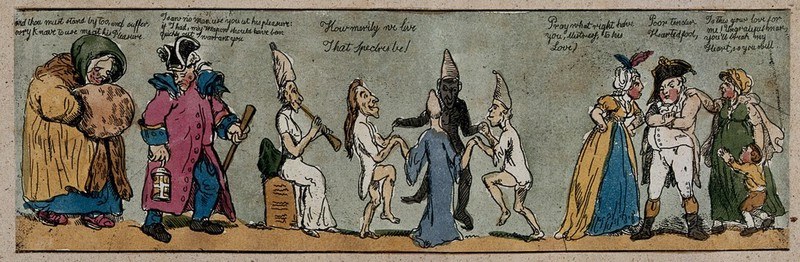
Dancing spectres (centre), a man and a woman arguing (left), and two women arguing over a man (right). Coloured etching.
Unknown artist
- Source:
- Wellcome Collection
- Rights:
- Rights vary by item — check the source record before reusing this image. Source record ↗
- Recorded as:
- Check
This work documents how social dance was depicted in popular satirical prints—not as refined entertainment but as a marker of disorder, transgression, and social inversion. The association of dance with spectres and clerical transgression reveals period anxieties about popular dance, the body, and the boundaries between the sacred and profane. For historians of social dance and print culture, it provides evidence of how choreography and bodily movement were weaponized as satire and moral commentary.
What you are looking at
A hand-coloured etching in a horizontal frieze format depicting a crowded street scene of social interaction and courtship, likely from the 18th century. The composition is divided into three narrative moments: at left, a well-dressed couple in animated conversation; in the center, a tall figure in clerical dress dances with or beside a smaller figure in white, flanked by two other figures in white engaged in rapid movement; at right, two women in contrasting dress (one in gold, one in green) gesticulate and argue with each other while a man and child observe. The entire scene unfolds against a neutral background with minimal setting, suggesting a street or public space. The print employs hand-coloring in yellows, blues, pinks, and greens to differentiate the figures, while the etching itself provides fine linear detail in the facial features, fabric textures, and gestural emphasis.
The dancing
The central dancing figures display rapid, energetic movement with bent knees and raised arms, suggesting lively social dance rather than formal technique. The tall figure in dark dress appears to lead or direct the smaller figure beside him. Surrounding figures throughout the composition gesture with expressive arm movements—pointing, reaching, and emphatic hand positions—indicating animated conversation and emotional intensity. The figures in white at center display the most exaggerated movement and flexed postures, consistent with folk or popular dance forms. Body weight shifts and foot positions suggest stepping and turning rather than balletic elevation.
The dance depicted
The central figures appear to be engaged in a popular social dance or courtship ritual, possibly a German or Northern European folk form. The presence of the clerical figure and the theatrical energy of the surrounding action suggest this may depict a transgressive or satirical scene—spectres, the supernatural, or social disorder masked as dance. The smaller figure in white appears to be dancing or being animated by supernatural influence, consistent with the titled reference to 'dancing spectres.' This is not courtly or ballroom dance but rather popular, street-level movement, and possibly theatrical or fantastical in intent rather than documentary.
How it was made
A hand-coloured etching, as indicated by the fine linear hatching visible in the background and the precision of facial features and fabric detail characteristic of etched line. The hand-coloring in discrete flat areas of pigment was typical of popular prints produced for wider circulation than oil paintings. This technique allowed rapid, affordable reproduction and distribution to a broad audience—street vendors, print shops, and collectors of satirical or moral instruction prints. The frieze format and compressed horizontal composition suggest a narrative print designed to be read sequentially, like a broadside or satirical commentary on social behavior.
About this work
This is a satirical or moralistic popular print depicting a chaotic street scene centred on dance as spectacle and transgression. The 'dancing spectres' of the title likely refer to the animated figures in white at the composition's centre, dancing with or under the influence of a clerical figure in a scene of social disorder. The surrounding figures—arguing, gesticulating, observing—situate the dance as one moment within a broader social drama of courtship dispute, transgression, and moral chaos. The work belongs to a tradition of Northern European popular prints from the 18th century that used dance, spectacle, and the supernatural as vehicles for satire, moral instruction, or entertainment.
How to look at it
Attend to the three distinct moments arranged horizontally and how they are linked by gesture and narrative. The central figure in white is the focal point of movement and animation; notice how the surrounding figures' gestures and postures respond to or frame this central action. The contrast between the formal dress of some figures and the apparent abandon of the dancers suggests satire—the orderly and respectable disrupted by the chaotic and embodied. The print's saturated hand-coloring in primary hues and the exaggerated facial expressions and body angles are deliberate strategies to make the scene readable at a distance and emotionally emphatic.
The period
In 18th-century Northern Europe, hand-coloured etched and engraved prints were the primary medium for moral instruction, social satire, and entertainment. Prints on themes of courtship disorder, supernatural intervention, and social chaos were popular and affordable, circulating in the streets and marketplaces of major cities. This period saw recurring cultural anxieties about popular dance as a site of bodily excess, sexual transgression, and social disorder—anxieties that popular prints both reflected and amplified. The inclusion of a clerical figure dancing or directing the spectres may reference folk beliefs about supernatural possession, clerical hypocrisy, or both.
Where it lives
The work is held in the Wellcome Collection, which houses medical, social, and historical prints and manuscripts. Its presence there suggests it may have been catalogued for its depiction of transgression, disorder, or supernatural themes rather than primarily as a dance document.
Dance in this work
Questions about this work
What does 'dancing spectres' mean in the title?
The title likely refers to the animated figures in white at the composition's centre, who are depicted as moving with supernatural energy—'spectre-like' in their rapid, jerking gestures and apparent lack of agency. They may be possessed, bewitched, or understood as ghostly presences dancing under compulsion, a common trope in 18th-century satirical and moral prints.
Why is there a clergyman in the dance?
The inclusion of a clerical figure dancing or directing the spectres is almost certainly satirical. It may reference folk beliefs about supernatural possession by demons (hence the need for a priest), or it may mock clerical hypocrisy and secret participation in popular, bodily pleasures. Both readings were common in contemporary satire.
Is this a real dance or an invented scene?
This is not a documentary depiction of a specific historical dance form. It is a theatrical or satirical invention using the motifs of popular dance—rapid movement, bodily abandon, social disorder—to comment on transgression and chaos. The 'dance' is a vehicle for satire rather than an ethnographic or instructional record.
How was this printed and distributed?
Hand-coloured etchings like this were printed from a metal plate and then hand-painted with watercolour or gouache. They were affordable and portable, circulated by street vendors, print sellers, and collectors. Satirical prints on themes of social disorder, courtship, and transgression were popular entertainment and moral instruction tools in 18th-century cities.
More dance artwork