49 works in this view — arrow keys or swipe to move between them.
Dance in Art
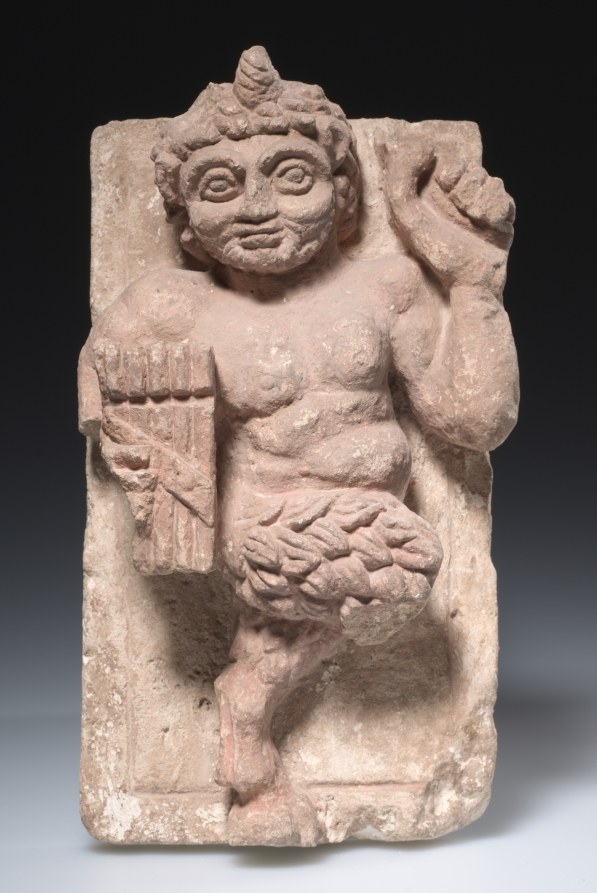
Dancing Pan
Unknown artist
- Source:
- Cleveland Museum of Art
- Rights:
- Public domain — free to use, share and adapt.
- Recorded as:
- CC0 (Public Domain)
The relief documents a conception of dance as divine, ecstatic, and embodied—a counterpoint to formalized or courtly dance. The anatomical precision and dynamic posture reveal that the classical artist understood dance as a physical discipline requiring balance, strength, and control, even when representing supernatural abandon. For dancers studying the history of movement representation, the work shows how a non-narrative tradition conveyed the energy and exertion of dance through pose and musculature alone.
What you are looking at
A stone relief carving depicts a single male figure in a dynamic, animated pose against a rectangular background. The figure is nude except for what appears to be a draped cloth or skirt at the waist, with muscular definition clearly articulated in the stone. His head is turned slightly, with an expressive face featuring large, wide-set eyes and curled hair or a headdress arrangement on top. His right arm is raised high and bent, while his left arm gestures downward and outward. His legs are in a wide stance, with weight distributed actively through the body. The carving shows the figure in mid-movement, captured with considerable attention to anatomical form and dynamic gesture. The relief is shallow but well-defined, with the figure's musculature and facial features standing out prominently from the stone background.
The dancing
A single male dancer dominates the composition, shown in a contrapposto stance with weight shifted and legs widely separated. The raised right arm and lowered left arm create a sense of rotational movement through the torso. His head turns with the gesture, suggesting a moment of turning or spinning. The figure's musculature—particularly in the chest, abdomen, and legs—is rendered with anatomical precision, indicating the artist understood the physical exertion of dance. The wide leg position and arm extension suggest a movement that requires balance and control.
The dance depicted
This relief appears to depict a Pan or satyr figure rather than a human dancer, making identification as a specific dance tradition difficult. Pan was associated in classical antiquity with wild, ecstatic movement and with inspiring frenzy (Panic) in those who encountered him. The gesture and dynamic pose suggest a moment of energetic, possibly orgiastic motion—the kind of movement associated with Bacchic or Dionysian ritual dance and celebration. The figure's exuberant pose and exposed body are consistent with ancient representations of satyrs and bacchic dancers, though this is a relief portrait rather than a narrative scene. The work documents a classical conception of divine or supernatural dance as uninhibited, forceful, and full-bodied.
How it was made
This is a carved stone relief, likely limestone or marble, executed in a style consistent with Greco-Roman or neo-Greco-Roman sculptural practice. The shallow relief technique required the artist to create depth and musculature through careful modeling of the stone surface, with the figure emerging from but remaining part of the background plane. Relief carving of this type was durable and portable, suitable for architectural decoration, funerary use, or collection. The technique constrains the figure to a single viewpoint and requires the artist to convey movement and emotion through pose and surface modeling alone.
About this work
This stone relief carving documents an ancient or classical conception of Pan as a figure of ecstatic, embodied movement. The work captures a moment of dynamic gesture and physical exertion, rendered with considerable anatomical knowledge and attention to expressive pose. It belongs to a long artistic tradition of depicting divine or supernatural dancers as figures of energy, abandon, and physical intensity—a counterpoint to the more formal or controlled movement vocabularies of human dancers.
The relief serves as a visual record of how one artistic tradition understood the connection between dance, divinity, and the body. The emphasis on musculature, facial expression, and dynamic posture reveals assumptions about what makes movement expressive and memorable. For historians and dancers, the work is valuable not for its representation of a specific dance technique, but for what it tells us about how movement was conceptualized and valued in classical culture.
How to look at it
Attend to the moment of movement the artist chose: the raised arm and wide stance suggest a turning or spinning motion, frozen at the peak of exertion. Notice how the artist used musculature and pose rather than multiple figures or narrative context to convey the idea of dance. The expressive face and dynamic posture were the sculptor's main tools for suggesting energy and emotion. Observe how the relief technique constrains the figure to a single viewpoint, requiring all sense of movement to come from the pose itself.
The artist
Unknown. The carving is consistent with Greco-Roman sculptural practice, and the subject (Pan or a satyr) was a common motif in classical and neo-classical art. The work may be antique, a Renaissance or later neo-classical copy, or a modern academic work in the classical tradition. Without additional documentation or stylistic analysis, attribution is not possible.
The period
In classical antiquity, Pan and satyrs were represented as figures of wild, ecstatic movement, often associated with wine, fertility, and Bacchic ritual. Such figures appeared frequently in relief carvings, on vessels, and in architectural decoration. The motif was revived during the Renaissance and remained popular throughout the early modern period as part of the broader recovery of classical subject matter. The emphasis on anatomical precision and dynamic pose reflects classical ideals of the body and movement that remained influential in academic art training through the 19th and 20th centuries.
Where it lives
Held by the Cleveland Museum of Art and catalogued as part of their dance-related art collection. The work is listed as being from an unknown era and of unknown medium in the catalogue record, suggesting it may be uncatalogued or recently acquired.
Dance in this work
Questions about this work
Is this Pan or a satyr?
The catalogue identifies the figure as Pan, though Pan and satyrs were closely associated in classical art and shared similar iconography. Pan was a god of wild nature and ecstatic movement; satyrs were demigods or spirits of wine and fertility. Both were represented as uninhibited, physically exuberant figures. The distinction is less important than the shared association with ecstatic, embodied movement.
What dance is being shown?
No specific human dance tradition is depicted. Instead, the relief represents a classical conception of divine or supernatural movement—the kind of uninhibited, physically intensive motion associated with Bacchic celebration or ritual ecstasy. The figure is performing an attitude or moment rather than a codified dance step.
Why is the figure nude?
Nudity in classical art signaled divinity, heroism, or supernatural status. A nude male figure in classical art tradition immediately communicated that the subject was not an ordinary human but a god, hero, or mythological being. The nudity also allowed the sculptor to display anatomical knowledge and to convey strength and physical vitality through the musculature.
How old is this work?
The catalogue does not provide a date. The style is consistent with Greco-Roman sculptural tradition, but it could be an antique work, a Renaissance or later neo-classical revival, or even a 19th or early 20th-century academic piece. Stylistic analysis and material examination would be needed to determine the actual date of carving.
More dance artwork