49 works in this view — arrow keys or swipe to move between them.
Dance in Art
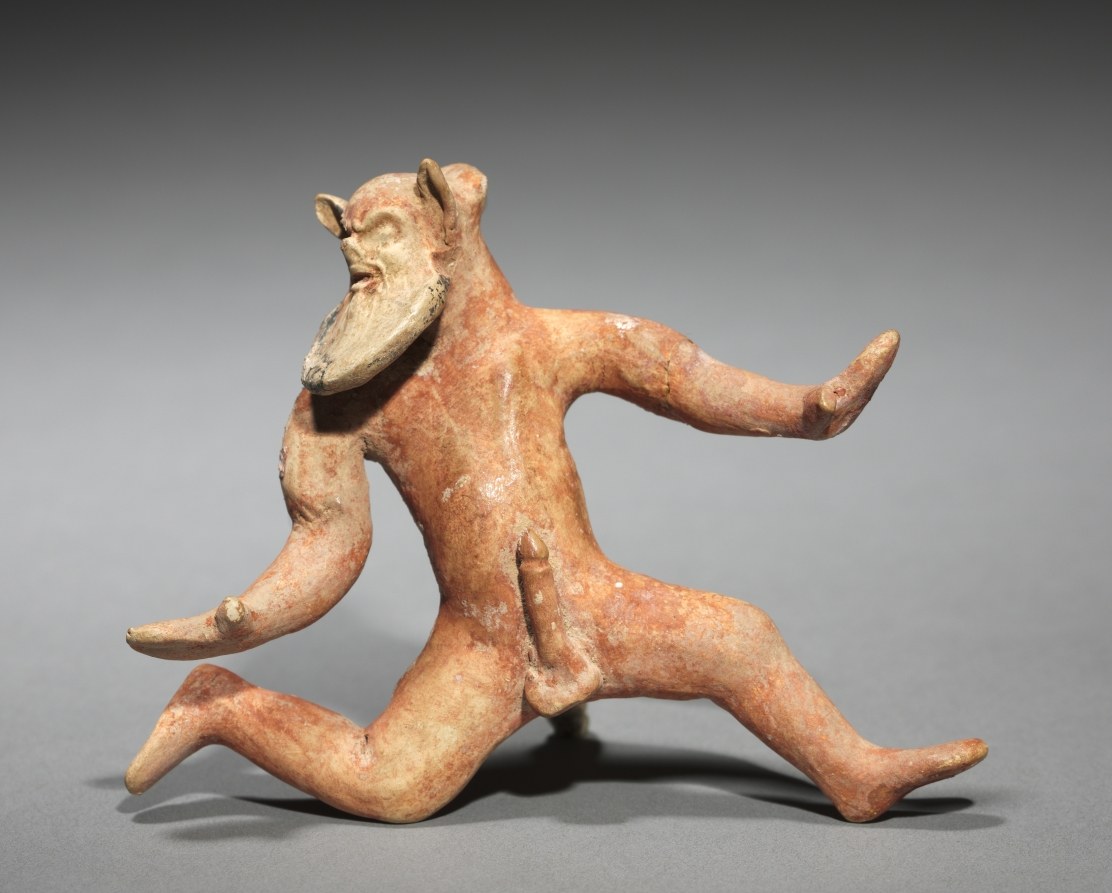
Dancing Satyr
Unknown artist
- Source:
- Cleveland Museum of Art
- Rights:
- Public domain — free to use, share and adapt.
- Recorded as:
- CC0 (Public Domain)
Satyric performance was the third and comedic element of Greek dramatic festivals, performed by trained choruses in close coordination, and this figure preserves a physical vocabulary lost to written text. For dance historians, this piece is evidence that ancient theater valued explosive, uninhibited, acrobatic movement—that the satyr was not a static symbolic figure but a kinetic one. The work shows that sculptors understood and valued dance as a subject worthy of careful technical execution.
What you are looking at
A terracotta figure of a bearded male satyr captured mid-leap or dance. The figure is modeled in the round with careful attention to musculature and movement. His weight appears to pivot on the extended rear leg while his forward leg bends deeply, suggesting the moment of pushing off into an energetic jump. His beard is rendered in bold, stylized waves, and his torso twists with kinetic energy. The arms are positioned at different heights—one raised with the hand open in a gesture that suggests exuberance or musical accompaniment, the other extended lower. The figure is nude except for what appears to be a wreath or band across the chest. The terracotta has aged to a warm tan-to-rust hue with areas of cream-colored deposits, indicating considerable age. The proportions are naturalistic but not classical—the torso is powerfully built, the legs sturdy and compact. The sculptor has emphasized the moment of explosive movement rather than stillness.
The dancing
The satyr is a single dynamic figure suspended in action, not in contact with a partner. His stance creates a diagonal line from the planted rear leg through the twisted torso to the extended upper arm, creating a visual sense of forward momentum. The weight distribution suggests athletic force and control—this is not a stumble but a deliberate leap or rapid sideways step. The raised arm, with fingers splayed open, could indicate percussion-making, celebration, or simply the natural counterbalance of energetic motion. The beard, rendered with parallel grooves, is characteristic of satyr iconography and suggests maturity, virility, and otherness.
The dance depicted
This is a satyr—a creature from Greco-Roman mythology associated with wine, fertility, music, and theatrical performance. Satyrs are foundational figures in the imagery of ancient Greek theatrical dance and ritual. They appear in satyric drama, the third play in each tragic trilogy at Athenian festivals, where male choruses of satyrs engaged in lewd, acrobatic, and exuberant dance movements. This figure's dynamic pose—the mid-leap position with arms at varying heights—captures the energetic, uninhibited quality of satyr performance. The apparent moment of abandonment and physical exertion aligns with ancient descriptions of satyr behavior as lustful, joyful, and drunken. Whether this represents an actual performance or a generic image of satyr character remains uncertain without archaeological context, but the pose is unambiguously theatrical.
How it was made
This is a modeled and hand-finished terracotta figure, likely wheel-thrown or hand-built in sections and then assembled. The anatomical detail—the defined musculature, the carefully grooved beard, the individuated fingers—suggests skilled modeling rather than a mold-pressed piece. The sculptor worked the clay with tools to create highlights and shadows that emphasize movement. Terracotta was an accessible medium for Greek and Etruscan craftspeople, cheaper than bronze and quicker to produce. Figures like this were made for domestic shrines, tombs, or temple deposits. The technique allowed for dynamic poses that would be risky in stone and more expensive in bronze, making terracotta ideal for the uninhibited exuberance of a satyr.
About this work
This terracotta satyr is a theatrical performer frozen in a moment of exuberant leaping or rapid stepping. The figure belongs to a vast ancient tradition of satyr imagery that runs through Greek drama, Etruscan tomb decoration, and Roman domestic art. Satyrs were not invented for representation—they were invented *as* performers, central to Greek dramatic festivals and the rituals they served. This piece captures the physical vocabulary of that performance: explosive movement, asymmetrical balance, gesturural extravagance, and the coded exoticism of a non-human body in motion.
For viewers in a dance context, the satyr's pose offers evidence of how ancient theatrical bodies moved and how artists understood athletic, uninhibited movement. The sculpture demonstrates that ancient audiences valued not dignified stillness but captured dynamism, and that the body in motion was worth memorializing in clay. It belongs in a dance collection because it represents dance—satyr performance—not as a formal category but as a lived practice.
How to look at it
Observe the asymmetry of the pose: one leg planted, the other lifting; one arm raised, the other extended; the torso twisted rather than frontal. This is the sculptor's choice of a single moment—not a neutral stance but the instant of commitment to a leap or sideways movement. The beard, the open-palmed hand, the splayed toes, and the muscular tension all read as expressions of uninhibited joy and theatrical excess. The work exemplifies how ancient artists conveyed not just the appearance of a figure but the *quality* of action—urgency, pleasure, and abandon rather than control.
The artist
Unknown. The figure is a product of workshop practice in the Greek or Etruscan tradition, possibly 6th–4th century BCE based on style. Terracotta figurines were produced in quantities by skilled craftspeople and often not signed. Attribution would require scientific analysis of clay sources and formal comparison with published workshops—data the current record does not provide.
The period
Satyric drama was formalized as part of the Athenian dramatic festivals by the 5th century BCE, though satyr worship and performance in Dionysian contexts likely predates this. The satyr was a figure of transgression: male, bearded, ithyphallic or sexualized, intoxicated, and devoted to pleasure rather than civic order. In art, satyric performance ranged from the theatrical (satyric drama in festivals) to the ritual and cult-oriented (Dionysian worship, fertility rites). Terracotta figurines of satyrs and other theatrical figures proliferated in the Hellenistic and Roman periods, suggesting a mass market for domestic religious objects. This piece reflects the period's interest in capturing movement and character through sculpture.
Where it lives
Held by the Cleveland Museum of Art. The source attribution "cma" suggests this is part of CMA's published or accessible collection. Without accession or acquisition data in the record, the specific context of the collection—whether assembled by period, material, theme, or provenance—cannot be confirmed.
Dance in this work
Questions about this work
What is a satyr and why would ancient people dance as one?
A satyr was a male creature from Greco-Roman mythology: bearded, often ithyphallic, associated with wine, fertility, forests, and the god Dionysus. In theatrical contexts, satyric drama was the third play in Athenian festival trilogies, performed by choruses of male actors in exuberant, often obscene choreography. Satyrs represented licensed transgression—a space where civic order was temporarily suspended in the name of pleasure and ritual fertility. Dancing as a satyr meant inhabiting excess and liberation.
How old is this figure?
The catalogue record does not provide a date. Based on stylistic features and the prevalence of terracotta satyr figurines, it most likely dates to the Hellenistic period (323–31 BCE) or Roman period, though earlier Archaic or Classical examples exist. Scientific dating of the terracotta clay (thermoluminescence) would establish a more precise range.
Could this have been used as a theatrical mask or costume piece?
Unlikely. The figure is a small, three-dimensional sculpture meant for display or religious dedication, not a mask or wearable prop. Theatrical masks were typically lighter, flatter, and designed to be held or worn. However, this piece could represent the kind of character and movement a performer in satyr costume would embody.
What does the raised arm and open hand gesture mean?
The gesture may represent several things simultaneously: a musical gesture (satyrs were associated with pipes and percussion), a gesture of celebration or ecstasy, or simply the natural counterbalancing arm movement of a leaping body. Without written context, the exact meaning cannot be confirmed, but all these readings are consistent with satyr iconography.
More dance artwork