49 works in this view — arrow keys or swipe to move between them.
Dance in Art
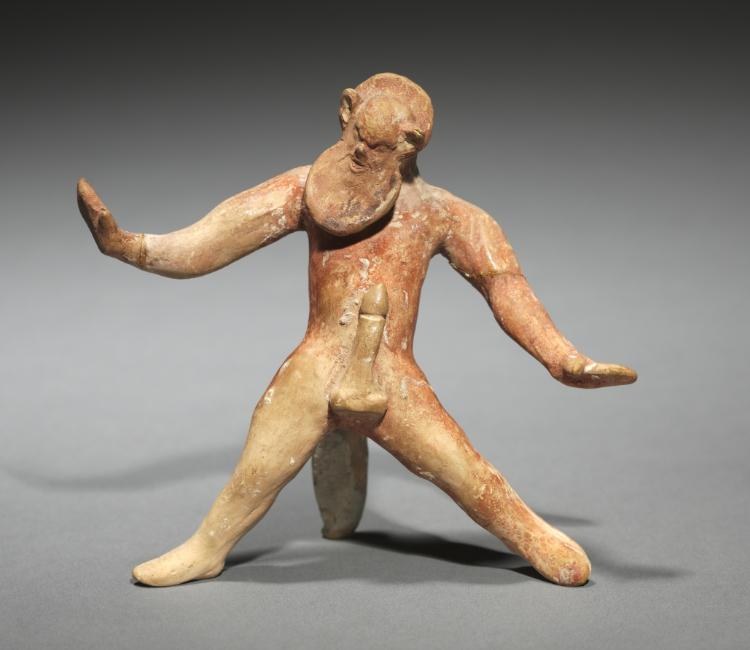
Dancing Satyr
Unknown artist
- Source:
- Cleveland Museum of Art
- Rights:
- Public domain — free to use, share and adapt.
- Recorded as:
- CC0 (Public Domain)
This work documents how ancient cultures embedded dance—and ecstatic, non-rational movement—into small, portable objects that circulated widely. The satyr's pose conveys a philosophy of the body and pleasure radically different from later European dance conventions, and the medium (humble terracotta rather than marble or bronze) suggests that dance imagery was not confined to elite art or theater but lived in domestic and sacred space.
What you are looking at
A terracotta figurine depicts a single male figure in a dynamic, striding pose set against a neutral gray background. The figure is rendered in warm tan and burnt-orange clay, with visible surface weathering and patina consistent with age. He stands with legs in a wide, lunging stance—the left leg extended forward with knee bent, the right leg straight behind—creating a pronounced forward momentum. His torso twists slightly, with the left arm raised to shoulder height in a relaxed, open gesture while the right arm extends downward and back. His head is tilted, gaze directed upward and away from the viewer, lending the figure an air of abandon or ecstasy. The figure is unclothed except for what appears to be a narrow belt or loincloth at the waist. The musculature is generalized rather than anatomically precise, rendered with rounded forms typical of terracotta modeling. No setting is depicted; the figure exists in isolation.
The dancing
A single male dancer, rendered in a contrapposto-derived but more vigorous stance than classical repose. The weight shifts forward onto the bent left leg while the right extends in a trailing line; this distribution suggests mid-movement rather than a stable pose. The raised left arm is open and uncontrolled, the hand relaxed; the right arm hangs or extends backward naturally. The torso rotates to face slightly left while the head tilts back and away, a gesture of abandon that signals pleasure or trance rather than formal control. The figure's anatomy—rounded pectorals, defined abdomen, simplified limbs—reflects the conventions of terracotta modeling rather than anatomical study.
The dance depicted
This figure almost certainly depicts a satyr in ecstatic or bacchic dance, consistent with the title and the classical repertoire of terracotta figurines from antiquity. The satyr appears in the throes of revelry, a stock figure in Dionysian imagery across Greek and Roman art. The uninhibited pose—the thrown-back head, the open arm, the forward lunge—conveys drunken joy or possession by the god, central to satyr mythology. The figure does not suggest any formal dance technique; rather, it captures the satyr as a creature of instinct and revelry, dancing alone in ecstatic pleasure. Without inscription or dated context, the specific dance form cannot be named, but the sculptural tradition and the satyr subject point to Graeco-Roman religious or theatrical representation of Dionysian revels.
How it was made
This is a terracotta figurine, hand-modeled in clay and fired. The technique allows for dynamic, three-dimensional gesture—the artist has carved and incised details (facial features, musculature) and built the form in the round, permitting the figure to be viewed from all angles. The medium's plasticity and the simplification of anatomy are characteristic of terracotta figurines made for domestic or votive use rather than monumental display. Firing has left the surface with a warm, slightly mottled tone and visible cracks and wear, indicating age and exposure. Terracotta figurines of this type were widely produced and distributed, suggesting this work circulated among populations of modest means rather than elite patrons.
About this work
A terracotta figurine of a satyr in ecstatic dance, likely from antiquity though the record offers no precise date. The figure captures a moment of Dionysian abandon—legs lunging forward, one arm raised, head thrown back—rendered in the simplified, expressive style of terracotta modeling. The work belongs to a long classical tradition of depicting satyrs as creatures of revelry and uninhibited pleasure, and it testifies to the integration of dance imagery into daily material culture in the ancient world. Such figurines served both as toys or decorative objects and as votive offerings, bringing divine and mythological figures into intimate, portable form.
How to look at it
Observe the figure's weight distribution: the artist has frozen a moment of active transition, not a static stance. The forward-lunging left leg and the thrown-back head work together to convey momentum and abandon rather than formal control. Notice the contrast between the figure's muscularity (suggesting strength and vitality) and the open, relaxed gestures of the arms, which convey pleasure rather than effort. The upward gaze and open mouth (implied by the tilted head) suggest rapture or intoxication—a coded representation of ecstatic loss of control, central to the satyr's mythological role.
The period
Satyrs were a canonical subject in Graeco-Roman art and appeared frequently in terracotta figurines from the Classical and Hellenistic periods onward. These small clay figures were inexpensive to produce and distribute, making them accessible to a wide audience. In the context of theater (satyr plays, which were performed at Athenian festivals), satyrs embodied chaos, appetite, and comic transgression—a counterpoint to heroic drama. The iconography of the ecstatic satyr—uninhibited, abandoned to pleasure—recurs across media and centuries, reflecting a persistent fascination with figures who live outside social constraint.
Where it lives
The work is held by the Cleveland Museum of Art and is documented in their collection database as a piece of ancient or classical-style terracotta sculpture. The catalogue record provides only the title and the holding institution; no accession number, date, origin, or conservation history is recorded.
Dance in this work
Questions about this work
What is a satyr and why did artists keep depicting them?
A satyr in Graeco-Roman mythology is a creature associated with Dionysus (Bacchus), the god of wine, fertility, and theater. Satyrs embody appetite, pleasure, and the transgression of human limits—they are often drunk, lustful, and unconcerned with social propriety. Artists depicted them across media and centuries because they offered a way to represent ecstasy, abandon, and the body's capacity for pleasure and chaos, subjects both fascinating and transgressive. In terracotta figurines, satyrs were accessible, portable versions of these mythological themes.
Is this a religious object or a toy?
Likely both. Terracotta figurines served multiple functions in antiquity: they were toys for children, decorative objects for homes, offerings left at shrines or temples (votive offerings), and even educational or satirical commentaries on myth and society. The satyr's dancing pose and ecstatic expression suggest a subject meant to delight and amuse, whether in private hands or in a sacred context.
How do we know this depicts dance?
The figure's dynamic pose—the wide, striding legs, the raised and open arm, the thrown-back head—all signal movement and action rather than rest. The gesture is not militaristic (no weapon or shield) or laborers' posture; instead, it resembles the uninhibited, exuberant movement associated with revelry and ecstatic states. The title 'Dancing Satyr' confirms this reading, and the pose aligns with how satyrs are depicted in vase painting and relief sculpture, always shown as creatures in motion.
More dance artwork