49 works in this view — arrow keys or swipe to move between them.
Dance in Art
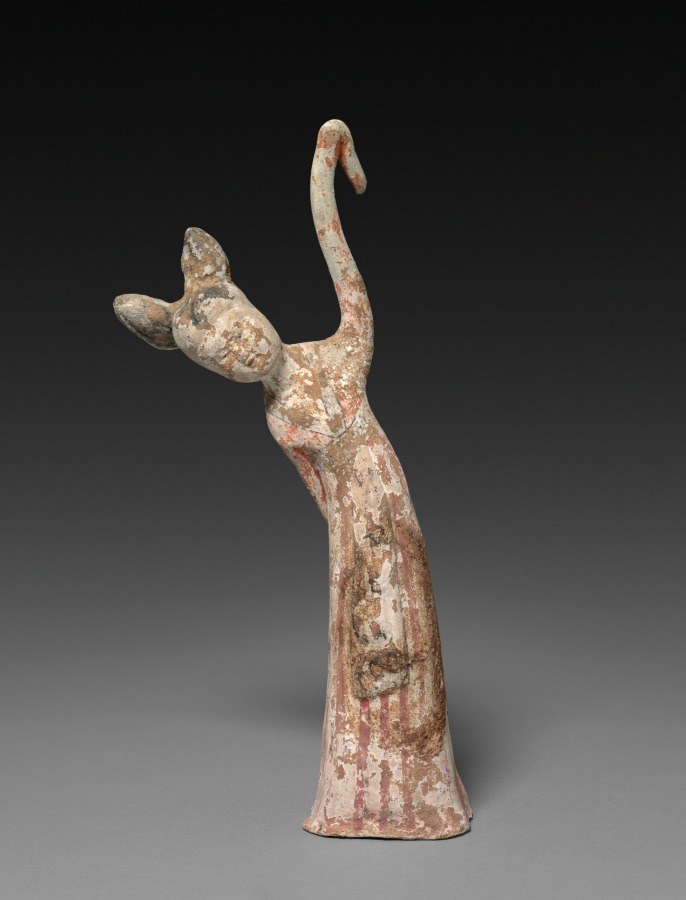
Female Dancer Tomb Figurine
Unknown artist
- Source:
- Cleveland Museum of Art
- Rights:
- Public domain — free to use, share and adapt.
- Recorded as:
- CC0 (Public Domain)
Tomb figurines like this are among the earliest visual records of dance in human culture, pre-dating most written descriptions of performance. The specificity of the pose—the raised arm, the extended gesture—suggests the artist understood dance as a codified practice with recognizable positions, not merely as generic movement. For historians, this object is direct evidence of which dances were important enough to memorialize in a grave.
What you are looking at
A terracotta figurine depicts a single standing female dancer with an elongated, columnar body rising to a small head. The figure's right arm is raised and bent, hand near the face in a gesture suggesting engagement or expressiveness; the left arm extends outward at waist level. The dancer wears what appears to be a draped garment that clings to the body, with the lower portion flaring slightly. The surface shows substantial wear and patina, with areas of cream-colored slip or burnish contrasting with deeper terracotta-red pigmentation, suggesting age and handling. The figure stands on a flared base. The modeling is schematic rather than naturalistic—the proportions and pose suggest formal dance rather than casual movement, and the raised arm and extended gesture create a sense of deliberate posture.
The dancing
The dancer is a single figure in a standing position with clear postural intention. The right arm is raised with the elbow bent, the hand positioned near or at the face—a classical gesture of presentation or emotional expression. The left arm is extended horizontally at approximately waist height, creating a lateral asymmetry that suggests active movement or a held position within a choreographed sequence. The body is upright and frontal, with the weight evenly distributed. The narrow shoulders and elongated neck suggest a stylized, non-naturalistic approach to the human form, consistent with formal performance conventions.
The dance depicted
This appears to be a grave figurine from an ancient Mediterranean or Near Eastern culture, most likely from the Classical or Hellenistic period (though the record offers no date). The raised arm, extended gesture, and deliberate posture are consistent with formal dance as practiced in ancient courts or ritual settings. The stylization and the context—a tomb figurine—suggest this depicts either a performance genre tied to funerary rites or a representation of a dancer as a valued social role. Without inscription or clearer cultural markers in the record, the specific dance tradition cannot be identified with confidence, though the pose recalls Greek or Roman theatrical dance positions.
How it was made
This is a terracotta figurine, hand-modeled and likely wheel-thrown for the cylindrical body, with limbs and head formed separately and attached. The surface shows areas of cream-colored slip (a fine clay wash applied before firing) and red-brown terracotta pigmentation, evidence of either original surface treatment or differential weathering. The technique allowed the maker to create a portable, durable object suitable for placement in a tomb. Terracotta figurines of this type were produced in quantity across many ancient cultures and circulated as trade goods, votive offerings, or burial goods, suggesting this was an object intended for a broad audience or a domestic/funerary context rather than elite display.
About this work
This terracotta figurine represents a dancer in formal pose, likely made for tomb placement in an ancient Mediterranean or Near Eastern culture. The raised arm, extended gesture, and schematized human form all suggest a dancer of social or ritual importance, preserved in clay as a record of a performance tradition now lost. The work belongs in a gallery of dance in art because it is one of the oldest surviving documents of human dance practice: the figurine freezes a specific posture and gesture, allowing us to infer something about how people moved, how they valued dance, and what they chose to preserve for the afterlife.
How to look at it
Attend to the raised arm and the angle of the extended left arm: these are not accidental poses but deliberate gestures that the artist chose to record. The frontality of the figure and the small scale of the head relative to the body suggest this is a formal or ritual pose, not a naturalistic representation. Notice how the artist has simplified anatomy in favor of conveying a clear, legible posture—the long neck, the narrow shoulders, the columnar torso—allowing the pose itself to carry meaning. The wear and patina are part of the object's history; they show that this figurine has been handled, buried, and excavated, and that its surface tells the story of time.
The period
The practice of placing figurines in tombs was widespread across ancient Mediterranean and Near Eastern cultures from at least the Bronze Age through the Roman period. In many of these cultures, dance held sacred or social significance—it was performed at religious rites, funerary ceremonies, and elite entertainments. The specific gesture and pose of this figure may reflect conventions particular to one tradition (Greek, Egyptian, Levantine, etc.), but without a secure date or provenance the broader context cannot be precisely established. What is clear is that dance was valued enough to document in a lasting material.
Where it lives
The figurine is held in the Cleveland Museum of Art. The catalogue record offers no date, medium attribution, artist, or accession details beyond the title and collection name, suggesting it may be part of a larger acquisition of ancient or ethnographic material where individual objects lack detailed documentation.
Dance in this work
Questions about this work
What culture made this?
The catalogue record does not specify. The style—terracotta, hand-modeled, with a columnar body and small head—is consistent with figurines from several ancient Mediterranean and Near Eastern cultures across a wide chronological range. A curator or conservator at the Cleveland Museum would be able to identify the culture and date from clay analysis, surface treatment, and stylistic comparison, but that information is not recorded here.
Why would they bury a dancer figurine?
In many ancient cultures, figurines were placed in tombs to serve the deceased in the afterlife or to commemorate valued roles and relationships. A dance figurine may have honored a dancer of status, preserved a record of an important ritual performance, or—in some traditions—been believed to perform for the deceased in eternity. Tomb context suggests the dancer held social or religious significance.
Can we tell what dance this is?
Not from the figurine alone. The raised arm and extended gesture are consistent with formal dance traditions across many cultures, but without knowing the cultural origin, date, and any accompanying burial goods or inscriptions, we cannot name a specific dance. The pose tells us the dance was codified and important enough to preserve—that is all we can say with confidence.
More dance artwork