49 works in this view — arrow keys or swipe to move between them.
Dance in Art
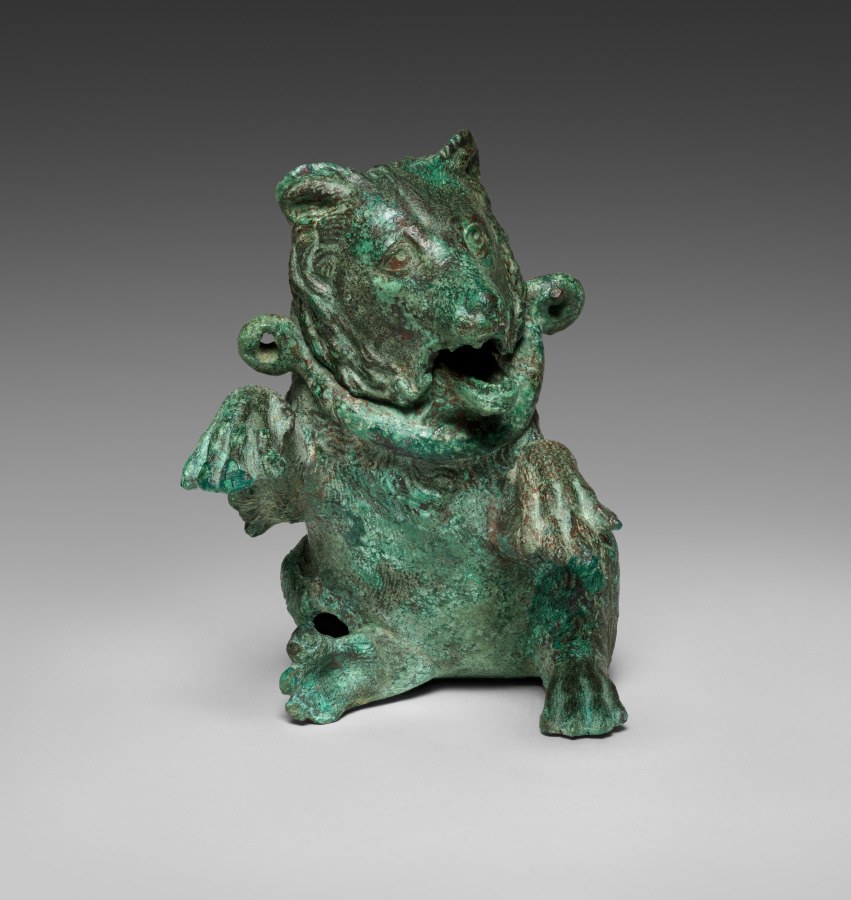
Oil Ampulla in the Form of a Dancing Bear
Unknown artist
- Source:
- Cleveland Museum of Art
- Rights:
- Public domain — free to use, share and adapt.
- Recorded as:
- CC0 (Public Domain)
This object documents a form of performance—trained animal entertainment—that was widespread in antiquity but leaves few direct visual records. The dancing bear ampulla is evidence that such performances were familiar and valued enough to be referenced in everyday luxury objects, suggesting they held a secure place in public entertainment and cultural memory. For dance historians, it expands the archive of documented performance beyond human dancers to include the animal performers who shared ancient stages.
What you are looking at
A small-scale bronze or copper-alloy vessel cast in the form of a dancing bear standing upright on its hind legs. The bear's body serves as the container, with the head tilted back slightly in an expressive pose and the mouth open as though vocalizing or laughing. The figure wears what appears to be decorative drapery or fabric across its shoulders and back, rendered in relief. Small holes perforate the body—one visible on the chest and another on the front leg—suggesting this was a functional oil ampulla (a vessel for holding precious liquids) rather than purely decorative. The surface is heavily patinated in the characteristic green and blue-green of oxidized copper alloy, with lighter areas of exposed metal showing through wear and age. The object stands compactly, the bear's stance wide and stable, with clearly delineated paws and a sense of weight settled into the hind legs.
The dancing
The bear is a single upright figure in a stance that reads as lively and animated—weight distributed evenly across both hind legs, the body slightly twisted, the head thrown back. The tilted head and open mouth suggest vocalization or exuberant movement rather than stillness. The raised shoulders and the way the drapery clings to the upper body convey a sense of motion or momentary pause in activity. The posture is neither naturalistic nor passive; it reads as a captured moment of vigorous action.
The dance depicted
This object depicts a dancing bear—a figure common in ancient Mediterranean and Near Eastern performance culture. Bears were kept and trained for entertainment, and trained bear performances were a recognized form of public spectacle in antiquity. The open mouth and tilted-back head suggest the moment during such a performance when the animal moves in response to music, handlers, or stimuli. The rendering is too stylized and the context too distant for precise identification of a specific dance technique, but the bear is clearly shown in an animated state rather than at rest. This is performative movement, captured in three-dimensional form.
How it was made
This is a cast bronze or copper-alloy vessel, likely created using the lost-wax casting method. The small perforations indicate functional design as a pouring vessel or ampulla, and the drapery across the back likely conceals a filling hole. The casting is competent and detailed, suggesting a skilled workshop rather than casual production. Such vessels were high-value objects, produced for elite households or trade, and the choice of a dancing bear as the form indicates sophisticated humor and knowledge of performance culture. The patina suggests considerable age and burial or extended exposure.
About this work
This small cast-metal oil ampulla in the form of a dancing bear represents an unusual intersection of functional metalwork and performance imagery. The vessel captures a bear in an animated, upright pose—head thrown back, mouth open—characteristic of trained bear performances that entertained audiences across the ancient Mediterranean. The maker has rendered the animal with both realism and caricature, emphasizing the moment of active movement. It is simultaneously a practical container and a witty sculptural commentary on public entertainment, encoding cultural knowledge about animal performance, feasting (the context for oil ampullae), and the relationship between the civilized human viewer and the animal spectacle.
How to look at it
Observe the bear's weight and stance: the artist has positioned the hind legs wide and planted, anchoring the figure despite the dramatic head tilt. The open mouth and back-tilted head are the key to reading this as movement rather than mere standing—they convey the moment of vocalization or exertion during performance. Notice also the drapery: it may be the handler's fabric or a decorative cloth, reinforcing that this is a controlled, human-managed performance. The small holes are easy to miss but crucial; they reveal the object's real function and make clear that the sculptural form and utility were deliberately unified.
The period
Trained bear performances were documented across the ancient Mediterranean and Near East, particularly in Greek and Roman contexts. Such entertainments were professional spectacles, often associated with festivals, markets, and the courts of wealthy patrons. The bear handler was a recognized performer type. The practice persisted through the medieval period and into the modern era; the image of the dancing bear became a cultural archetype. This ampulla, by its decorative incorporation of the motif, suggests that bear performance was sufficiently mainstream to warrant luxury representation in domestic objects.
Where it lives
The object is held in the Cleveland Museum of Art. It is catalogued as a functional vessel (an oil ampulla) rather than as sculpture, though it occupies a space between the two categories. Such vessels were produced across a wide geographic and temporal range, and without clear archaeological or stylistic documentation in the current record, precise dating and origin remain uncertain.
Questions about this work
Was this a real bear or an imaginary one?
Almost certainly real. Trained bears were common entertainers in the ancient world, and the artist has rendered anatomical features—the head shape, paw structure, posture—with knowledge of actual bears. The exaggeration of the mouth and the animated pose are artistic choices, but they reference a real performance tradition, not myth or fantasy.
What would have been stored in this vessel?
As an ampulla, it likely held precious oil—scented oil, perfume, or medicinal unguent. Ampullae were often used for luxury goods in wealthy households. The functional holes in the body allowed controlled pouring. The choice to make the container in the form of a dancing bear suggests this was not a purely utilitarian object; it was likely a display piece as well, signaling the owner's sophistication and familiarity with exotic entertainment.
How common were dancing bear performances in antiquity?
Common enough to be referenced in everyday objects, as this ampulla demonstrates. Literary sources and occasional visual art document trained bears and their handlers across the Greek and Roman world. However, the training and control of large wild animals was a specialized and expensive enterprise, so performances were likely restricted to major festivals, market days, and the households of wealthy patrons.
Could a bear actually dance, or is this artistic exaggeration?
Bears can be trained to stand upright and move in response to music, handlers, or stimuli, which is what observers of the time would have recognized as 'dancing.' The animal would not perform steps in a human sense, but the upright posture and responsive movement are real behaviors. The artist has captured and stylized that behavior, emphasizing the lively, vocalized moment.
More dance artwork