49 works in this view — arrow keys or swipe to move between them.
Dance in Art
Spring Dancers Manzai
Miyagawa Chōshun (Japanese, 1683–1753)
- Source:
- Cleveland Museum of Art
- Rights:
- Public domain — free to use, share and adapt.
- Recorded as:
- CC0 (Public Domain)
Manzai is an ancestor of modern Japanese comedy performance (rakugo and other forms), and this painting is evidence of how the form was actually practiced and embodied in the period when it was created. For historians of Japanese performance, the image documents costume, posture, and the physical vocabulary of a form that left few other records. For dancers, it shows how comedy performance and acrobatic skill were integrated into a single artistic practice.
What you are looking at
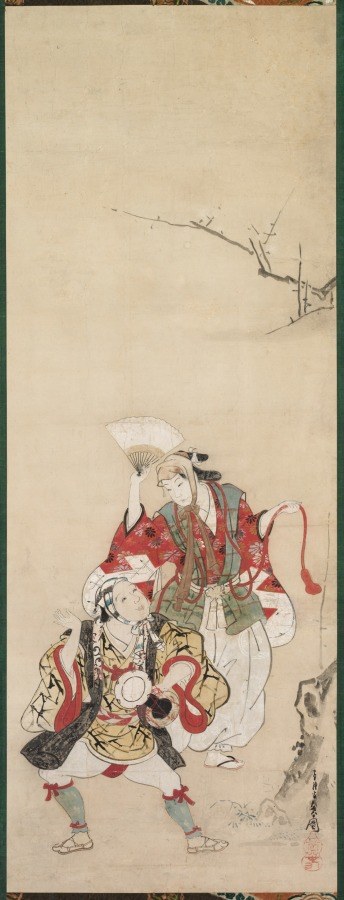
Two figures in vibrant red and cream costumes dominate this vertical composition against a pale ground. The lower figure, wearing a short pleated red skirt and cream undergarment, leans forward in a dynamic athletic pose with knees bent and arms extended. The upper figure stands upright in layered red robes with a deep cream-colored collar, holding a fan aloft in the right hand; the left arm extends outward. A bare branch curves across the upper portion of the composition, suggesting winter or early spring. The figures are modeled with delicate brushwork and gold leaf accents; their faces are fine and expressive. The composition emphasizes vertical movement and spatial separation between the two dancers.
The dancing
The lower figure is caught in a wide-legged forward bend with arms spread laterally, weight distributed through both legs in what appears to be a powerful, athletic stance. The upper figure maintains an upright, composed carriage with the fan held high and the opposite arm extended in a graceful line. Both figures demonstrate control and clarity in their positioning. The spatial separation suggests they are not in direct physical contact, creating a call-and-response dynamic rather than a partnered hold.
The dance depicted
This appears to be a Japanese Manzai performance, as the title indicates. Manzai is a traditional form of comedic performance art with deep roots in Japanese folk theatre, though it evolved considerably over centuries. The dynamic contrast between the two figures—one in an exaggerated, acrobatic posture and one in composed, elevated dress—reflects the dynamic of the traditional Manzai partnership: a tsukkomi (straight man or more dignified role, here shown standing) and a boke (foolish or physical role, here in the bent posture). The title "Spring Dancers" suggests this captures the aesthetic and festive energy of spring performances. The painting documents the physical vocabulary and costumes of Manzai as practiced at the time this work was created.
How it was made
The work is executed on paper in ink and color, with the application of gold leaf visible in the figures' ornaments and costume details. The brushwork is precise and economical, with particular attention to the definition of the face and hands. The pale ground is left largely unpainted, emphasizing the figures as discrete compositional elements against negative space. This technique and material suggest a Japanese painting tradition, likely a hanging scroll or album leaf format. The fineness of the line work and the restrained use of color indicate a trained hand working within established conventions of figure representation.
About this work
This is a record of a Manzai performance captured in the refined medium of Japanese painting. Manzai was a traditional form that combined dance, acrobatics, and comedy; the two dancers played complementary roles, one dignified and composed, the other physically exuberant and absurd. The work documents both the physical practice of the form—the acrobatic bent-knee stance, the elaborate costume with fan—and its social function as spring entertainment. As a painting, it preserves the visual character of performance and the physical demands placed on Manzai dancers. The title suggests a seasonal context: spring performances were occasions for renewal and festivity, and the artist has captured the energy and dynamism central to the form.
How to look at it
Observe the contrast between the two figures' postures: the lower dancer's center of gravity is dropped, the knees are splayed, and the body is bent forward into space—a position of physical exertion and comedic vulnerability. The upper figure's composure and elevation, by contrast, reads as dignity and control. The fan in the upper figure's hand is not merely decorative but a tool for gesture and comedic timing. The bare branch at the top anchors the composition and may suggest the seasonal context. Notice how the artist has used the pale ground to isolate the figures, making their gestures and costumes the sole focus: this is a painting about bodies in motion and the visual language of performance.
The period
Manzai emerged in medieval Japan as a form of folk entertainment performed at shrines and festivals. By the Edo period (1603–1868), it had developed into a more formalized performance art with recognized roles, costumes, and techniques. The painting's style and execution suggest it was created during a period when Manzai was widely performed and documented in the visual arts. Spring performances held particular cultural significance in Japan, as moments of seasonal transition and renewal tied to Shinto festival cycles. The refined medium of painted paper suggests this work was made for an educated audience with access to fine materials and painting traditions.
Where it lives
The work is held in the collection of the Cleveland Museum of Art. The catalogue record indicates only that it is from the museum's holdings and is part of their dance-related art collection; further provenance and acquisition history are not recorded.
Dance in this work
Questions about this work
What is Manzai?
Manzai is a traditional Japanese performance form combining comedy, acrobatic movement, and rhythmic dialogue. It evolved from folk entertainment into a formalized art with two complementary roles: the tsukkomi (the dignified straight man) and the boke (the physical fool or comic). Historically performed at festivals and celebrations, especially in spring, Manzai emphasized the physical virtuosity and comic timing of its practitioners.
How do I identify Manzai in visual art?
Look for two figures in contrasting postures and dress—one dignified and composed, one in an exaggerated or physical position. Manzai costumes are often vivid and layered, and the dynamic between the two performers is asymmetrical: they are not in a formal partnered hold but rather in a call-and-response relationship. Fan props and wide-legged, bent-knee stances are common visual markers.
Why does the catalogue just say 'Spring Dancers'?
The title likely refers to the seasonal context of Manzai performance—spring was a festive and renewal-focused season in Japan, and performances at this time held cultural significance. The title is descriptive of the moment and occasion rather than narrative. The catalogue record does not provide more detailed information about artist, date, or specific provenance.
What is the bare branch doing in the composition?
The branch is a compositional anchor suggesting a natural setting and reinforcing the spring context suggested by the title. It also balances the vertical emphasis of the two standing and bent figures and provides visual breathing room in the composition. In Japanese painting tradition, sparse natural elements often suggest season and mood rather than literal landscape.
More dance artwork