28 works in this view — arrow keys or swipe to move between them.
Dance in Art
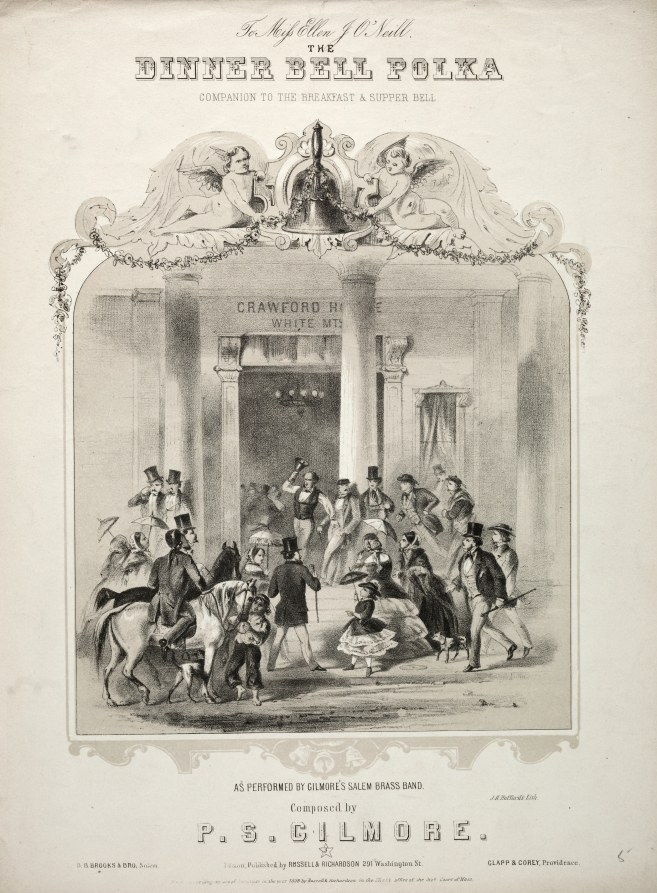
The Dinner Bell Polka - Sheet Music Cover
Winslow Homer (American, 1836–1910)
- Dance:
- Polka
- Source:
- Cleveland Museum of Art
- Rights:
- Public domain — free to use, share and adapt.
- Recorded as:
- CC0 (Public Domain)
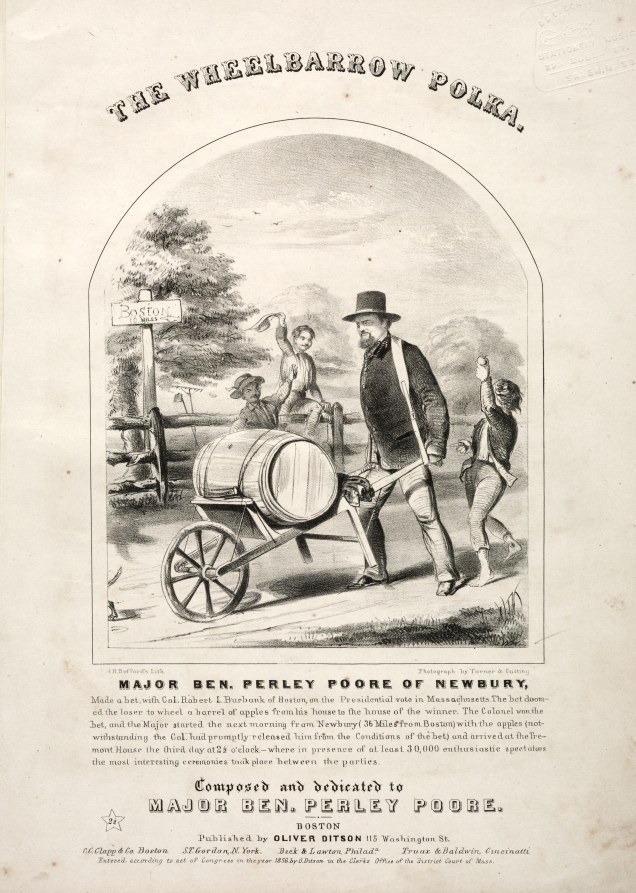
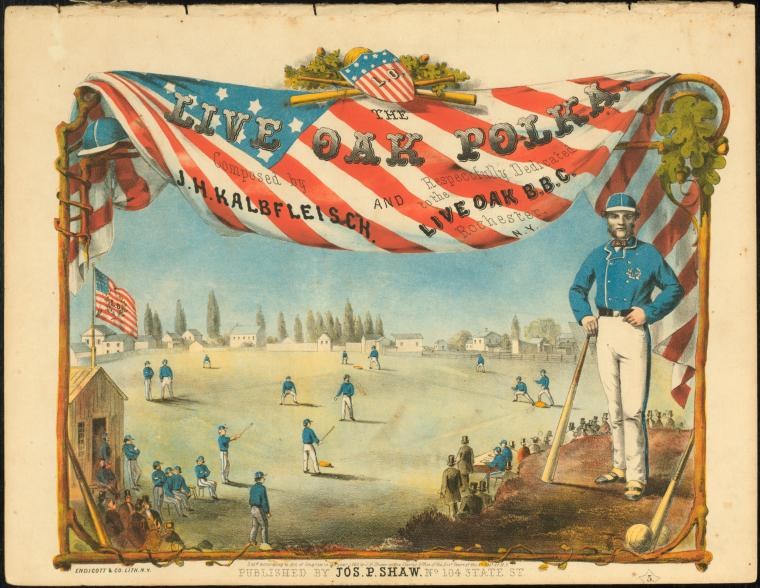
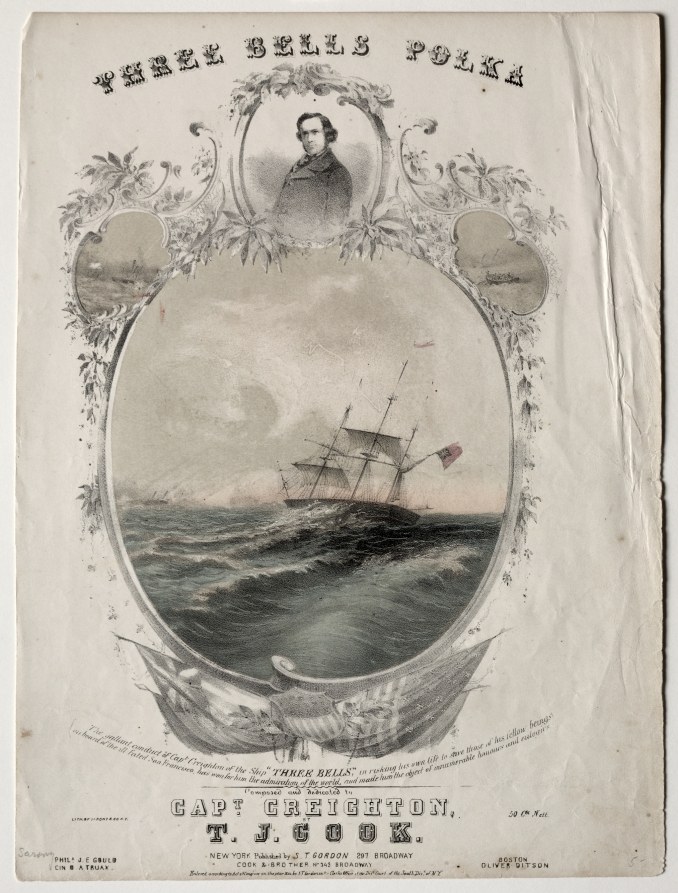
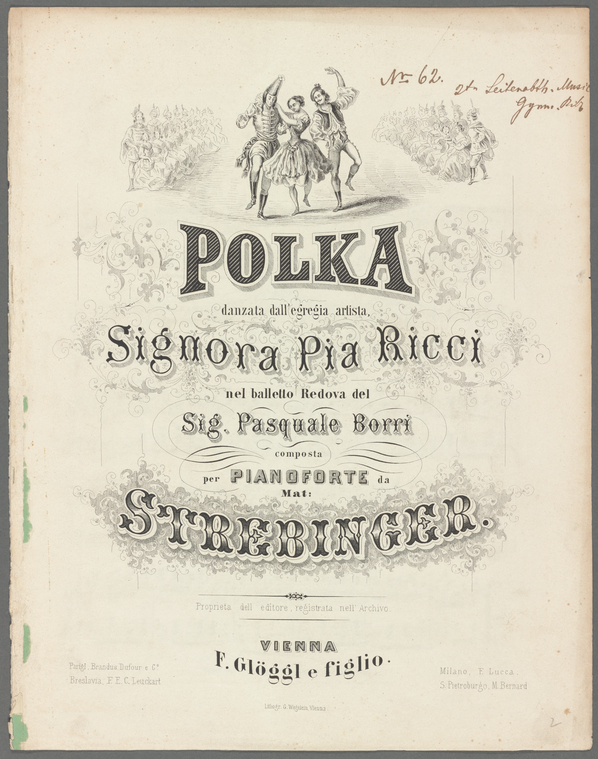
Sheet music covers are among the richest visual documents of historical dance practice. They show not just what music was danced to, but how dance was marketed, who danced it, and how the dance was integrated into fashionable social life. This cover's dense ballroom scene, its formal dedication, and its confident presentation of the polka as a recognized social form all testify to how rapidly and completely the polka had been absorbed into British and American ballroom culture by the 1850s–60s.
What you are looking at
This is the decorative cover to a piece of sheet music titled 'The Dinner Bell Polka,' dedicated to 'Mr. and Mrs. J. C. Neill' and marked as a companion to the Breakfast and Supper Bell. The central image depicts an indoor ball or assembly, set within an ornamental frame topped by a classical coat of arms flanked by putti. The scene is rendered in fine engraving or lithographic process, showing a crowded social gathering in what appears to be a grand hall or country house—a servant or attendant stands at the far end, and the space is marked by tall columns. The figures are dressed in mid-nineteenth-century formal attire: men in tailcoats and top hats, women in full-skirted dresses with corseted waists, typical of the 1850s–1860s. The composition is busy and angled to suggest movement and social congestion, with figures clustered and overlapping across the floor. The gathering is clearly celebratory—this is a dance or festive social occasion, not a formal receiving line—and the title's reference to 'dinner bell' implies this was the music for a specific moment in the evening, perhaps the call to supper or the transition from dining to dancing.
The dancing
The figures occupy the floor in informal groupings rather than in paired dance holds. Several are turned in profile or three-quarter view, allowing the engraver to show the cut of their coats and the volume of the women's skirts. A few couples face one another or stand in loose conversation; others appear to be walking or turning. The postures are alert and social rather than locked in a specific dance frame—the women's arms are unconstrained, and the men stand with hands free. The overall impression is of social interaction and spectation rather than the formal synchronized movement of a set dance. The density of figures and the overlapping of bodies conveys the crush and liveliness of a fashionable gathering.
The dance depicted
The work is identified as polka music by its title and dedication. The polka, which emerged in Bohemia in the 1830s and became wildly fashionable across Europe and North America by the 1850s, was a couple dance in 2/4 time, fast and energetic, performed in closed position. This is sheet music, not a depiction of polka dancing itself—the title announces the genre, but the image shows a formal ball or assembly at the moment before, during, or after dancing. The crowded, mixed gathering suggests the social context in which polka was danced: ballrooms and country houses where the polka had become the dominant couple dance of the era, supplanting earlier forms. The absence of visible polka frames—the tight, face-to-face closed holds characteristic of the dance—suggests this image captures the ball's social life rather than its choreographic heart.
How it was made
This is a sheet music cover produced by lithography or fine engraving, processes that allowed for detailed tonal gradation and fine line work suited to both formal titles and elaborate scene illustration. The catalogue record does not specify the medium, but the delicate rendering of fabric, the precise architectural detail (columns, cornicing), and the ornamental enframing suggest lithography, a reproductive medium that was standard for music publishing by the mid-nineteenth century. The process allowed thousands of copies to be distributed cheaply, making this a mass-produced object for middle-class and upper-middle-class households. The publisher is identified in small print at the base as J. Beggan & Bros., Strand, London, confirming this as a commercial London music publisher's product.
About this work
This is the cover illustration to a polka for piano, published in London in the mid-nineteenth century. It serves as a historical document of ballroom culture in the Gilded Age: the fashionable dress, the formal architectural setting, the mixed social gathering, and the dedication to named patrons all mark this as a product made for and marketed to the prosperous middle and upper classes. The polka itself had recently arrived from Central Europe and had become the most fashionable couple dance of the era, and this sheet music—one of many published variants and arrangements—was how the music and dance idea circulated through homes and dance halls. The image does not depict the dance itself but rather the social occasion it structured: it is a window into what ballroom life looked like when polka was at its height.
How to look at it
Look at the ornamental frame and the title's emphasis on 'The Dinner Bell'—this alerts you that the image is meant to capture a specific, named social occasion, not a generic ball. Notice how the figures are rendered without formal dance holds; they are standing, walking, conversing. The artist has chosen to show the social and sartorial context of polka dancing rather than the dance itself, which suggests that by mid-century, the polka's identity was secure enough that it needed no explicit visual instruction. The density and bustle of the scene, and the smart tailoring and full skirts, all advertise this as fashionable, respectable social dancing for the prosperous.
The artist
The artist is not recorded. The work is a commercial product from a London music publisher, J. Beggan & Bros., and would have been drawn or engraved by a staff artist or freelance illustrator whose name was not preserved. Such cover illustrations were a staple of the music-publishing trade and represented a significant secondary market for graphic artists; the skill required to render fine architectural detail, formal dress, and multiple figures in lively interaction was considerable, even if the work was anonymous.
The period
The polka arrived in Western Europe from Bohemia in the 1830s and became an international craze by the 1850s. It was faster, more energetic, and less formal than the waltz, and it appealed to younger dancers and to the rising commercial and professional classes who populated urban ballrooms. By the time this cover was published—likely 1850s–1860s, based on costume—the polka was no longer a novelty but an established fixture of fashionable dance. In visual art, ballroom scenes remained popular subjects for engravers and lithographers throughout the century, though often treated satirically or sentimentally. This cover represents the commercial, music-publishing side of that visual culture: illustration designed to appeal to amateur musicians and dancers who would purchase the sheet music for home use.
Where it lives
This sheet music cover is held in the Cleveland Museum of Art and is part of its dance-related art collection. The object is a commercial music publishing product, a lithographed or engraved cover for a polka arrangement published by J. Beggan & Bros. of London (address: Strand). Such objects circulated widely in the nineteenth century and represent the visual and commercial apparatus through which dance music reached amateur performers and home audiences.
Dance in this work
Questions about this work
What is a polka and why was it so popular?
The polka is a Czech couple dance in fast 2/4 time, performed in closed position. It emerged in the 1830s and became an international craze by the 1850s because it was faster, more energetic, and socially less formal than the waltz. It appealed particularly to younger dancers and to the commercial and professional classes who dominated urban ballrooms.
Why does the image not show people actually dancing in polka position?
The cover illustrates the social occasion—a ball or assembly—rather than the dance itself. By the mid-nineteenth century, the polka was well-established, and its visual identity was clear enough that the cover could simply show the fashionable ballroom context in which polka was danced. The 'Dinner Bell' title suggests this captures the moment of transition or gathering, not the height of dancing.
Who was this music made for?
This sheet music was marketed to middle- and upper-class amateurs—pianists in homes and modest concert halls. The dedication to named patrons (Mr. and Mrs. J. C. Neill) suggests this was a gift or compliment to specific clients or subscribers. The series title 'Companion to the Breakfast and Supper Bell' indicates this was part of a commercial line of social occasion music.
How do we know when this was published?
The catalogue record does not specify a date, but the costume—men's tailcoats and top hats, women's full-skirted dresses with narrow waists—is consistent with the 1850s–1860s. The publisher J. Beggan & Bros. was active in London during this period.
More Polka artwork