49 works in this view — arrow keys or swipe to move between them.
Dance in Art
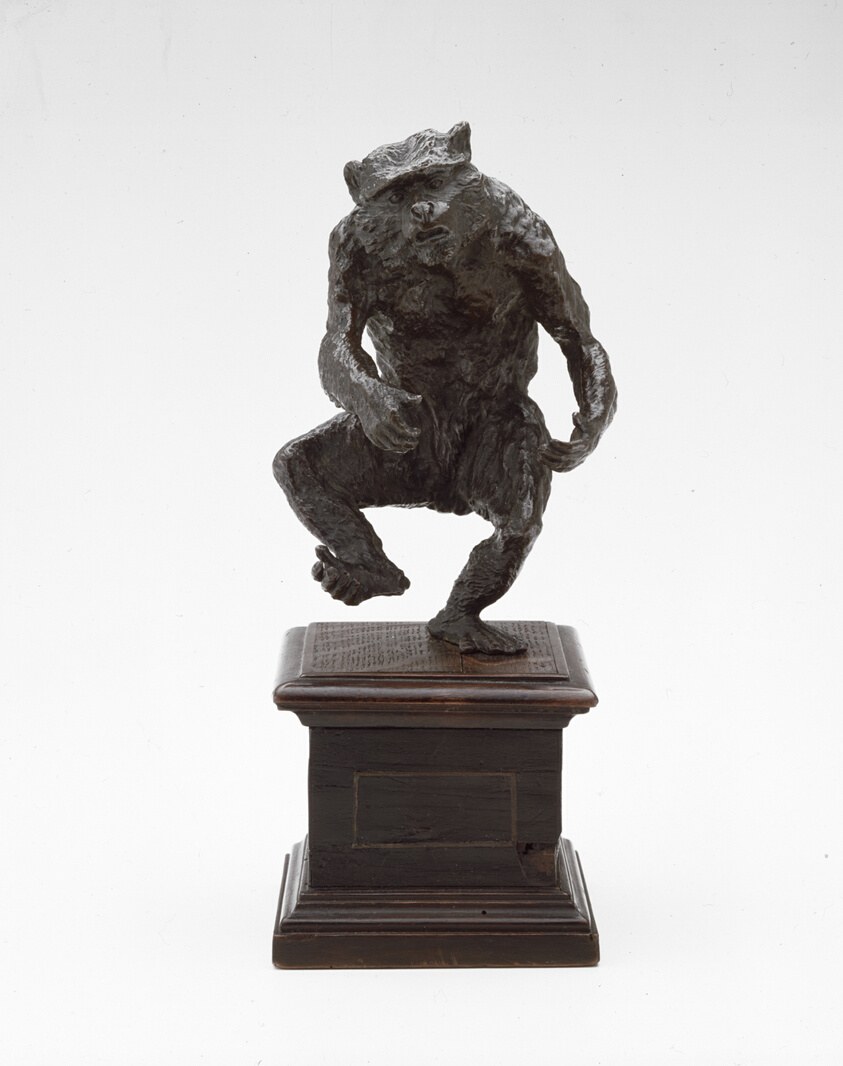
Dancing Monkey
Christophe Fratin
- Source:
- Art Institute of Chicago
- Rights:
- Public domain — free to use, share and adapt.
- Recorded as:
- CC0 (Public Domain)
For historians of performance and entertainment, this figurine documents the cultural currency of trained or theatrical monkeys, which were genuine attractions in early modern courts and public spaces. For art historians and sculptors, it demonstrates how bronze carving could capture personality and movement in miniature, and how the animal body became a vehicle for satirizing human pretension, including human dance and gesture.
What you are looking at
A bronze figurine of a monkey stands alone on a rectangular wooden plinth. The monkey is rendered in a naturalistic but caricatural style, its body densely textured with fur. It is captured mid-gesture: the creature crouches with knees bent, one arm raised and bent at the elbow in an expressive pose, the other hand near its body. The head is turned slightly, mouth open as if vocalizing or grinning. The posture suggests animation and personality—not a passive animal study but something approaching performance or entertainment. The wooden base is simple and functional, with a rectangular plaque visible on its upper surface where a title or inscription would appear. The whole work is modest in scale and appears designed for a viewer to examine from close range, perhaps on a shelf or table.
The dancing
The monkey's body is compact and muscular, with weight settled into a wide-legged crouch or squat. One arm extends upward with the elbow bent, palm turned outward—a gesture that reads as expressive, almost pleading or presenting. The other arm remains closer to the body. The head is alert and turned, with features carved to show character rather than mere anatomical accuracy. There is a strong sense of bodily liveliness and personality throughout, as if the monkey is caught in a moment of gestural communication or performance rather than passive repose.
The dance depicted
This is not a depiction of human dance but of a monkey performing or entertaining—a subject that appeared across European decorative arts from the Renaissance through the 18th century. The pose and carving style suggest it may reference the tradition of trained monkeys as performers in courts and public spaces, or it may be a satirical reference to human folly via animal mimicry. The raised arm and alert posture do suggest a choreographic or gestural tradition—monkeys were sometimes costumed and trained to mimic human movement for entertainment. Without inscription legible in the image, the specific context and date remain unclear, but the work participates in a long tradition of animal sculpture as commentary on human behavior and performance.
How it was made
This is a bronze casting, visible from the surface texture, patina, and the way light catches on the metal. The casting appears to be a lost-wax or direct casting process that allows fine detail—the fur texture is rendered through surface work, and the facial features show considerable carving precision. The wooden base is later mounting or original; the plaque suggests this was part of a collection or display series. Bronze casting was the standard medium for precious or significant figurative works intended for educated collectors, which implies this piece held some artistic or status value beyond pure novelty.
About this work
This is a small bronze monkey figurine mounted on a wooden base, likely dating to the 17th or 18th century, depicting an animal in an animated, expressive pose that references the tradition of trained monkeys as court entertainers or as satirical figures. The work sits within a long European tradition of animal sculpture as both naturalistic observation and moral or social commentary. It belongs in this collection because monkeys in performance—whether as trained animals or as artistic subjects—represent an alternative genealogy of movement and entertainment outside formal human dance traditions, yet one that often commented on and mimicked human dancers and courtly behavior.
How to look at it
Note the raised arm and the alert tilt of the head: these are gestures that convey intention and personality, not random animal posture. The open mouth and expressive features suggest the artist was interested in capturing a moment of communication or 'performance.' Compare the deliberate pose to how a genuinely passive animal sculpture would sit. Consider whether the monkey is being shown as entertaining itself, entertaining others, or imitating human movement—questions the pose leaves productively open. The wooden base and inscription plaque suggest this was part of a cabinet or collection, viewed close-up and handled, which shaped how the artist carved it.
The period
Monkey figurines proliferated in European decorative arts during the 17th and 18th centuries, a period when exotic animals fascinated wealthy collectors and courts. Trained monkeys were real attractions at European courts; they were dressed, taught tricks, and sometimes forced to mimic human behavior including dancing. Simultaneously, monkeys became standard satirical figures in prints, paintings, and sculpture—representing human folly, lust, vanity, or base behavior. This work likely participates in both traditions: it is at once a naturalistic study and a commentary on human performance and social pretension. The bronze medium and careful carving suggest it was made for a patron with means and taste, not as a crude novelty.
Where it lives
The work is recorded in the Art Institute of Chicago. No accession number, date, or artist is given in the catalogue record. The wooden base is integral to the work as we see it, but whether it is original is not established.
Questions about this work
Was this monkey trained to dance?
We cannot know from the sculpture alone. But trained monkeys were real attractions in 17th–18th-century courts, where they were dressed and taught to mimic human behavior including dancing. This figurine may commemorate such a creature, or it may be a satirical reference to human pretension using the monkey as metaphor.
Why is a monkey in a dance art collection?
Because performance and entertainment are broader than formal dance. Trained animals were genuine performers and were understood as such by their audiences. Including this work acknowledges that human dance history runs alongside and intertwines with other kinds of bodily performance and spectacle.
Is this a portrait of a specific monkey?
The inscription on the plaque might answer this, but it is not legible in the photograph. The work appears to be a character study—capturing monkey-ness and performative personality rather than individual likeness.
More dance artwork