49 works in this view — arrow keys or swipe to move between them.
Dance in Art
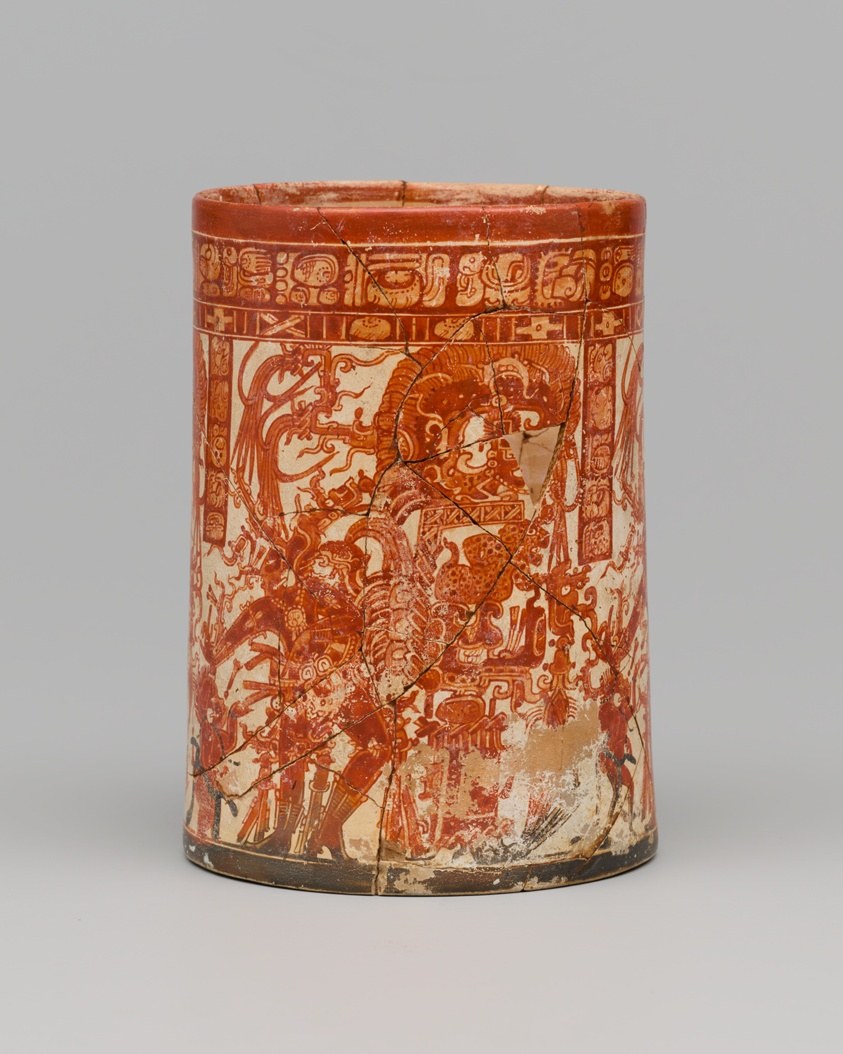
Vessel with Dancing Maize Gods
Aj Maxam
- Source:
- Art Institute of Chicago
- Rights:
- Public domain — free to use, share and adapt.
- Recorded as:
- CC0 (Public Domain)
For a dance historian, this vessel is essential evidence of how pre-Columbian Maya civilization integrated sacred figures—the maize god—into courtly and ceremonial contexts that likely included ritual performance and movement. The maize god and his associated mythology were reenacted in ceremonies that would have involved dance, music, and costume, as documented in later Colonial-period Maya and Aztec sources. Understanding the visual and religious framework within which Maya ritual dances occurred requires studying objects like this that preserve the iconography and hierarchy of the sacred beings participants invoked and embodied.
What you are looking at
A cylindrical ceramic vessel, likely a drinking cup or ceremonial container, is covered entirely in red-and-cream painted imagery characteristic of Classic Maya pottery. The vessel displays a dense, narrative scene populated with multiple figures engaged in ritual or ceremonial activity. At the center is a prominent figure wearing an elaborate feathered headdress and seated or standing in a position of authority; this figure is identifiable as a maize god based on the stylized corn-plant elements integrated into the composition. Surrounding this central figure are additional human and supernatural beings, rendered in profile and three-quarter view, interspersed with hieroglyphic glyphs and geometric decorative bands. The painting style is typical of polychrome Maya pottery from the Classic period (250–900 CE), with the red pigment applied over a cream slip. A horizontal band of glyphs and geometric patterns runs around the rim and serves as a border between the main narrative scene below and the decorative register above.
The dancing
The figures are rendered in the characteristic Maya style: elongated bodies in profile with distinctive postures. The central maize god wears an elaborate costume including a tall feathered headdress that dominates the composition. The surrounding figures display varied poses suggesting dynamic interaction—some appear to be in conversation or ritual exchange, with arms and hands positioned to indicate gesture and engagement. The bodies are relatively static and frontal despite the profile orientation, typical of Maya representational conventions. Multiple figures are arranged around the central deity, creating a tiered, hierarchical composition rather than a unified group movement.
The dance depicted
This is not a depiction of dance in the Western or modern sense, but rather a ceremonial or mythological scene centered on the Maya maize god, a central figure in Maya cosmology. The maize god appears in various contexts in Maya art—creation myths, agricultural rituals, and afterlife scenes—but this composition seems to represent a sacred or courtly gathering rather than a coordinated dance performance. The gestures and postures of the surrounding figures suggest ritual interaction, possibly the performance of sacred duties or the enactment of mythological narrative. However, the arrangement lacks the synchronized movement, symmetrical partnering, or rhythmic grouping that would identify this as a dance scene proper. If movement is implied, it would be ritualistic and ceremonial rather than recreational or performative in the theatrical sense.
How it was made
This is a ceramic vessel, almost certainly a drinking cup or ceremonial cylinder (watertight container for liquids or precious substances), created using the coil-building method typical of Maya pottery. The surface was smoothed and covered with a cream-colored slip, then painted with a red pigment derived from iron oxide or cinnabar. The painter worked with fine brushes to create the detailed figural and glyphic imagery. The precision of the linework and the complexity of the composition indicate a skilled artisan, possibly working in a palace or elite household workshop. The paint has been partially worn and abraded over centuries, visible in the faded areas and loss at the rim and base, consistent with age and burial context.
About this work
This is a Classic Maya polychrome ceramic vessel decorated with a narrative scene centered on the maize god and surrounding ritual figures. The work exemplifies the extraordinary sophistication of Maya court art and the central role of the maize deity in Maya religious and cosmological thought. The vessel would have held precious liquid—likely chocolate or another ritual beverage—and served simultaneously as a functional container and a display of elite status and religious knowledge. The inscribed glyphs provide a text that would have been readable to Maya scribes and nobility, making this both a visual and linguistic artwork. The work belongs in a gallery devoted to dance and movement because it documents ritualized, ceremonial activity and the sacred context in which Maya ritual performance occurred, even if it does not depict dance in the modern sense.
How to look at it
Examine the figure of the maize god at the center: note the elaborate feathered headdress, the formal seated or standing posture, and the distinctive costume that identifies him as a deity rather than a human participant. Look at the arrangement of the surrounding figures—their gestures, the direction they face, and their spatial relationship to the central figure—to understand the hierarchical and ceremonial nature of the scene. Trace the glyphic band running around the vessel to understand that this is a text as well as an image, recording names, titles, and possibly the purpose or occasion of the vessel. The painting style—the fineness of line, the sophistication of composition within the narrow cylindrical format—should convey the artistic skill and the elite context for which this was made.
The period
This vessel dates to the Classic Maya period (250–900 CE), when Maya civilization in the Yucatan and Central America reached its peak in artistic, architectural, and intellectual achievement. During this period, Maya scribes and artists had developed a sophisticated writing system, and elite potters produced extraordinarily detailed polychrome vessels for court use and burial with the dead. The maize god was one of the most frequently depicted figures in Maya art, reflecting the central importance of maize agriculture and the mythology of human creation from maize (as recorded in the Popol Vuh). Ritual activity, including dance, music, and bloodletting, formed the core of Maya religious practice and courtly performance. The vessels themselves were prestige goods and were often painted with scenes of the afterlife or mythological narrative, used in ceremonies and deposited in elite burials.
Where it lives
This vessel is held by the Art Institute of Chicago. It is a classic example of the museum's significant collection of Pre-Columbian art, which includes some of the finest examples of Maya polychrome pottery in North American museums. The vessel likely entered the collection through a donation or purchase in the early-to-mid twentieth century, a period of active acquisition of Pre-Columbian art by major American institutions.
Dance in this work
Questions about this work
Is this actually a dance scene?
Not in the way we might expect from European or modern art. The vessel depicts a ceremonial or mythological scene involving the maize god and ritual participants, likely the Maya elite engaged in sacred activity. However, Maya ritual and ceremony—including those depicted in art—almost certainly involved dancing, music, and performance. This image captures the religious and hierarchical context in which such performances occurred, even if it does not show bodies in motion.
Who was the maize god in Maya culture?
The maize god was a central figure in Maya mythology and cosmology, associated with agriculture, fertility, and the cycles of death and rebirth. According to the Popol Vuh (the Maya creation epic), humans themselves were created from maize. The maize god appears frequently in Maya art as a young, beautiful deity wearing elaborate costume and regalia, often in scenes of ritual or the afterlife. He was reenacted in ceremonial performance by dancers and actors.
What was this vessel used for?
This cylindrical vessel (a Maya 'codex-style' or 'narrative vase') was likely used to hold and serve precious liquids in courtly settings, most likely chocolate or another ceremonial beverage. The decorated surface served to display the owner's wealth, knowledge, and religious sophistication. After the death of the elite person who owned it, such vessels were often placed in burials, where they would accompany the deceased to the afterlife.
How do we know what the glyphs say?
Modern scholars have deciphered most Classic Maya hieroglyphic writing. The glyphs on this vessel likely record the name of the vessel's owner, the date it was painted, the figure(s) depicted, and possibly the occasion or ritual context. Reading Maya glyphs is a specialized field, and the precise meaning of every inscription on every vessel is not yet fully understood, but the system is well enough deciphered that scholars can extract historical and cultural information from these texts.
More dance artwork