49 works in this view — arrow keys or swipe to move between them.
Dance in Art
dance event dance attribute
Unknown artist
- Rights:
- Not recorded. Do not assume this image is free to reuse — check the source record.
dance event dance attribute is an artwork in the LODance gallery of dance in art. It's one of thousands of historic images tracing how dancing has been seen and celebrated across the centuries.
What you are looking at
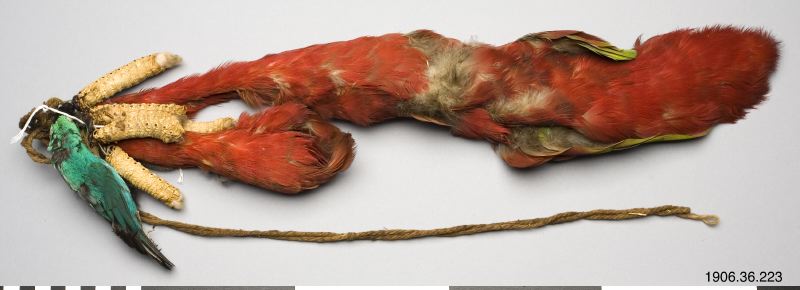
This is a taxidermied bird specimen, not a dance artwork. The object consists of a preserved red parrot or macaw with iridescent green wing feathers, mounted with yellow scaled feet and a braided rope or cord attachment. The specimen is displayed against a neutral background with a scale bar at the bottom, typical of natural history museum documentation. The plumage is vivid but shows signs of age and deterioration in places, and the mounting suggests this is a historical collection piece rather than a contemporary artwork.
The dance depicted
This object does not depict dance.
How it was made
This is a preserved taxidermied specimen, a technique involving careful removal and treatment of the skin, mounting on a support structure, and arrangement for display. Taxidermy was a common practice for collecting and studying natural history from the 18th century onward. The braided cord suggests it was once suspended or mounted for display in a museum or private collection.
About this work
This is a natural history specimen, not a work of dance art. It appears to be a historical taxidermied bird in a museum collection, documented through the Europeana digital heritage platform. It has been catalogued incorrectly as a dance artwork, possibly through an automated cataloguing error or data ingestion mistake.
The period
The preservation technique and mounting style suggest this specimen dates to the 19th or early 20th century, when natural history collecting and taxidermy were at their height in European museums.
Where it lives
The object is held in a collection accessible through Europeana, a digital aggregator of European cultural heritage. The accession number 1906.36.223 suggests it is part of an institutional museum collection, likely European given the Europeana source.
Questions about this work
Why is a taxidermied bird in a gallery of dance in art?
It should not be. This appears to be a cataloguing error. The work was submitted to Europeana with generic metadata tags ('dance event dance attribute') that do not match its actual content. It is a natural history specimen, not a depiction of dance.
What bird is this?
The plumage, size, and foot structure suggest a macaw or large parrot species, likely from the Americas. The red and green coloration is typical of macaws. Without access to the original specimen label or museum records, a precise species identification is not possible from the image alone.
More dance artwork