49 works in this view — arrow keys or swipe to move between them.
Dance in Art
dance event dance ornament
Unknown artist
- Rights:
- Not recorded. Do not assume this image is free to reuse — check the source record.
This work does not belong in a gallery about dance. Its inclusion suggests a cataloguing error that should be reviewed and corrected.
What you are looking at
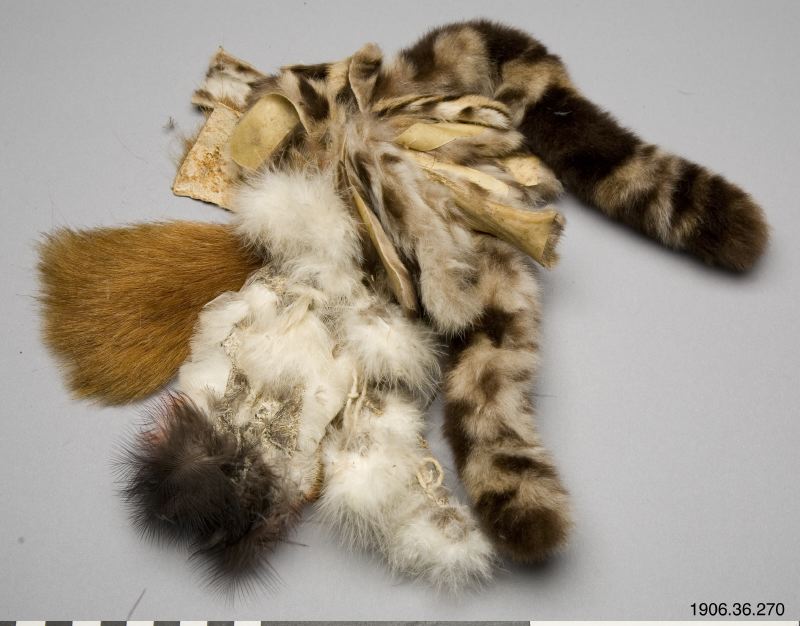
This is a taxidermied animal skin or fur specimen, not a dance artwork. The object appears to be the preserved pelt of a small mammal, possibly a raccoon or similar animal, photographed flat against a neutral background for museum cataloguing. The fur is arranged to display the full body: the head with pointed ears and visible facial structure at upper left; the torso with dense white and brown fur in the center; the limbs extending outward; and a distinctive striped tail curved to the right. The specimen shows significant age and wear, with patchy coloration, areas of deterioration, and visible anatomical preparation marks. A scale bar and accession number (1906.36.270) appear at the bottom, indicating this is a natural history museum object rather than artwork.
The dancing
There are no human or dance figures in this image. This is a preserved animal specimen, not a representation of dancers or dance.
The dance depicted
This object does not depict dance. The catalogue record's labeling as a 'dance event dance ornament' appears to be a cataloguing error or miscategorization. The image shows a taxidermied animal specimen with no connection to dance, dancers, or choreography.
How it was made
This is a taxidermied animal skin, a technique of preservation and mounting used in natural history collections. The specimen has been flattened and photographed for archival documentation. The preservation method appears to date to the early 20th century based on the accession number (1906) and visible condition.
About this work
This is a natural history specimen, not a dance artwork. It is the preserved skin of a small mammal, catalogued with a number suggesting acquisition in 1906. The Europeana source and accession number indicate it belongs to a museum collection focused on natural history or zoology, not the performing arts. The cataloguing as a 'dance ornament' is inconsistent with the object depicted.
How to look at it
The photograph presents the specimen in a standardized flat-lay format typical of museum cataloguing, maximizing visibility of anatomical features. The scale bar and accession number prioritize archival information over aesthetic presentation.
The period
As a taxidermied specimen acquired in 1906, this object reflects early 20th-century museum practice in natural history documentation. Taxidermy was both a practical preservation technique and a display art form during this period, though that context is distinct from dance history.
Where it lives
The object is catalogued in Europeana with accession number 1906.36.270, suggesting it is held in a European museum collection. The early date and preservation method indicate it is a historical natural history specimen rather than a contemporary work.
Questions about this work
Why is this listed as a dance artwork?
It should not be. The cataloguing of this taxidermied animal specimen as a 'dance event dance ornament' appears to be an error in the metadata. The image clearly shows a preserved animal skin, not any representation of dance, dancers, or performance.
What animal is this?
The specimen appears to be a raccoon or similar small mammal based on the facial structure, ear shape, body size, and distinctive striped tail, though precise identification would require expert examination.
More dance artwork