49 works in this view — arrow keys or swipe to move between them.
Dance in Art
dance event
Unknown artist
- Rights:
- Not recorded. Do not assume this image is free to reuse — check the source record.
This work does not belong in a dance archive and should be removed from this collection. It contributes nothing to the study or appreciation of dance imagery.
What you are looking at
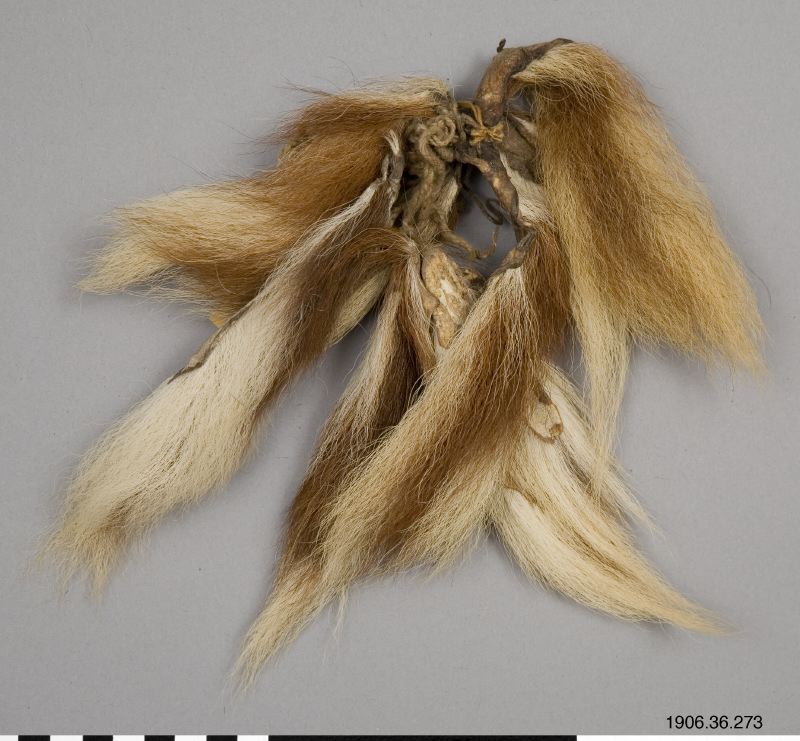
This is a taxidermied animal specimen mounted against a neutral gray background. The creature appears to be a wild cat or feline, with tan and cream-colored fur, displayed in a leaping or climbing pose with its body angled upward and its limbs extended. The specimen shows the full body from head to hind legs, with the tail curved naturally. The mounting appears to be a period taxidermy practice, with what looks like jute or hemp rope visible around the central support structure. The fur is relatively well-preserved, showing distinct color gradations from darker golden tones on the head and back to lighter cream on the underside and legs. This appears to be a museum specimen, likely from the early 20th century based on the mounting style and archival photography.
The dancing
This is not a dance image. The object is a taxidermied animal specimen, not a human or figure engaged in dance movement. There are no dancers, holds, frames, or any elements of choreographic composition.
The dance depicted
This object does not depict dance. It is a natural history specimen—a preserved animal mounted for museum display or study.
How it was made
This is a taxidermied animal specimen, a method of preserving and articulating animal skins, skeletons, and internal structures for scientific display. The mounting uses rope and a support armature visible in the photograph. The specimen was documented through archival black-and-white photography, likely a studio shot taken for curatorial record-keeping. The catalogue number visible in the image (1906.36.273) suggests this is part of an institutional collection.
About this work
This work has been misidentified or misfiled. It is a taxidermied feline specimen from a natural history collection, not a dance artwork. The object belongs in a zoological or natural history archive, not in a gallery of dance in art. It appears to have been included in the Europeana database through cataloguing error or a search retrieval mistake.
How to look at it
There is nothing in this image that relates to dance. A viewer approaching this expecting dance content will find only a preserved animal.
The period
The mounting style and photographic documentation suggest this specimen was catalogued in the early 20th century, when museum taxidermy was at its height and systematic photographic records of collections became standard practice. However, this is a natural history artifact, not a work of art or dance documentation.
Where it lives
The specimen is housed in Europeana (source noted in the catalogue record) and bears the accession number 1906.36.273. It appears to be part of a larger natural history collection.
Questions about this work
Why is a taxidermied animal in a dance gallery?
It should not be. This is a cataloguing error. The object is a natural history specimen and belongs in a zoological collection, not a gallery of dance in art.
What animal is this?
The specimen appears to be a wild feline, possibly a lynx, bobcat, or similar medium-sized cat species, based on the fur coloring, body proportions, and facial features visible. The exact species cannot be confirmed from the image alone.
More dance artwork