49 works in this view — arrow keys or swipe to move between them.
Dance in Art
danshänge dance ornament
Unknown artist
- Rights:
- Not recorded. Do not assume this image is free to reuse — check the source record.
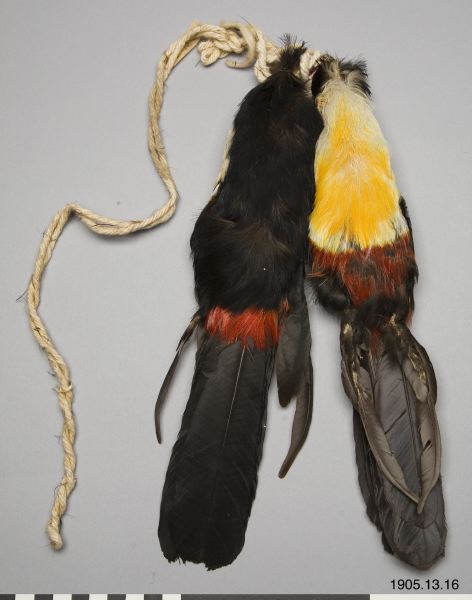
This ornament demonstrates how dancers incorporated natural objects and animal symbolism into performance, and how courtship and interaction between two figures—human or animal—could be a central motif in European folk dance. The survival of the object in museum form preserves evidence of a dance tradition that may otherwise have left no physical trace.
What you are looking at
This is a taxidermied or preserved ornament made from bird skins and feathers, mounted on a length of twine or rope. Two birds are joined at the body, displaying dramatically contrasting plumage: the left bird is predominantly black with dark feathers, while the right bird shows striking coloration in yellow, orange-red, and brown across the head, breast, and back, with dark flight feathers visible. The birds appear to be arranged in a posed, almost theatrical configuration—the positioning suggests a moment of interaction or dance-like engagement between the two figures. The rope attachment and museum mounting (visible in the catalogue number at bottom) indicate this is a historical museum piece, photographed against a neutral background to show the object clearly.
The dancing
The two birds are positioned in close proximity, their bodies nearly touching, creating a sense of dynamic relationship. The left bird's dark silhouette contrasts sharply with the colorful right bird, which dominates visually. The yellow and orange-red markings on the right bird's upper body and head suggest the plumage displays typical of courtship or territorial behavior in many bird species. The positioning—almost face-to-face or in profile to one another—reads as an interaction moment, though the exact stance of the feet and legs is obscured by the mounted presentation.
The dance depicted
The catalogue title 'danshänge dance ornament' suggests this object was understood as a dance ornament in its original context, likely from a Scandinavian or Germanic cultural sphere (Danish or German: *Tanzhänge* or similar, meaning 'dance hanging'). If this was worn or used in dance, it may have been attached to a dancer's costume—the rope attachment supports this interpretation. The interaction between the two birds could represent a mating dance, courtship ritual, or symbolic pairing. However, without clear documentation of how it was worn or used, the dance context remains inferred from the title rather than directly evident from the object's construction. The bright plumage of one bird may have made it especially visible and striking in performance.
How it was made
This is a composite taxidermy object made from preserved bird skins and feathers, likely dating to the 19th or early 20th century based on the preservation technique and museum catalogue practices. The birds have been carefully prepared and mounted together with twine or rope, suggesting professional craftsmanship. The neutral grey background and specimen photography indicate this is a museum piece, documented for archival purposes. The technique of mounting two contrasting birds together—one dark, one brilliantly colored—suggests intentional aesthetic composition, either for display value or to enhance the dance ornament's visual impact during wear.
About this work
This is a dance ornament composed of two preserved birds mounted together with rope, catalogued as a Scandinavian or Germanic piece. The bright plumage and interactive positioning suggest it may have been worn or displayed in a courtship or interaction dance, possibly attached to a performer's costume. The object exemplifies the European folk practice of incorporating natural materials—particularly striking animal elements—into dance costume and ritual. Its presence in a museum collection indicates recognition as a significant artifact of dance practice, though the specific dance tradition and performance context remain undocumented in the surviving record.
How to look at it
Observe the stark visual contrast between the two birds: the dark left figure provides a foil for the brilliant yellow, orange-red, and brown of the right bird's head and back. The positioning suggests a moment of interaction or engagement, possibly mimicking the ritualized displays of birds during courtship. The rope attachment draws the eye upward and suggests how the ornament would have hung or been secured during wear. Notice how the bright coloring of the right bird would have caught light and movement, making it highly visible in performance.
The period
The construction and preservation technique suggests a 19th-century date. The period saw growing European interest in folk traditions and ethnographic collection, which may explain how this dance ornament came to be catalogued in a museum rather than remaining in active use. The practice of adorning dancers with feathers and bird imagery has deep roots in Germanic and Scandinavian traditions, often connected to seasonal festivals, courtship rites, and ceremonial performances. The museum's documentation of this piece reflects 19th- and early 20th-century anthropological interest in preserving folk material culture.
Where it lives
This object is held in the Europeana digital collection, a pan-European aggregator of museum and cultural institution holdings. The museum catalogue number 1905.13.16 indicates it was accessioned in 1905, suggesting it came into a European museum collection in the early 20th century or slightly earlier. The precise museum holding institution is not specified in the available metadata.
Dance in this work
Questions about this work
What is a 'danshänge' or dance ornament?
A dance ornament (from German/Danish *Tanzhänge* or similar) is an object worn or carried by a dancer as part of costume or performance. This example combines two bird skins mounted on rope, suggesting it was either worn as a hanging ornament or used as a prop. The brilliant plumage would have enhanced visibility and movement during performance, making the dancer more striking to viewers.
Why would birds be used in a dance ornament?
Birds appear in European folk dance traditions as symbols of courtship, fertility, seasonal change, and interaction. The bright plumage of certain birds—like the yellow and red coloring visible here—would have made them visually arresting in performance. In many traditions, the ritualized displays and interactions of birds served as inspiration or metaphor for human dance, particularly courtship or couple dances.
How was this ornament used in dance?
The rope attachment suggests it was suspended from a costume or worn at the waist or shoulders. Without documentation, the exact use remains unclear, but the positioning of the two birds—appearing to interact—hints that the ornament may have been shaken or moved to create dynamic visual and possibly sound effects during performance. Such ornaments were common in Scandinavian and Germanic folk traditions.
More dance artwork