49 works in this view — arrow keys or swipe to move between them.
Dance in Art
dansprydnad dance attribute
Unknown artist
- Rights:
- Not recorded. Do not assume this image is free to reuse — check the source record.
For costume historians and ethnographers, the colors and construction of these feathers reveal material choices in dance dress and suggest trade routes or local resource availability. For dancers and teachers, such artifacts preserve tangible evidence of how performance bodies were adorned, even when the movement vocabulary itself is not documented.
What you are looking at
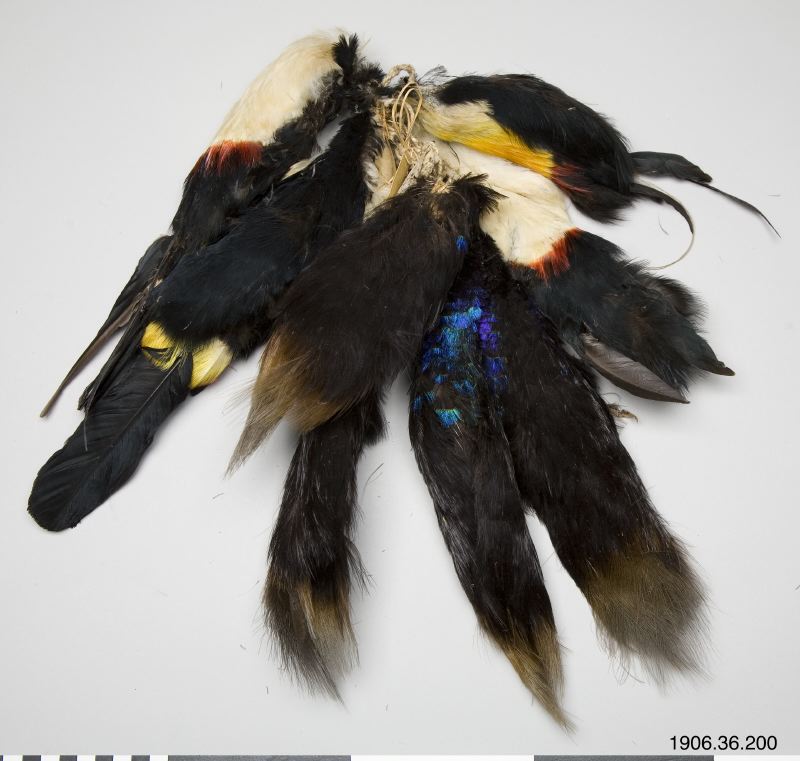
A collection of feathered ornaments arranged against a neutral background, displayed as a flat lay. The pieces are composed of variously colored plumage—predominantly black feathers interspersed with bands and patches of white, cream, yellow, rust-red, and iridescent blue. Several pieces appear to be constructed tail feathers or long plumes; others suggest shorter, bundled arrangements. The feathers show natural variation in length, some trailing past twelve inches. One piece features a visible iridescent blue section, possibly from a jay or similar bird. The arrangement is documentary in character, suggesting ethnographic or costume collection display rather than artistic composition.
The dancing
There are no human figures or dancers present. These are craft materials or costume components, not representations of human movement or body position.
The dance depicted
The title 'dansprydnad' (Swedish: dance ornament or dance adornment) indicates these are feathered accessories used in dance costumes or performance dress. However, the image shows the raw materials—prepared plumage in various colors—rather than dancers wearing them or the finished garments. The collection may represent materials from a regional folk tradition or historical theatrical practice, but the specific dance form cannot be determined from the objects alone.
How it was made
This is a photograph or digital documentation of a museum or collection specimen. The objects are preserved bird feathers and plume arrangements, likely prepared for archival storage or collection display. The neutral background and overhead framing follow museum cataloguing and documentation standards, indicating this is a catalogue or provenance image rather than an artistic work. The high resolution suggests modern digital photography.
About this work
This is a documented collection of feathered dance ornaments, photographed for archival purposes. The label 'dansprydnad' suggests these were wearable adornments for folk or theatrical dance, though the image shows only the component materials rather than their use or context. Such collections often represent local or regional costume traditions and can illuminate what dancers wore and how communities valued decorative fibers in performance practice.
Without context on the specific tradition, geography, or era these materials represent, the collection remains a material artifact of unknown dance practice. The preservation and cataloguing itself—part of the Europeana digital heritage collection—testifies to institutional recognition of dance costume and ornamentation as culturally significant.
How to look at it
Examine the color range and feather sources: the presence of iridescent blue suggests non-local birds, while the scale and bundling of pieces indicates how densely feathers were used in a single costume. The variation in plume length suggests different placement—longer feathers for visual impact at movement, shorter pieces for layering or structured areas. Note the construction: some pieces appear to be naturally occurring plume clusters, others deliberately bundled or bound.
The period
Folk and regional dance costumes across Northern Europe and beyond have incorporated feathered ornaments for centuries, often drawing on trade materials and local bird species. Institutional collection and preservation of such items became standard practice in the 19th and 20th centuries as museums began documenting vernacular culture and ethnographic material. The digitization and online cataloguing through Europeana reflects 21st-century efforts to make historical costume and material culture accessible to researchers and public.
Where it lives
The collection is held in Europeana's digital heritage database (accession 1906.36.200). This suggests the physical object resides in a European museum or archive, likely Scandinavian given the Swedish language label. The digital record provides no information on acquisition date, original context, or the specific dance tradition represented.
Questions about this work
What dance would have used these feathers?
The Swedish term 'dansprydnad' indicates folk or regional dance costume, but the archived materials provide no specific dance name or geographical context. Such ornaments were common in Scandinavian folk traditions, but also across Northern European carnival, masquerade, and celebratory dance. Without additional provenance information, the exact tradition cannot be identified.
Are these real feathers from real birds?
Yes. The variation in color, iridescence, and natural structure indicates these are genuine bird plumage, likely collected and prepared for costume use. The iridescent blue sections suggest imported or trade feathers from birds like jays; other pieces appear to be from common local birds.
How would dancers have worn these?
The image does not show how they were attached or worn. Based on their size and the bundling visible, they were likely sewn or tied to clothing—possibly a headdress, collar, belt, or hem—to create visual movement and spectacle during performance. The longest plumes would have created dramatic motion with the body.
More dance artwork