49 works in this view — arrow keys or swipe to move between them.
Dance in Art
dansskallra dance-rattle dance rattle
Unknown artist
- Rights:
- Not recorded. Do not assume this image is free to reuse — check the source record.
Dance history written only from visual representation misses the sound-world and the tactile experience of performance. This object restores the sensory dimension: a dancer gripping this warm clay, feeling its weight shift, hearing the scatter of seeds inside with every gesture.
What you are looking at
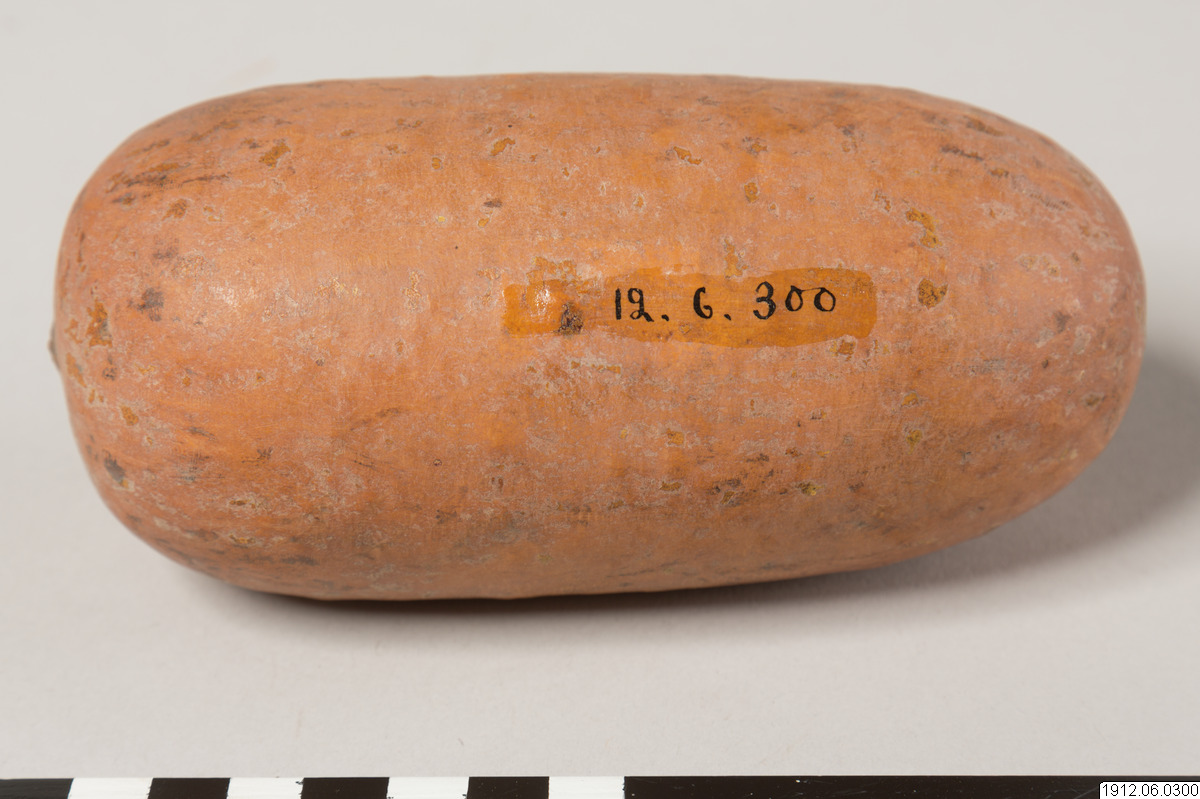
A terracotta rattle in the form of a smooth, rounded ovoid object, roughly the size of a child's fist. The surface is warm burnt orange in colour with darker patches and visible wear consistent with age and use. An applied label reading '19.6.300' in black ink marks the object's catalogue number. The rattle would have produced sound through internal pellets or seeds when shaken, a fundamental element of rhythmic accompaniment in dance.
The dancing
This is an instrument, not a depiction of dancers. The rattle's form is purely functional: a hollow vessel designed to be gripped and manipulated by hand. Its symmetrical, ergonomic shape suggests comfortable handheld use during extended performance or ritual activity.
The dance depicted
The 'dansskallra' (dance rattle) is a percussion instrument rather than a dance notation or representation. Such rattles accompanied dance across Northern European folk traditions, particularly in Scandinavian culture where the term originates. The dancer would shake it in rhythm, making it both a sound-making tool and a visible gesture element, with the musician and dancer often one person. The rattle's presence indicates dance contexts where rhythm-making and movement were inseparable practices.
How it was made
Handmade terracotta, formed from clay and fired. The surface shows unglazed, slightly roughened texture typical of prehistoric or ethnographic ceramics. The simple construction—a hollow body sealed after internal pellets were inserted—represents one of humanity's oldest musical technologies. No wheel marks or tool impressions are visible, suggesting hand-modelling technique.
About this work
This is a functional dance rattle from a Scandinavian folk tradition, now held as a museum specimen. It belongs in a dance archive not as a visual record of choreography but as material evidence of how dance was accompanied and experienced. The instrument itself is an active participant in the dance event: its weight, texture, and sound-producing capability shaped how a dancer moved and how spectators heard the movement. Museum catalogues often separate dance objects from dance documentation, but a rattle cannot be understood apart from the body that held it.
How to look at it
Handle the form in your mind: this object is meant to be held, thrown slightly upward, caught, shaken with wrist or arm rotation. The dancer's grip would affect the sound—loose or tight, accelerating or sustaining. Notice that the rattle is neither decorated nor special-looking; it is workaday and intimate, a tool worn smooth by use. The uneven patina suggests it has been held in hands many times.
The period
The catalogue number and museum context suggest early 20th-century collecting and classification of ethnographic materials. Such objects entered European museums during a period when folk traditions were being documented—sometimes respectfully, sometimes as part of salvage anthropology narratives. The rattle's unglazed, hand-modelled form may reflect continuity with much older traditions, or it may represent a recent craft object recorded as 'traditional'. Without archaeological or archival context, the rattle's actual age cannot be determined from the object itself.
Where it lives
The object is held in a Europeana member collection (institution not identified in the available record). The catalogue number 19.6.300 suggests it entered the collection in 1919 or was accessioned under that system. Europeana records indicate it is a museum specimen, likely collected as an example of Scandinavian material culture in the early modern ethnographic period.
Dance in this work
Questions about this work
How was a dansskallra actually used in dance?
The dancer held the rattle in one or both hands and shook it to produce rhythm. It served simultaneously as an instrument and as a visual prop, its movement visible to spectators while its sound drove the tempo. In some traditions, a single performer danced and accompanied themselves; in others, one person danced while another played the rattle. The internal pellets or seeds produced a rattling or buzzing sound distinct from drums or bells.
Why is a rattle in a dance archive?
Dance is not only movement; it is an ecosystem of sound, music, and tactile sensation. A rattle is evidence of how rhythm was created, how a dancer's body was organised in time, and what a performance felt and sounded like. Without the rattle, we have only half the story.
Can we tell how old this rattle is?
The museum accession number and Europeana record indicate it was catalogued in the early 20th century, but the rattle itself could be much older, or it could have been made recently in a traditional style. Terracotta does not have a reliable visual date signature. Only scientific analysis (thermoluminescence dating) or archival research could establish its actual age.
What does 'dansskallra' mean?
'Dansskallra' is Swedish/Scandinavian: 'dans' means dance, and 'kallra' or 'skallra' relates to rattling or shaking sound. The term describes the object's function and cultural origin at once.
More dance artwork