25 works in this view — arrow keys or swipe to move between them.
Dance in Art
The balloon polka Laeronaute A Wallerstein ld1-164614
Unknown artist
- Dance:
- Polka
- Rights:
- Not recorded. Do not assume this image is free to reuse — check the source record.
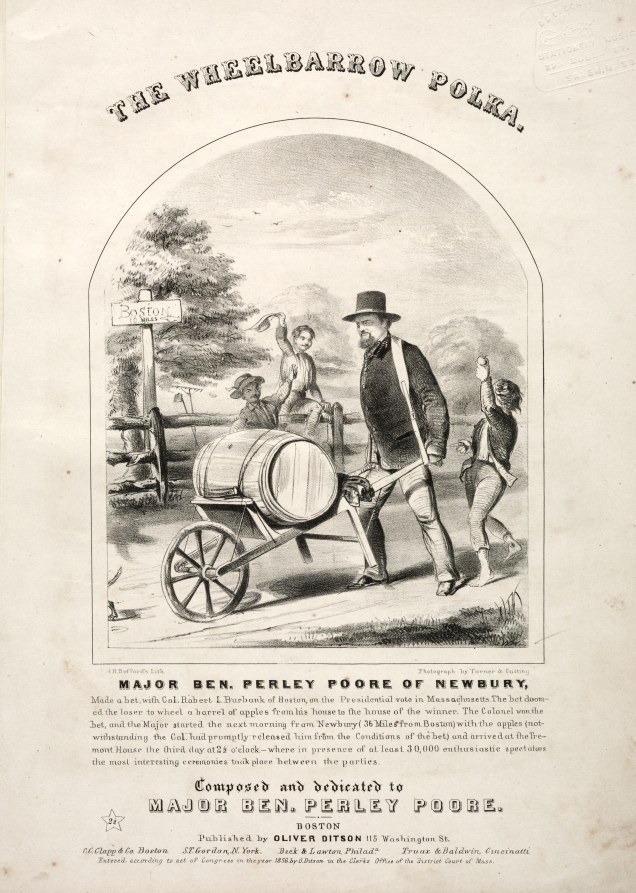
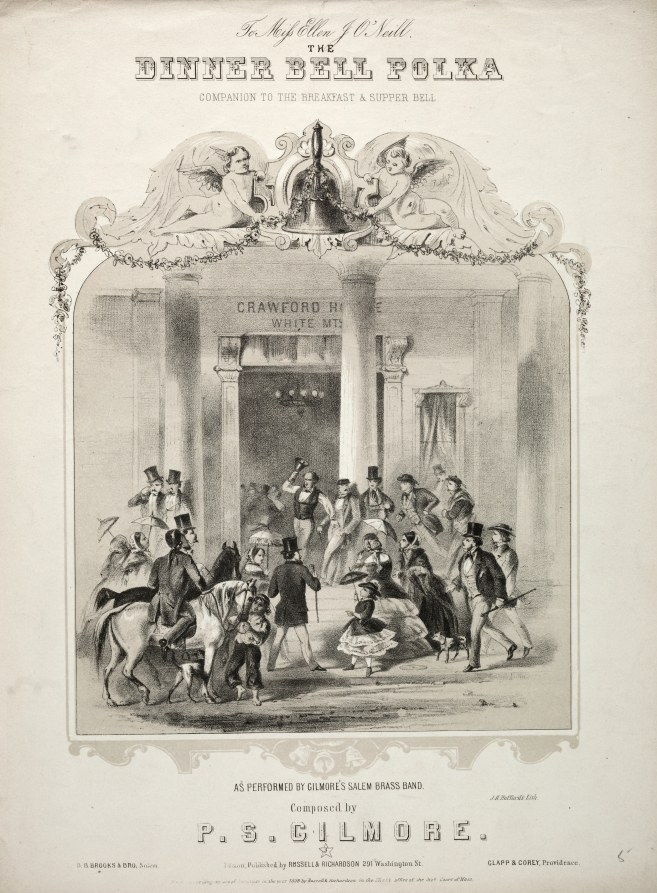
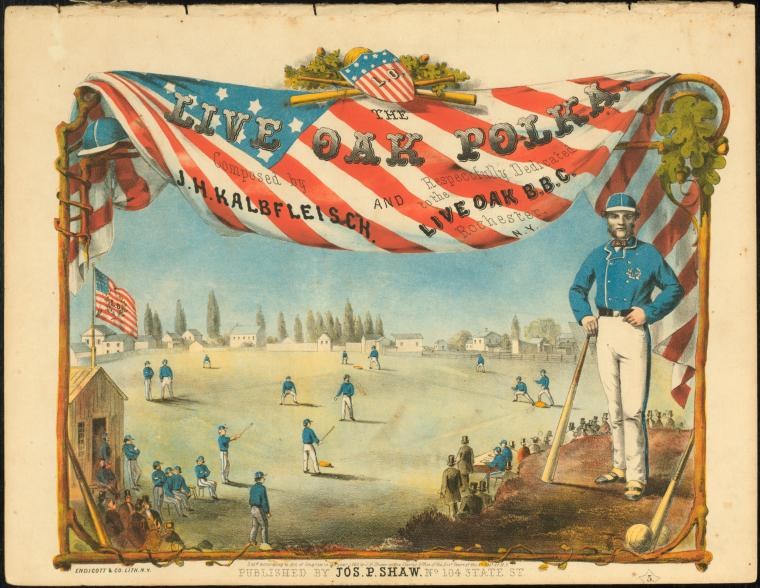
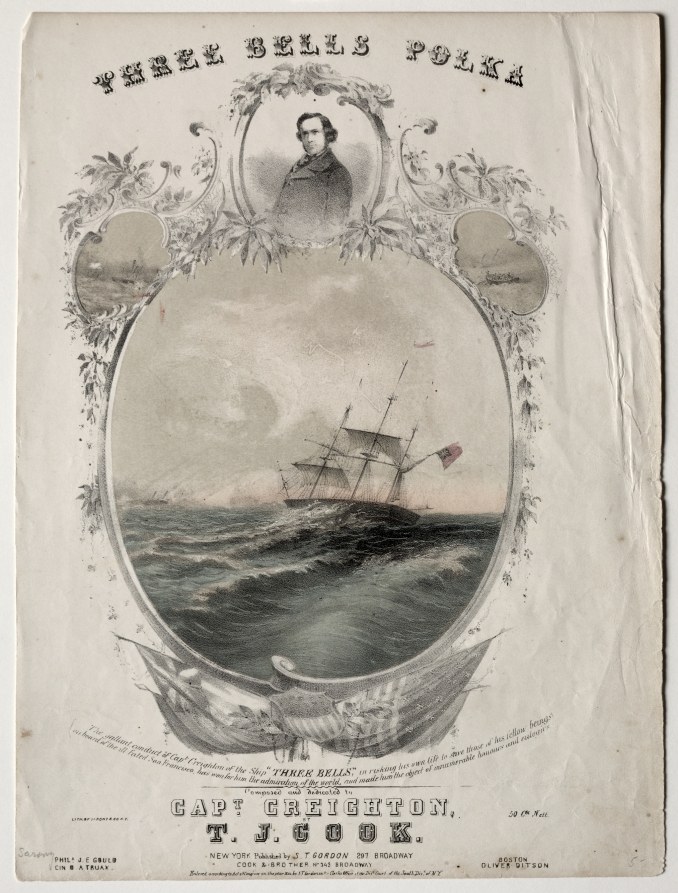
Polka title pages like this one are rare visual records of how 19th-century popular dances were packaged, promoted, and imagined by the publishing industry. The vignettes show that polka was understood as a democratic, romantic, and geographically adventurous dance—available to anyone who could afford sheet music—rather than as a formal ballroom technique. The work documents a moment when lithography and hand-coloring made decorated music affordable to ordinary households.
What you are looking at
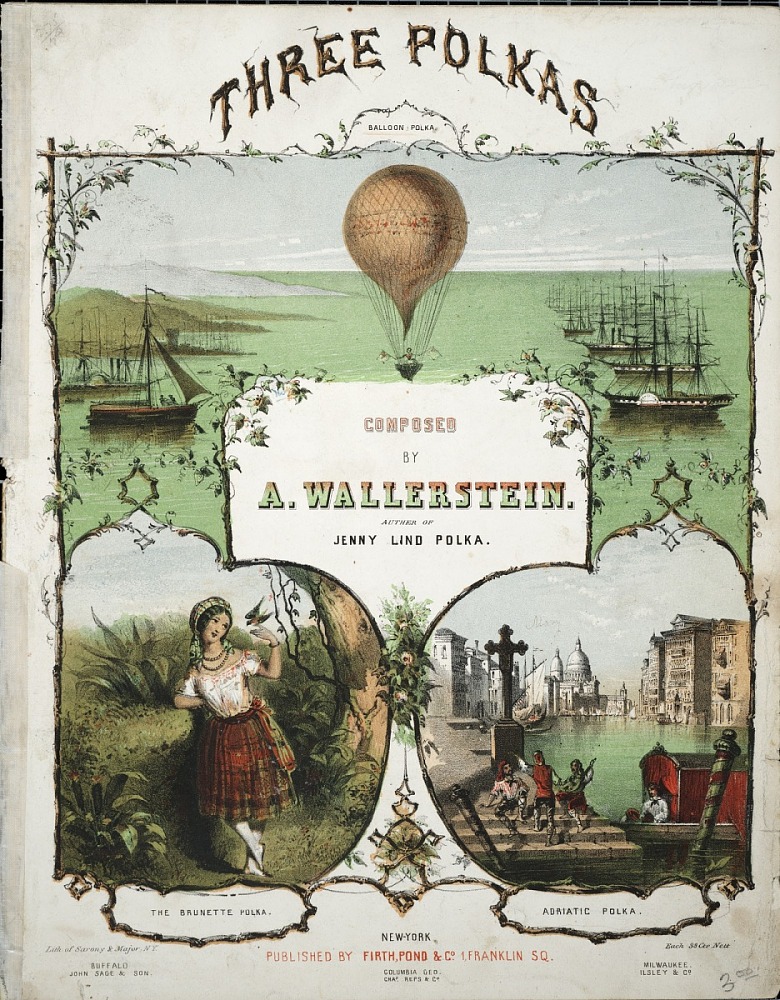
A decorative title page for a collection of three polkas composed by A. Wallerstein, framed by an ornamental vine border. The central composition is divided into four vignettes: at top, a hot-air balloon labeled "Balloon Polka" descends toward a harbor lined with tall ships; at bottom left, a woman in folk costume (red skirt, white blouse, bonnet) dances outdoors in rural dress, labeled "The Brunette Polka"; at bottom right, labeled "Adriatic Polka," a group of figures in period dress dance by a waterside city with church domes visible across the water. Each scene is contained in a decorative oval frame. The overall design is hand-colored, with soft watercolor washes in greens, blues, and flesh tones giving an atmospheric quality to each vignette. The composition celebrates both geographic and romantic themes—adventure, nationality, courtship—connecting polka dancing to travel, landscape, and social life.
The dancing
The figures are small and impressionistic rather than anatomically precise. In the folk scene (bottom left), the woman stands in a relaxed pose, one arm raised, her body angled as if mid-step or about to move; her posture suggests the informal, playful nature of folk dance. In the waterside scene (bottom right), multiple figures are grouped together in animated poses near a gondola or barge, their silhouettes suggesting lively social interaction. The figures are clothed in period dress (19th-century coats and skirts), and the artist has not rendered detailed footwork or partnering holds—the emphasis is on the festive, social occasion rather than technical execution.
The dance depicted
This is a polka collection, and the Brunette Polka vignette shows a woman in folk or peasant dress dancing outdoors, consistent with polka's origins in Central European folk culture. The Balloon Polka and Adriatic Polka connect the dance to place and novelty: the balloon represents modern spectacle and movement through air, while the Adriatic reference suggests Italian or Slavic geography. Polka was a couple dance of enormous popular success in the mid-19th century, characterized by a quick 2/4 tempo and a distinctive three-step hop. The scenes here emphasize polka as a dance of common people, travel, and romantic possibility rather than formal ballroom technique—consistent with how polka dances were published and consumed as popular sheet music throughout the 19th century.
How it was made
This is a hand-colored lithograph, recognizable from the characteristic soft tonal gradations, the fine linear detail in the decorative borders, and the delicate watercolor washes applied to the printed base. Lithography allowed for rapid reproduction of decorative title pages for sheet music and brought them to a broad middle-class market. The color is applied unevenly and with variation typical of hand-coloring workshops—each copy could vary slightly depending on the colorist's hand. The technique permitted both fine detail (in the vine borders and city skylines) and painterly atmosphere (in the sky and water), making it ideal for romantic or sentimental designs marketed to amateur musicians and dancers.
About this work
This is a decorative title page for a collection of three polka compositions by A. Wallerstein, published in New York by Firth, Pond & Co. (a major mid-19th-century sheet-music publisher). The work is a hand-colored lithograph, a common and affordable format for bringing music and dance imagery into middle-class homes. The three polkas are each illustrated by a charming vignette—one showing folk dancing, one a fantastical balloon journey, one an Adriatic waterside scene—connecting the dance to themes of place, travel, and courtship. It is a primary document of polka as a popular social dance in America during the mid-1800s, and an example of how dance was marketed through print.
How to look at it
Look first at the overall structure: how the title page uses the four vignettes to suggest polka as both a folk dance (bottom left) and a fashionable social event (bottom right and top). Notice how the artist chose intimate, informal moments rather than formal partnering—the woman outdoors alone, the group by the water animated but not in a regular dance formation. The decorative border of vines and flowers frames the whole design, humanizing it and making it approachable for amateur dancers. The hand-coloring—particularly the soft greens of the landscape and the pale washes of water and sky—gives each scene a romantic, wistful quality that had enormous appeal to the young women and couples who bought such music.
The artist
The composer A. Wallerstein (also known as the author of "Jenny Lind Polka") was active in the mid-19th century as a popular dance composer publishing through major New York houses. Wallerstein's name appears on multiple polka publications of the 1850s–1860s, contributing to the vast catalog of light, commercially successful dance music that flooded the American market. The Wallerstein name is Germanic, consistent with the period's association between polka composition and Central European or German-American composers, though details of his biography remain obscure.
The period
Polka erupted into popular culture in the 1840s and remained the dominant partner dance throughout the 1850s and 1860s in America and Europe. The dance was embraced enthusiastically by the middle class as a break from the formality of the waltz and the rigidity of quadrille figures; its quick tempo and sociable character made it ideal for amateur dancers. Sheet-music publishers in New York, Philadelphia, and other American cities produced enormous quantities of polka compositions, many with decorative, romantic, or comedic title pages to appeal to young people and couples. Hand-colored lithographed title pages were a standard marketing tool, often the only visual promotion a piece received. The presence of non-European settings (Adriatic, balloon—modern technology) in this particular work reflects polka's association with cosmopolitanism and novelty during the mid-Victorian period.
Where it lives
The work is held in the Smithsonian Institution. It is a published sheet-music title page, one of thousands of similar lithographed and hand-colored designs produced by the New York firm Firth, Pond & Co. during the mid-19th century.
Dance in this work
Questions about this work
What is a polka, and why was it so popular?
Polka is a quick, lively couple dance in 2/4 time, originating in Central Europe in the 1830s–1840s. It became explosively popular because it was easier to learn than the waltz or quadrille, cheerful, and danced to increasingly catchy music. Unlike the formal ballroom dances of the era, polka was democratic—anyone could do it—and it became the dance of choice for middle-class people, country dancers, and city revelers alike throughout the 1850s–1870s.
Who was A. Wallerstein?
Very little is known about Wallerstein beyond the title pages and sheet music that bear his name. He was active as a composer in mid-19th-century New York and published polka and other dance music through Firth, Pond & Co., one of the largest American sheet-music publishers. His work was popular enough to warrant decorative lithographed title pages, but no comprehensive biography survives.
Why are the three polkas illustrated with such different scenes?
Each title suggests a story or place: the Balloon Polka celebrates modern technology and flight; the Brunette Polka shows a folk-dancing woman (romantic and rural); the Adriatic Polka connects to an exotic or foreign place. This variety made the collection appealing as a gift or purchase—you were buying adventure and novelty as much as music. Themes of travel, nature, and courtship were standard marketing for polka music.
Is this a painting?
No. This is a lithograph—a print made from a drawing on stone—that was then hand-colored with watercolor or similar medium. Lithography allowed thousands of copies to be made affordably and distributed to amateur musicians. Each copy was colored by hand, so there is some variation from copy to copy.
More Polka artwork