49 works in this view — arrow keys or swipe to move between them.
Dance in Art
Les Noces de Pelée et de Thétis
Unknown artist
- Collection:
- Prints depicting dance
- Source:
- New York Public Library
- Rights:
- Public domain — free to use, share and adapt.
- Recorded as:
- Public Domain
This print documents the visual language of Renaissance and early modern court spectacle, where classical mythology was staged as an occasion for formal movement and dancing. It shows how dance and processional gesture were integrated into courtly entertainment and mythological narrative, and how printmaking circulated images of such spectacles to a learned audience.
What you are looking at
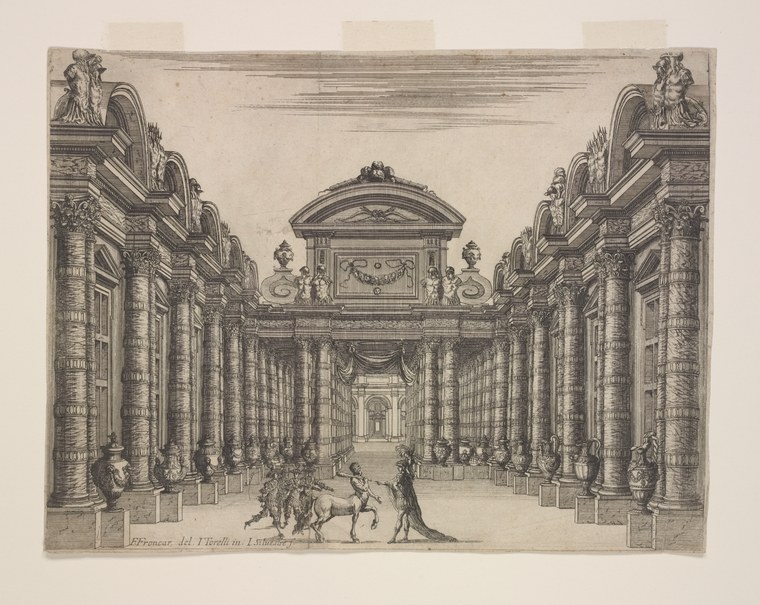
A grand classical colonnade recedes into deep perspective, lined with tall Corinthian columns on both sides that create a stately corridor. The floor is patterned and the walls between columns are decorated with relief panels. At the far end, a domed structure topped with sculptures frames the vanishing point. The foreground shows a mythological scene in action: a figure on horseback approaches from the right, while pedestrian figures in classical dress occupy the space—some standing in groups, others gesturing dramatically. The composition uses the architectural framework to direct attention toward the narrative unfolding in the middle distance. The print employs fine hatching and line work typical of engraving, creating tonal depth and shadow throughout the colonnade.
The dancing
The human figures are rendered in classical contrapposto stance and dramatic pose, with some figures gesturing expressively with raised arms. The mounted figure dominates the composition by moving through the space on horseback. The pedestrian figures wear classical drapery and appear to be responding to the mounted figure—some turning, some with arms extended in greeting or astonishment. The spacing and grouping suggest a formal ceremonial procession or mythological encounter rather than a social dance with paired partners or strict formation.
The dance depicted
This appears to depict a moment from classical mythology—likely the wedding procession or ceremonial encounter of Peleus and Thetis, as the title suggests. If dance is present, it is embedded in the formal classical movement and gesture of the figures rather than in recognisable social or theatrical dance steps. The mounted approach and the responding gestures of the standing figures suggest a processional or ceremonial movement that may have included dancing as part of the mythological narrative, but no specific dance style is legible from the postures shown.
How it was made
This is an engraving, identifiable by the fine parallel hatching lines that build tone and shadow, the precise linear definition of architectural elements, and the characteristic bite and register of copper-plate printing. The technique allowed for wide circulation of classical and mythological imagery in the 16th and 17th centuries, serving both as a record of artistic or theatrical conception and as a source for humanist learning. The architectural precision and mythological subject suggest this was addressed to an educated audience familiar with classical sources and contemporary court spectacle.
About this work
This engraving depicts a moment from classical mythology—the wedding of Peleus and Thetis—staged within an idealized classical architecture. The composition uses a deep columned perspective to frame a ceremonial or processional encounter between mounted and pedestrian figures in classical dress. While the title names a wedding, the image shows formal classical gesture and movement rather than a recognisable dance form; it records instead the kind of mythological spectacle that courts of the Renaissance and early modern period mounted as part of their festival culture, where dance, procession, and dramatic action were interwoven.
How to look at it
Attend to the architectural framing: the colonnade is not mere setting but a classical order that dignifies and formalises the human action unfolding within it. Note the mounted figure's entry into this formal space and the response of the standing figures—the raised arms, the turning bodies, the grouping—which suggests a moment of ceremonial greeting or recognition rather than the synchronised movement of a dance. The engraver has chosen to freeze the narrative at a moment of encounter, using perspective and composition to draw the eye from the architectural frame to the human drama.
The artist
The artist is not recorded. The print's style, subject matter, and technical execution suggest a northern European origin in the 16th or early 17th century, when engravings of classical and mythological scenes were produced in workshops in the Low Countries, Germany, and Italy for circulation among courts and educated collectors.
The period
The Renaissance and early modern court was obsessed with classical antiquity as a model for courtly behaviour and spectacle. Mythological narratives, especially those involving weddings and processions, became occasions for elaborate festivals that combined music, dance, poetry, and visual display. Engravings of such scenes circulated as records of performances or as designs for future ones, shaping what courts across Europe understood as an appropriate blend of classical allusion and contemporary display.
Where it lives
The work is held in the New York Public Library's prints collection, which preserves engravings documenting historical and mythological subjects. It is catalogued under the broad category of dance imagery, reflecting the collection's interest in movement, spectacle, and performance across periods and genres.
Dance in this work
Questions about this work
Is this a record of an actual performance?
Likely not. The print depicts a mythological scene—Peleus and Thetis—in an idealized classical setting. It may represent a court spectacle or festival that was performed, or it may be a design or conception for one. Engravings of this type circulated among courts and patrons as models for festivals to come.
Where is the dance?
The formal gestures and processional movement of the figures constitute the choreography here. In Renaissance court spectacle, dance was woven into procession, narrative, and mythological enactment rather than existing as a separate technical discipline. The raised arms, turning bodies, and grouping of the figures suggest movement and response, but not a recognisable ballroom or theatrical dance form.
What does the colonnade represent?
The classical architecture—the Corinthian columns and domed structure—frames the action as noble and timeless. It places the mythological narrative within an idealized classical order, suggesting that courtly ceremony and movement were understood as a modern expression of ancient virtue and beauty.
More dance artwork





