49 works in this view — arrow keys or swipe to move between them.
Dance in Art
Les noces de Pelée et de Thétis
Unknown artist
- Collection:
- Prints depicting dance
- Source:
- New York Public Library
- Rights:
- Public domain — free to use, share and adapt.
- Recorded as:
- Public Domain
This work is essential for understanding how Renaissance and Baroque courts visualized classical mythology—the source material for many surviving ballets and court spectacles. The engraving shows the architectural and processional conventions that shaped how dance was staged and framed as a form of courtly display and intellectual entertainment.
What you are looking at
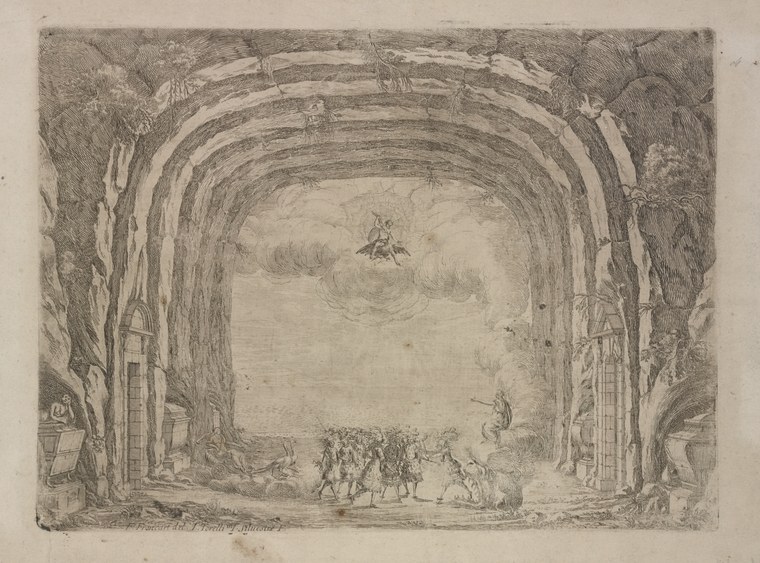
A grand architectural setting dominates this engraving: a massive stone archway with deeply recessed arches frames an expansive theatrical space. The archway's rusticated stonework and supporting columns suggest a classical or Renaissance palace interior. Beyond the arch, in the middle distance, a procession or gathering of figures moves across a broad stage space. The foreground shows a group of attendants or minor figures at ground level near the arch's base. The sky visible through the archway is luminous and filled with clouds; a chariot or flying figure appears in the upper distance, suggesting divine or mythological intervention. The entire composition uses dramatic contrast between the heavy shadow of the arch's interior and the bright, open space beyond, creating a sense of theatrical spectacle and classical grandeur appropriate to a wedding of gods.
The dancing
Multiple small figures are distributed across the composition, their forms rendered in fine detail but small scale relative to the architecture. In the foreground, several figures stand or move with formal bearing near the arch base, their postures upright and deliberate. The group in the middle distance appears to process or gather in formation, suggesting organized ceremonial movement rather than free dance. The figures wear what appears to be classical or draped costume. The chariot or divine figure above suggests a supernatural dimension to the event. The overall arrangement is processional and hierarchical rather than intimate or partner-focused.
The dance depicted
This engraving depicts the wedding of Peleus and Thetis, a foundational myth in classical literature (notably in Homer and Ovid). The work captures a key moment in the mythological narrative: the divine wedding feast and celebration. While not a depiction of social or theatrical dance as performed, the scene represents the kind of classical mythological subject that inspired theatrical ballet and court spectacle, particularly during the Renaissance and Baroque periods. The procession and ceremonial arrangement suggest the formality of court ballet's processional figures and entrées, though no specific dance technique is visible. The work documents the visual and narrative world that choreographers drew upon when creating ballets about classical mythology.
How it was made
This is an engraving, identifiable by the fine parallel hatching lines (visible in the shading of the arch and figures) characteristic of the medium, and the crisp linear definition of forms. Engraving allowed for precise tonal gradation and architectural rendering, making it the ideal medium for elaborate mythological and architectural scenes intended for circulation among educated audiences. The fineness of the line work and the careful composition suggest a work of high technical accomplishment, likely created for a printed book or series depicting classical subjects. The technique would have enabled wide distribution of this image of classical spectacle to courts and collectors across Europe.
About this work
This engraving depicts the wedding of Peleus and Thetis, the foundational myth of the Trojan War, rendered as a grand classical architectural and theatrical scene. The work is not a record of actual dance performance but rather an imagining of how classical mythology might be visualized in a theatrical or palatial setting—the kind of visual precedent that shaped how Renaissance and Baroque courts staged ballets and spectacles around classical narratives. The composition emphasizes ceremony, procession, divine intervention, and architectural grandeur, all central to the court ballet aesthetic. For historians of dance, this image documents not technique but the visual imagination and narrative world that informed the creation of mythological ballets.
How to look at it
Attend to the architectural framing: the massive arch is not merely a setting but the dominant visual fact, suggesting the theatrical proscenium and the way Renaissance designers used perspective and grand structures to contain and display human figures. The procession within uses the deep stage space created by the receding arches, a compositional principle borrowed from both classical Roman architecture and Renaissance perspective drawing. The divine figure in the upper sky introduces the supernatural element—characteristic of court ballet spectacle, which often featured gods and magical interventions. The small scale of the human figures relative to the architecture emphasizes the grandeur of the occasion and the architectural magnificence of the setting.
The period
This engraving likely dates to the 16th or 17th century, an era when classical mythology was central to both courtly spectacle and printed culture. The Renaissance revival of classical learning produced elaborate court ballets based on mythological subjects—works like the Florentine intermezzi and French court ballets—which combined music, dance, poetry, and elaborate stage machinery. Engravings like this one documented and circulated images of these spectacles, serving as records and inspiration for other courts. The style of the engraving and the architectural vocabulary suggest a period when the classical arch and perspective scenery were dominant in both visual art and theatrical design.
Where it lives
Held in the New York Public Library's collection of prints depicting dance. This collection gathers printed images across media and periods that document or represent dance in visual culture.
Dance in this work
Questions about this work
Is this showing actual dance or just a mythological scene?
This is a mythological subject—the wedding feast of Peleus and Thetis from classical legend—rendered as a grand theatrical and architectural composition. It is not a record of a specific dance performance, but rather the kind of classical narrative that Renaissance and Baroque courts staged as elaborate spectacles combining dance, music, and scenery. The engraving documents the visual world in which court ballet developed.
What is the significance of the grand arch?
The massive stone archway framing the scene echoes both classical Roman architecture and Renaissance theatrical design. Courts of the period used elaborate perspective scenery and architectural elements to stage ballets and spectacles, and this engraving shows how the arch functioned as both setting and frame—containing the action and creating a sense of theatrical grandeur appropriate to mythological subjects.
Who performed this ballet?
This image does not depict a specific historical performance. Rather, it shows how artists and designers imagined classical mythological subjects as theatrical spectacles. Many courts created their own ballets and intermezzi based on classical narratives like the wedding of Peleus and Thetis, and this engraving represents the kind of visual precedent that shaped how these narratives were staged.
Why is this in a dance collection?
While not a direct representation of dance technique or performance, this engraving documents the visual and narrative culture in which court dance developed and was staged. It shows the architectural language, mythological subject matter, and conception of theatrical space that shaped how Renaissance and Baroque courts created and presented ballets.
More dance artwork





