49 works in this view — arrow keys or swipe to move between them.
Dance in Art
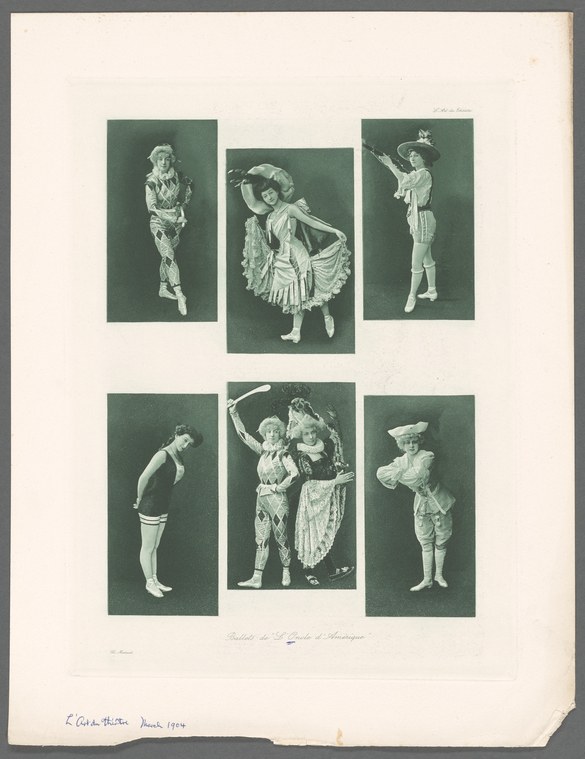
Ballets de L'oncle d'Amerique
Unknown artist
- Collection:
- Prints depicting dance
- Source:
- New York Public Library
- Rights:
- Public domain — free to use, share and adapt.
- Recorded as:
- Public Domain
This engraving documents the visual language and costume vocabulary of 18th-century French theatrical dance, a period when ballet was transitioning from court spectacle to public commercial theatre. For historians of dance and costume, it provides precise detail about how performers dressed, how their bodies were used in narrative and acrobatic performance, and what theatrical character types audiences expected to see. For anyone studying the evolution of ballet or pantomime, it is evidence of how movement and character were communicated through pose, costume, and physical virtuosity in the ancien régime.
What you are looking at
This is a composite engraving showing six theatrical figures arranged in two rows of three against dark backgrounds. Each figure is isolated in its own rectangular frame. The top row presents three characters in different poses: left, a figure in a decorated jacket and breeches in a standing attitude; center, a woman in an elaborate dress with a wide skirt and plumed hat, striking a theatrical gesture with one arm raised; right, a figure in a patterned costume with a tall headdress, one arm extended. The bottom row mirrors this arrangement: left, a figure in revealing costume bent forward in an acrobatic pose; center, two figures in a dynamic embrace or lift, the upper figure arched backward; right, a standing figure in formal dress with an ornate hat. All figures wear 18th-century stage costume with bright, patterned fabrics, feathered hats, and decorative detail. The printing is fine-lined and precise, with cross-hatching to create shadow and texture. The title at the bottom reads "Ballets de L'oncle d'Amérique" (Ballets of Uncle America).
The dancing
The six figures display the vocabulary of pantomimic theatre and acrobatic performance popular in 18th-century France. Each is posed in a distinct attitude: some stand upright with arms in formal theatrical positions, others are captured mid-gesture with exaggerated arm movements conveying emotion or narrative intent. The central pair in the bottom row perform an athletic lift or embrace, suggesting narrative drama and physical virtuosity. The figure at bottom left is captured in a deep forward bend or contortion, demonstrating the flexibility required of stage performers. Posture, spacing, and isolation of each figure emphasizes variety of character and choreographic type rather than ensemble unity.
The dance depicted
This appears to document a French theatrical dance spectacle, most likely from the 1750s–1770s, combining elements of pantomime, comic ballet, and acrobatic display. The title references "Uncle America," suggesting satirical or exotic narrative content typical of the period's fascination with the New World. The costumes, poses, and theatrical framing indicate this is a record of staged theatrical dance rather than court or social dance. The figure types—the acrobat, the dramatic couple, the pantomimic actors in exaggerated poses—suggest this was a mixed entertainment piece combining narrative pantomime with dancing and physical feats. No specific identified dance form is visible, but the context points to French theatrical dance of the pre-revolutionary period.
How it was made
This is a line engraving, identified by its fine parallel lines and cross-hatching to build tone and shadow, and by its capacity to render precise detail in costume and facial features. The technique allows the artist to create sharp contrasts between figures and dark background, and to document costume design with accuracy. Fine engravings of this kind were typically printed in multiple copies on paper, making them relatively affordable circulation objects for theaters, collectors of costume imagery, or those documenting theatrical spectacle. The quality of execution and composition suggests this was a commercial theatrical print, possibly sold to document a successful production or to advertise the dancers and spectacle involved.
About this work
This engraving documents a theatrical dance spectacle titled "Ballets of Uncle America," presenting six performers in 18th-century stage costume in isolated tableau-like poses. The work is a record of theatrical dance during the period when French ballet was expanding beyond court settings into commercial theatre, and when spectacle, pantomime, and physical virtuosity were central to popular entertainment. The isolation of each figure and precision of costume detail suggests this was both a theatrical souvenir and a document of performance practice and costume design.
The print belongs to a large body of 18th-century theatrical imagery produced to circulate knowledge of celebrated performers and productions to a public beyond the theater. Such engravings functioned as both promotional materials and historical records, allowing viewers to study the costumes, poses, and character types that defined stage dance of the period.
How to look at it
Examine each figure individually to understand the range of poses and character types in a single spectacle. Notice how the artist has used costume detail—the feathered hats, patterned breeches, wide skirts, and decorative jackets—to signal social status and theatrical character. The central pair in the bottom row merits close attention for what it reveals about the athleticism expected of stage performers: the lift or dramatic embrace shows that partnering involved significant physical demand. The contorted pose at bottom left documents the flexibility required and displayed on stage. Compare the standing figures to understand the theatrical vocabulary of gesture and arm position.
The period
This work dates to the mid-18th century, a period of significant change in French theatrical dance. The decline of elaborate court ballet at Versailles after the 1720s meant the migration of professional dancers to commercial theaters in Paris and other cities. During the 1750s–1770s, theatrical dance increasingly mixed classical ballet technique with pantomime, acrobatics, and comic character work. The spectacles often drew on exotic or satirical subjects—the reference to "Uncle America" fits this pattern of fascination with the New World, which fed theatrical imagination across Europe in the decades before the French Revolution. Engraved costume studies and character prints like this one were significant vehicles for circulating knowledge of celebrated dancers and productions to audiences who might not attend performances.
Where it lives
This engraving is held in the New York Public Library's collection of theatrical dance prints. It is catalogued as part of the library's holdings of prints depicting dance, a collection that documents performance practice and costume across several centuries.
Dance in this work
Questions about this work
What is 'Uncle America' and why does this ballet reference it?
The title likely references a theatrical spectacle or ballet-pantomime that drew on contemporary fascination with the New World. In the 18th century, exotic and satirical subjects (including comedic treatments of foreign lands and peoples) were popular in French theater. 'Uncle America' was probably a comic or novelty spectacle capitalizing on this fascination.
Who were these dancers and where was this performed?
The engraving does not identify the individual performers by name. Such prints were produced to document theatrical spectacles of the period but often recorded the costume and character types rather than individual dancers. The work was likely performed in a commercial Parisian theater or traveling company in the mid-18th century, but the specific venue and dancers are not documented in the available record.
What does 'theatrical' dance mean in this period, and how is it different from ballet?
In the 18th century, 'theatrical dance' encompassed not only ballet technique but also pantomime (expressive gesture telling a story), acrobatics, and comic character work. Ballet was the technical foundation, but stage spectacles mixed these elements to entertain diverse audiences. This image shows that range: dancers in formal ballet costume alongside acrobatic performers and those clearly engaged in narrative pantomime.
More dance artwork





