49 works in this view — arrow keys or swipe to move between them.
Dance in Art
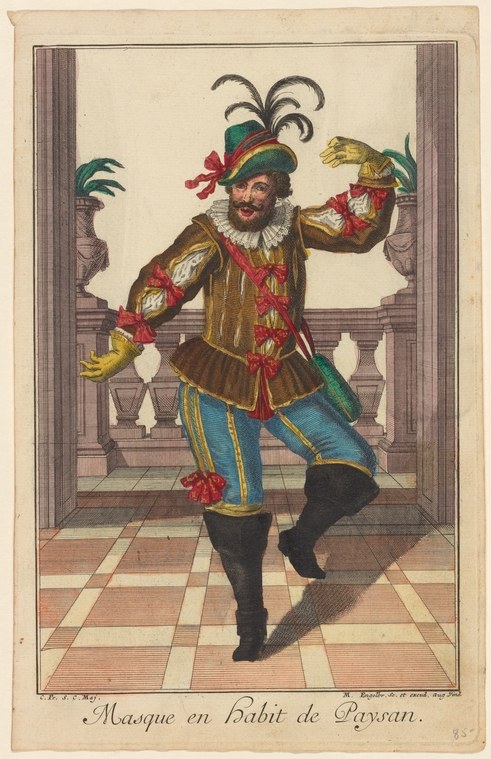
Masque en habit de paysan: C. Pr. S. C. Maj. M. Engelbr. sc. et excud. Aug[ustae] Vind[elicorum]
Unknown artist
- Collection:
- Prints depicting dance
- Source:
- New York Public Library
- Rights:
- Public domain — free to use, share and adapt.
- Recorded as:
- Public Domain
This image documents the visual language of 18th-century theatrical comedy and the performance traditions that fed into early modern entertainment. For dancers and historians, it shows how dance, mask, and costume worked together in a tradition outside formal court or stage ballet—a tradition where physical wit and exaggerated gesture were as important as footwork.
What you are looking at
A single male figure in an ornate costume stands centered in a columned interior space with a checkered floor in perspective. He wears a richly decorated coat in olive-green and red with gold trim, a white ruffled collar, and red ribbon bows at the shoulders and knees. A tall feathered hat tops his head. His posture is animated and theatrical: one leg is raised and bent, the other planted firmly, and both arms are raised with elbows bent, one hand holding what appears to be a small purse or ornament. His face shows a broad smile. The setting is austere—fluted columns frame the scene on either side, and the floor recedes into depth with alternating light and dark tiles. The figure's dynamic pose and theatrical dress suggest a moment of exuberant performance rather than a formal court dance.
The dancing
The single dancer stands in a pose of exaggerated sprightliness typical of character comedy: weight shifting, one leg raised in a bent position, arms akimbo with elbows sharply angled. The frame is asymmetrical and full of motion—the body is not in a closed or formal position. The raised leg and angled arms suggest quick, articulate footwork and a performance designed to amuse rather than impress by grace. This is the posture of a comedian or fool, not a courtier.
The dance depicted
The title *Masque en habit de paysan* (Masked figure in peasant dress) indicates this depicts a character from the masked comedies or *commedia dell'arte* tradition, specifically a peasant or rustic type. The ornate costume contradicts the peasant label—this is a theatrical exaggeration of rustic dress by an urban performer. The animated pose and theatrical setting suggest a moment from a comedy dance or jest, where the dancer adopts a stock character and performs with physical wit. The raised leg, smile, and gesture are designed to entertain rather than to demonstrate technical refinement.
How it was made
This is a hand-colored engraving or etching, recognizable from the fine parallel hatching, the clean black outlines, and the careful coloring in oil or watercolor applied after printing. The imprint line notes *C. Pr. S. C. Maj. M. Engelbr. sc. et excud. Aug. Vind.* (engraved and published by Engelbrecht, Augsburg), establishing it as a commercial print product from an 18th-century Augsburg workshop. The technique allowed for multiple impressions and wide circulation among educated audiences interested in theatrical costume and character types. The precision of the engraved line and the formal framing with columns suggest a deliberate documentation of a stage character.
About this work
This is an 18th-century hand-colored engraving documenting a theatrical character from the masked-comedy tradition—a performer in exaggerated peasant costume caught mid-performance. The engraving records not a formal dance but a moment of character comedy in which bodily wit and costume are the tools. It belongs in a gallery of dance because the figure's animated pose and gesture are inseparable from the performance tradition: the raised leg, the arm gesture, the smile are all choreographed elements of a recognized comic type. This is dance as entertainment and satire, performed in a tradition where physical comedy and formal costume combine.
How to look at it
Attend to the posture: the raised leg, the bent elbows, the unbalanced weight distribution all signal a moment of comic action rather than a formal step or figure. The smile and the exaggerated costume are part of the choreography. The architectural setting frames the figure formally, but the pose within it is anything but formal—the collision between the orderly background and the dynamic, slightly absurd figure is the point. Notice also how the feathered hat and the ornate coat work together: the costume announces a character type, and the pose completes the characterization.
The artist
The print was engraved and published by Melchior Engelbrecht in Augsburg, an 18th-century workshop known for producing theatrical and costume prints. Engelbrecht's practice focused on documenting contemporary theatrical types, particularly from the comedic and masked traditions. These prints circulated widely and served as reference material for performers, costume makers, and educated spectators.
The period
This work dates to the 18th century, when masked comedy and *commedia dell'arte* traditions remained active in German and Austrian theater even as French court dance and formal ballet were becoming established. Theatrical costume prints were a standard means of documenting and circulating knowledge about performance types. At the same time, formal ballet was consolidating its techniques and aesthetic; this print represents an older, more physical and comic tradition of bodily performance. The distinction between the refined court dances and the rougher, more gestural comedy traditions was becoming more pronounced during this period.
Where it lives
The print is held in the NYPL Prints collection, catalogued as part of a larger holding on dance in art. It is a commercial engraving of the 18th century, one of many such theatrical and costume prints that documented contemporary performance types for a broad educated audience.
Dance in this work
Questions about this work
Is this a real dance, or just someone in a funny costume?
Both. This is a documented character type from 18th-century theatrical comedy—the peasant buffoon. The pose itself is choreographed: the raised leg, the arm gestures, the smile are all part of a recognized performance tradition. It is a dance because the body is organized to entertain and to communicate character through physical wit. It is not a formal technical dance like ballet, but it is very much a dance tradition.
Why is a peasant character wearing such an ornate outfit?
The costume is intentionally exaggerated and contradictory—that is part of the comic effect. Theatrical peasant characters were always played by urban performers in heightened, often absurd versions of rural dress. The fine fabric and expensive trim mock the idea of a real peasant while announcing the character as a theatrical type rather than a portrait from life.
What tradition of theater does this come from?
This is part of the masked-comedy tradition that included *commedia dell'arte* and its German and Austrian equivalents. These were improvisational or semi-scripted performances built around stock characters—the clever servant, the old man, the peasant fool—each with a recognizable costume and physical vocabulary. The tradition was still active in 18th-century German-speaking territories, even as formal ballet was rising in prestige.
More dance artwork





