49 works in this view — arrow keys or swipe to move between them.
Dance in Art
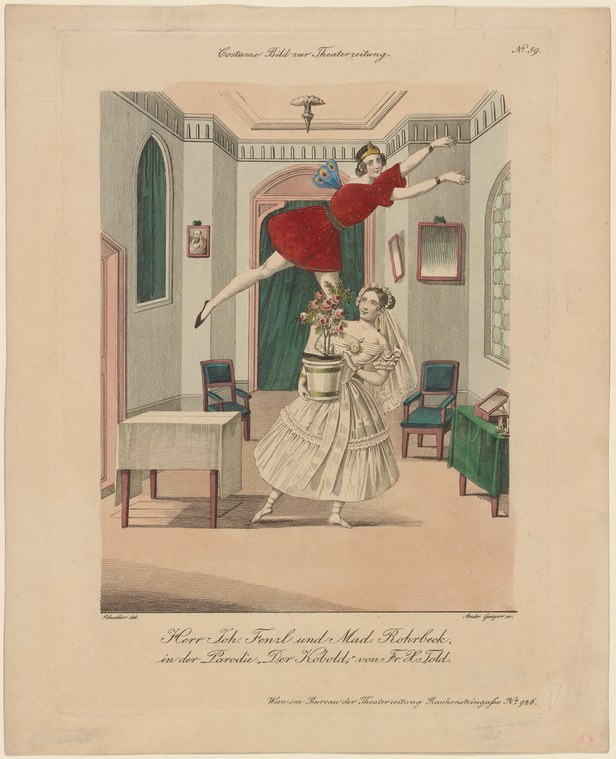
Herr Joh. Fenzl und Mad. Rohrbeck, in der Parodie 'Der Kobold' von Fr. X. Told
Unknown artist
- Collection:
- Prints depicting dance
- Source:
- New York Public Library
- Rights:
- Public domain — free to use, share and adapt.
- Recorded as:
- Public Domain
This print preserves a specific performance moment and the names of the performers who created it, offering rare documentary evidence of how theatrical burlesque and pantomime used the trained body for comic effect in the early 19th century. It shows that 'dance' in this era extended far beyond ballet into popular theatrical traditions that valued physical grotesquerie, supernatural effects, and audience surprise as performance tools.
What you are looking at
A theatrical interior scene depicting a moment of playful comic action. A woman in a pale muslin gown with high waistline stands center-right, holding a potted flowering plant and looking upward with evident surprise or alarm. Above and behind her, a man in a brilliant red jacket and dark breeches is captured mid-leap or flight, his body angled diagonally across the upper portion of the composition, his limbs extended in exaggerated burlesque pantomime. The room is a classical interior with pale walls, a coffered ceiling, tall arched doorways with green drapery, small framed pictures, and simple period furniture. The spatial recession and architectural detail suggest a drawing room or parlor of the Regency era. The hand-coloring emphasizes the contrast between the woman's pale dress, the man's vivid red coat, and the cool grays and greens of the interior.
The dancing
The male figure dominates through his impossible airborne posture—a burlesque superhuman leap with legs and arms akimbo, torso twisted, suggesting either magical suspension or theatrical exaggeration for comedic effect. The female figure is grounded and vertical, her posture naturalistic but her upward gaze directed at the floating man, establishing the narrative moment. Their spatial relationship—he occupies the upper register, she the lower—heightens the comic disproportion. No partner hold or contact occurs; the scene is a moment of theatrical reaction rather than partnered dance.
The dance depicted
This is a theatrical parody scene from the one-act play *Der Kobold* (The Hobgoblin), a comedic piece in the German tradition that used dance and pantomime for comic effect. The inscription identifies the performers as Herr Joh. Fenzl and Frau (or Mlle) Rohrbeck. The artist has frozen the moment of magical or supernatural intervention—the titular kobold (a mischievous spirit) is represented by the man's impossible leap, a visual gag that exploits the contrast between the natural grace expected of trained dancers and the grotesque, gravity-defying posture the parody demands. This belongs to the theatrical traditions of early 19th-century popular entertainment rather than classical dance.
How it was made
This is a hand-colored engraving or aquatint from the Viennese theatrical press, identifiable by the fine line-work, the neat hand-coloring in areas of flat color (the woman's dress, the man's coat, architectural elements), and the style of topographical theatrical documentation characteristic of early 19th-century German-speaking theaters. The technique allowed precise reproduction and distribution of images of celebrated theatrical moments to audiences and the theater-going public. The number 'No 59' visible at top right indicates this was part of a numbered series, likely a portfolio or periodical series documenting performances.
About this work
This is a theatrical scene print documenting a performance moment from *Der Kobold*, a Viennese comic play that made use of burlesque physicality and magical grotesquerie. The print captures the parody's central gag—the superhuman, impossible leap of a supernatural trickster—and names the performers who created it. It belongs to the rich tradition of early 19th-century theatrical documentation that recorded not just texts but the physical comedy and spectacular moments that defined popular performance. For historians of dance, it documents how trained performers of the period deployed exaggeration, vertical extension, and impossible postures as tools of parody and pantomimic comedy, outside the emerging ballet vocabulary.
How to look at it
Attend to the artist's choice to freeze the leap at its peak, with the man's body at maximum distortion and extension. Note how the woman's steady verticality and upward gaze frame his chaos; her stillness makes his levitation read as genuine rupture of the natural world, rather than simply a high jump. The brilliant red coat ensures he cannot be overlooked despite being 'above' the scene. The architectural precision of the room grounds the impossible action in a real domestic interior, creating the precise tone of early 19th-century comedic burlesque—magical events in mundane spaces.
The artist
The artist is unknown; the print is dated only 'unknown' in the catalogue. The style, hand-coloring technique, and inscription suggest a Viennese theatrical print workshop of the early-to-mid 19th century, a period of high productivity in documenting celebrated performances and performers for a growing middle-class theater audience. The inscription credits 'Fr. X. Told' as the author of the play, suggesting this was a known piece in the repertory.
The period
This print dates from an era when Viennese popular theater was at its height, with comedic parody and burlesque drawing large audiences and generating merchandise in the form of prints and engravings. The Regency and post-Napoleonic period saw a flourishing of theatrical documentation as a commercial and cultural practice. Simultaneously, ballet was developing its own classical vocabulary and aesthetics in this same period; this image shows the deliberate counterpoint—theatrical comedy and supernatural parody thrived on violation of the body's natural lines and the laws of physics, while ballet cultivated impossible-looking but human grace. The kobold figure represents popular culture's appetite for the magical and grotesque.
Where it lives
This print comes from the New York Public Library's collection of prints depicting dance. It is part of a numbered series (No. 59), likely from a portfolio or periodical run documenting Viennese theatrical performances, and was preserved as evidence of an important performance tradition.
Dance in this work
Questions about this work
Who performed this scene?
According to the inscription, Herr Joh. Fenzl and Frau (or Mlle) Rohrbeck performed in this scene from *Der Kobold*, a Viennese comic play. Both were active performers in the early 19th-century Viennese theater, though biographical details about them are limited in surviving records.
What is a kobold, and why is it relevant to dance history?
A kobold is a mischievous supernatural spirit or trickster from Germanic folklore. In this parody, the supernatural element is embodied through impossible physical feats—the gravity-defying leap—which shows how theater used trained physicality to represent magic and the uncanny. This documents an important tradition of theatrical burlesque that sat alongside emerging classical ballet.
Is this a ballet?
No. This is a parody scene from a comedic theatrical play, not a ballet. It documents popular theater and burlesque, which used trained performers but valued grotesquerie, exaggeration, and violation of natural lines—opposite to ballet aesthetics. However, the performers were likely trained in dance and movement, making this relevant to the broader history of staged dance.
Why is the man floating?
The floating posture is a visual gag: the kobold (trickster spirit) is defying gravity as proof of his supernatural nature. The artist has exaggerated the pose beyond any human jump to make the magic legible. This is parody and pantomime, using the body's extension and distortion to create comic absurdity.
More dance artwork





