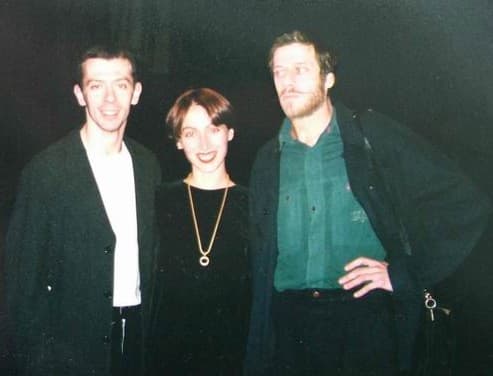
Alexei Ratmansky
Legend of Dance
Why They Matter
Ratmansky matters because he treats ballet history as living material. His original works demonstrate that inherited classical technique can support humor, political memory, complex musical construction, and sharply individualized characters. His reconstructions have also changed how major companies
Styles Alexei Ratmansky shaped
Each one links to the style’s own page — its origins, music, tempo and video.
Watch
NYC Ballet Presents: ARTIST IN RESIDENCE: Alexei Ratmansky
New York City Ballet
Official company context for Ratmansky's NYCB residency and collaborative studio practice
NYC Ballet Presents Alexei Ratmansky's PICTURES AT AN EXHIBITION
New York City Ballet
Connects Ratmansky's account of his career with an official-company view of a major NYCB work
Biography
Alexei Ratmansky is a contemporary ballet choreographer who combines detailed musical response, character-rich classicism, and archival engagement with nineteenth-century repertory. Born in Leningrad in 1968 to a Russian mother and Ukrainian father, he grew up in Kyiv and entered the Bolshoi Ballet School in Moscow at ten, studying there from 1978 to 1986. After graduation he returned to Kyiv and joined the National Ballet of Ukraine as a principal dancer, encountering a widening range of Western choreography during the late Soviet period.
In 1992 Ratmansky joined the Royal Winnipeg Ballet, where exposure to works by George Balanchine, Frederick Ashton, Antony Tudor, and Twyla Tharp broadened his performance vocabulary and sharpened the quickness, adaptability, and theatrical intelligence that would later mark his choreography. He subsequently danced with the Royal Danish Ballet, where close contact with August Bournonville's repertory deepened his interest in naturalistic acting, mime, and buoyant classical phrasing.
He began making ballets during his performing career. The 1998 *Dreams of Japan* received a Golden Mask, and commissions followed from major companies. His 2003 *The Bright Stream*, set to Dmitri Shostakovich, became a pivotal Bolshoi success. In 2004 he was appointed artistic director of the Bolshoi Ballet, where he expanded the repertory and revisited Soviet-era works while continuing to choreograph, serving through 2008.
Ratmansky's relationship with New York City Ballet began through the New York Choreographic Institute in 2002, followed by *Russian Seasons* in 2006 with music by Leonid Desyatnikov. Subsequent works including *Concerto DSCH*, *Namouna, A Grand Divertissement*, *Pictures at an Exhibition*, *Odesa*, and *Voices* demonstrate how he moves between folk-inflected ensemble structures, abstract musical architecture, and individualized dramatic worlds.
From 2008 to 2023 he served as Artist in Residence at American Ballet Theatre, creating and staging a large body of work. Alongside new ballets, he developed historically informed reconstructions based on notation and archival evidence. His 2014 *Paquita* research with historian Doug Fullington used Stepanov notations in Harvard's Sergeyev Collection as well as period drawings, exemplifying his method of treating documents as performance evidence rather than as a mandate for mechanical imitation.
Ratmansky became a MacArthur Fellow in 2013. In August 2023 he began a new appointment as Artist in Residence at New York City Ballet, creating works including *Solitude* (2024), *Paquita* (2025), and *The Naked King* (2026), continuing a career that links inherited classical structures with present-day performers, subjects, and theatrical sensibilities.
Career Highlights
Graduated from the Bolshoi Ballet School after studying there from 1978 and began his professional career with the National Ballet of Ukraine. Teatro alla Scala
Joined the Royal Winnipeg Ballet, where he danced a broad Western repertory. Teatro alla Scala
Dreams of Japan received a Golden Mask Award. Pacific Northwest Ballet
Created The Bright Stream for the Bolshoi Ballet, a production central to his rise as a choreographer and company leader. Pacific Northwest Ballet
Became artistic director of the Bolshoi Ballet, serving through 2008. New York City Ballet
Received the Benois de la Danse for Anna Karenina, created for the Royal Danish Ballet. New York City Ballet
Created Russian Seasons for New York City Ballet to a score by Leonid Desyatnikov. Teatro alla Scala
Began his tenure as American Ballet Theatre Artist in Residence; NYCB records the tenure as 2008–2023, while some sources give the formal start as January 2009. New York City Ballet
Named a MacArthur Fellow for revitalizing classical ballet through historically informed and newly created work. MacArthur Foundation
Began his appointment as Artist in Residence at New York City Ballet in August. New York City Ballet
Premiered The Naked King, his ninth ballet for NYCB and the company’s 500th commission. New York City Ballet, *The Naked King*
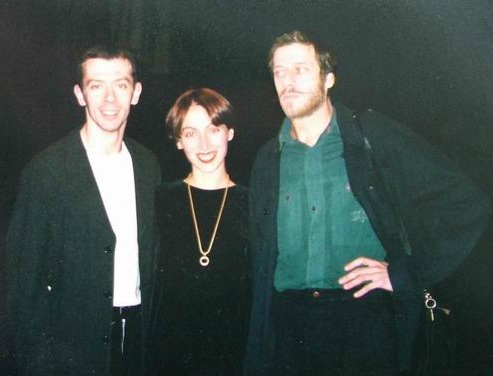
Works
5 stage works credited to Alexei Ratmansky, 1998–2026.
- Middle Duet (1998)Ballet · Choreographer
- Russian Seasons (2006)Ballet · Choreographer
- Concerto DSCH (2008)Ballet · Choreographer
- Pictures at an Exhibition (2014)Ballet · Choreographer
- The Naked King (2026)Ballet · Choreographer
Credits sourced from Wikidata (CC0), one citation per field. Works without a recorded premiere date are listed last. Titles link to the work in Limelight.
Legacy & Impact
Ratmansky matters because he treats ballet history as living material. His original works demonstrate that inherited classical technique can support humor, political memory, complex musical construction, and sharply individualized characters. His reconstructions have changed how major companies approach canonical repertory, foregrounding notation, period evidence, and collaborators while acknowledging that any modern staging is an interpretation. The result is a rigorous practice of listening—to music, dancers, documents, and historical circumstance—rather than a fixed style.


Explore More Legends
Discover the dancers, teachers, choreographers, and cultural icons who shaped how the world moves.
Keep the thread going
Dance history, technique, and the occasional rabbit hole — in your inbox. Thoughtful, infrequent, unsubscribe anytime.
Free. No spam. One click to leave.