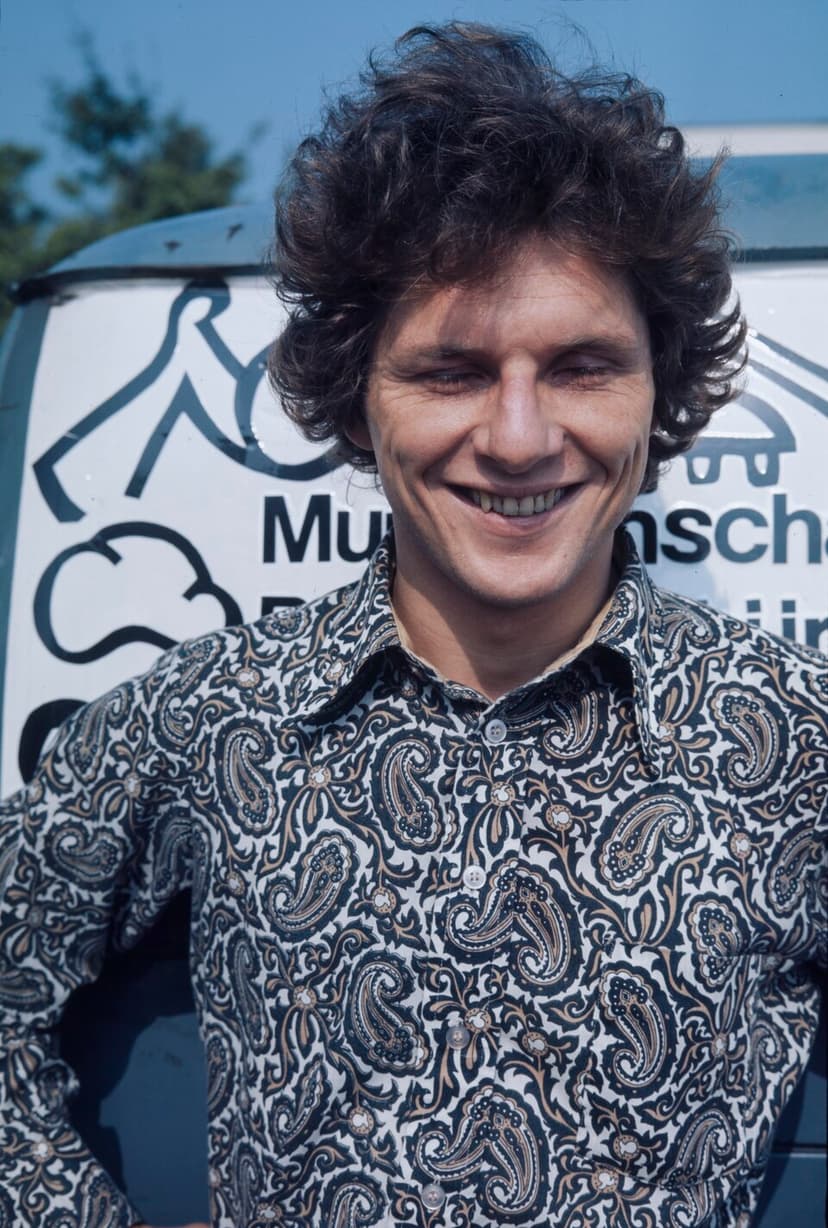
Andres Bossard
Legend of Dance
Why They Matter
Bossard matters to dance and movement history because MUMMENSCHANZ placed bodily timing, weight, articulation and spatial relation inside a theatre of materials. The performer might disappear into a tube, mask or moving surface, yet choreographic choices made the object seem to breathe, argue…
Biography
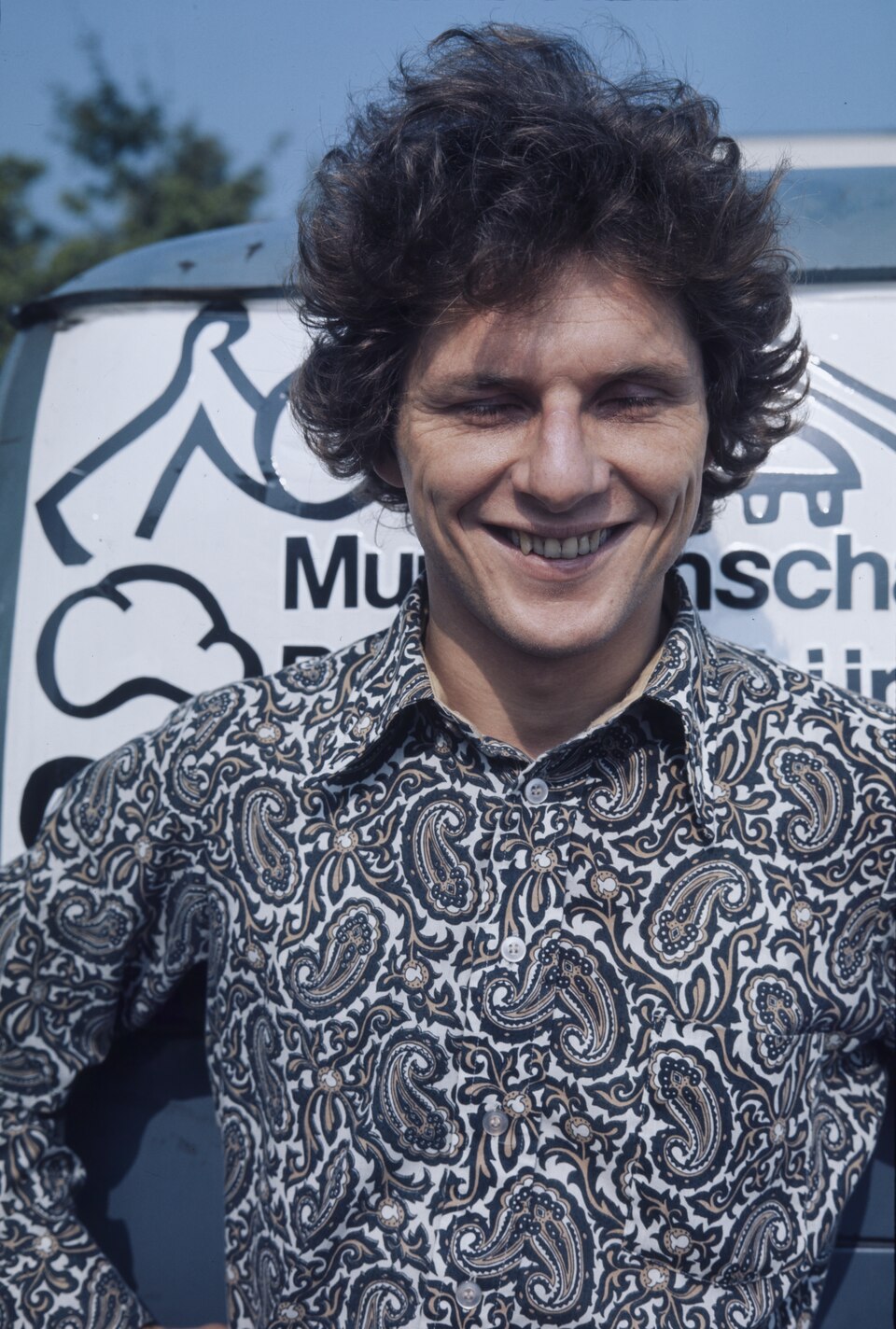
Andres Bossard was a Swiss mime artist, physical-theatre performer and co-founder of MUMMENSCHANZ, the visual-theatre company that made wordless, body-driven animation of masks and materials internationally legible without speech. Born in Zurich on 9 August 1944, he worked as a writer and performer in Swiss cabaret before moving to Paris at twenty-three to study at the École Jacques Lecoq, a school centered on movement, mask and ensemble theatre. There he met fellow Swiss performer Bernie Schürch, and by 1969 they were developing visual, non-verbal performance experiments with changing masks, gradually removing spoken text from their act.
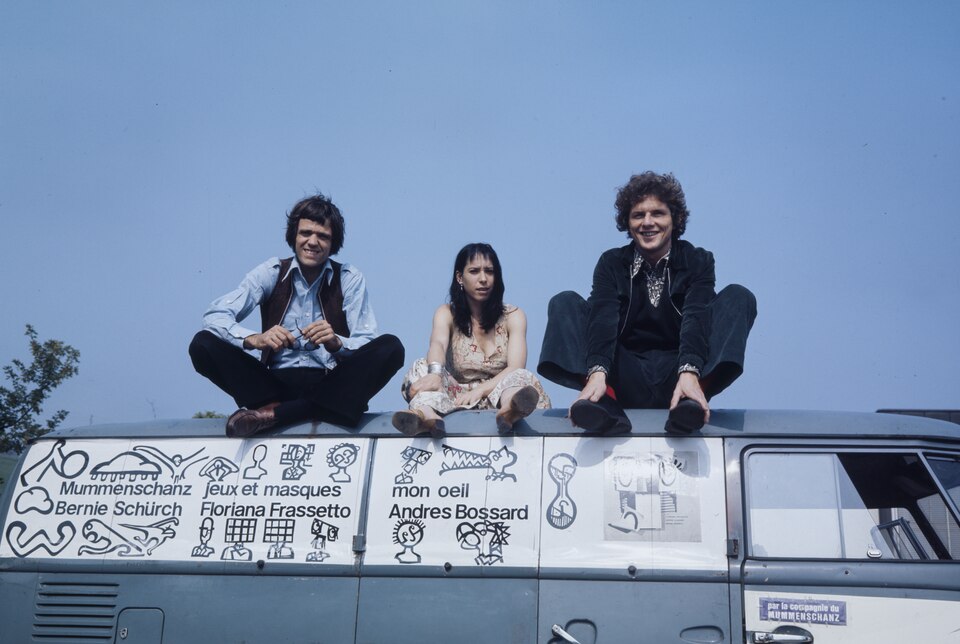
In 1972, Bossard and Schürch joined with Floriana Frassetto to found MUMMENSCHANZ. The trio developed a theatre of bodies, masks and ordinary or industrial materials—paper, foam, flexible tubes, fabric and inflated forms—that could become faces, creatures or conversational partners. Their method was deeply collaborative, so the company's signature language emerged from shared invention rather than individual authorship.
MUMMENSCHANZ toured Europe in 1973 and reached North America shortly after. The original Broadway production opened at the Bijou Theatre on 30 March 1977, with Bossard, Frassetto and Schürch credited as creators and opening-night performers. The show ran for 1,326 performances, closing on 20 April 1980—a durable commercial success for an apparently fragile, wordless form.
After a hiatus, the founders developed *The New Show* during the early 1980s. It toured internationally and played the Helen Hayes Theatre in 1986, establishing MUMMENSCHANZ as a durable institution rather than a single novelty act. Additional casts were trained to tour while the founders continued creating and performing. Bossard became ill during a 1991 world tour and died on 25 March 1992. The surviving founders paused before continuing the company in his memory.
Career Highlights
Moved to Paris at age twenty-three and began two years of study at the École Jacques Lecoq. MUMMENSCHANZ Foundation MUMMENSCHANZ Foundation
Began developing visual, non-verbal performance experiments and a changing-mask show with Bernie Schürch. MUMMENSCHANZ Foundation MUMMENSCHANZ Foundation
Co-founded MUMMENSCHANZ with Bernie Schürch and Floriana Frassetto. MUMMENSCHANZ company MUMMENSCHANZ company
Joined the company's first European tour and its first United States engagement. MUMMENSCHANZ history MUMMENSCHANZ history
Opened on Broadway at the Bijou Theatre as a creator and performer of Mummenschanz. IBDB IBDB
The Bijou run closed after 1,326 performances. IBDB IBDB
Returned to Broadway with The New Show at the Helen Hayes Theatre. MUMMENSCHANZ history MUMMENSCHANZ history
Performed with MUMMENSCHANZ during the company's season with Swiss National Circus Knie. MUMMENSCHANZ history MUMMENSCHANZ history
Took The New Show on another world tour before illness ended his performing career. MUMMENSCHANZ history MUMMENSCHANZ history
Gallery
Legacy & Impact
Bossard's work with MUMMENSCHANZ changed how performers and audiences understood the relationship between body, material and character. By placing precise timing, weight, spatial control and articulation inside a theatre of objects, he and his collaborators showed that a performer could disappear into a tube, mask or moving surface yet remain choreographically legible—making the object seem to breathe, think and feel. That speech-free performance language broadened popular ideas of mime and helped connect dance, puppetry, clowning and object theatre for international audiences, influencing how physical theatre is still made and understood.


Explore More Legends
Discover the dancers, teachers, choreographers, and cultural icons who shaped how the world moves.
Keep the thread going
Dance history, technique, and the occasional rabbit hole — in your inbox. Thoughtful, infrequent, unsubscribe anytime.
Free. No spam. One click to leave.