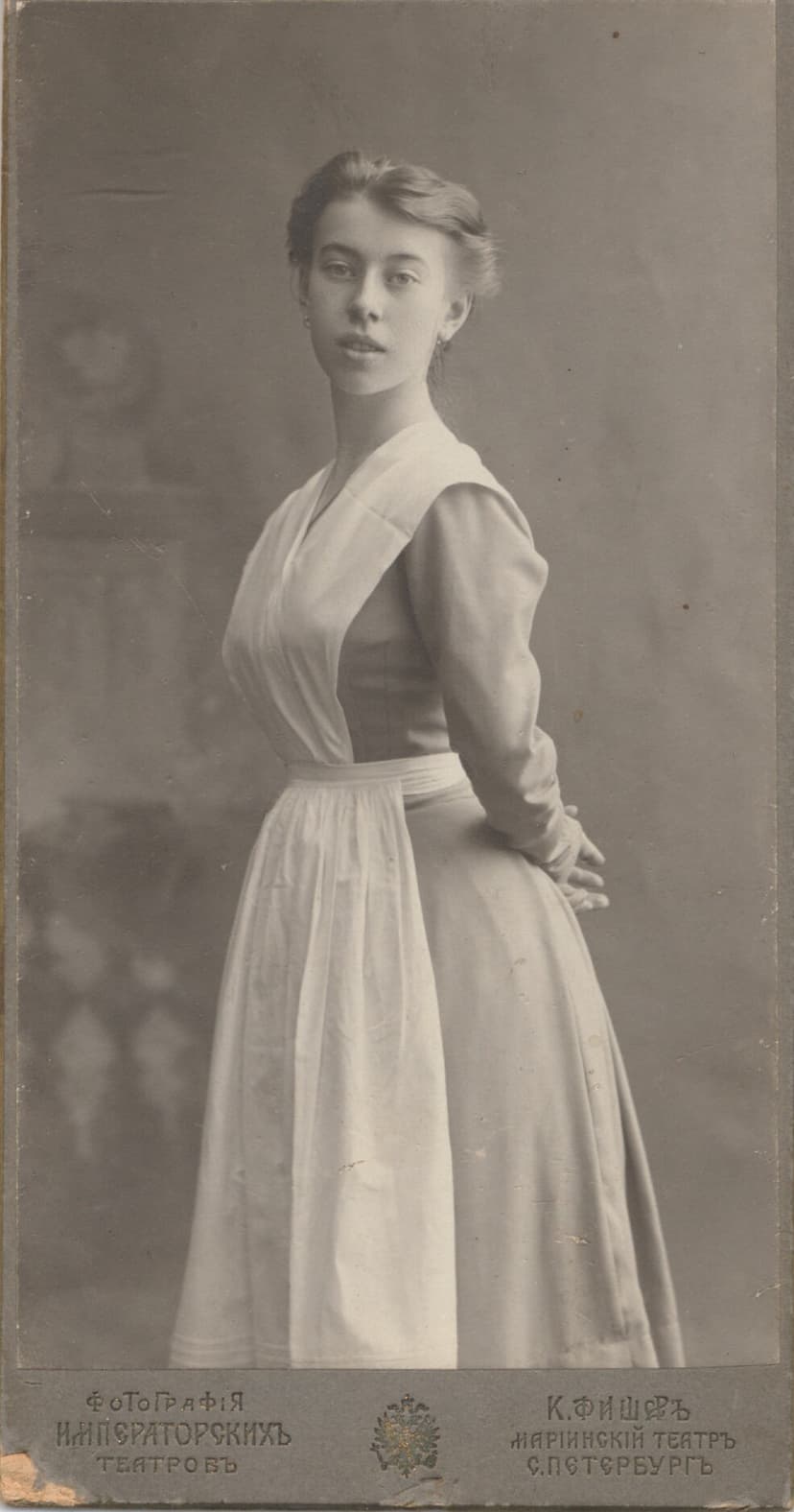
Bronislava Nijinska
Legend of Dance
Why They Matter
Nijinska matters because she proved that ballet’s inherited technique could be a medium for modernist thought rather than a constraint against it. Her choreography reorganized pointe work, gesture, rhythm, and ensemble structure to address collective ritual, sexual ambiguity, mass behavior, fashion,
Biography
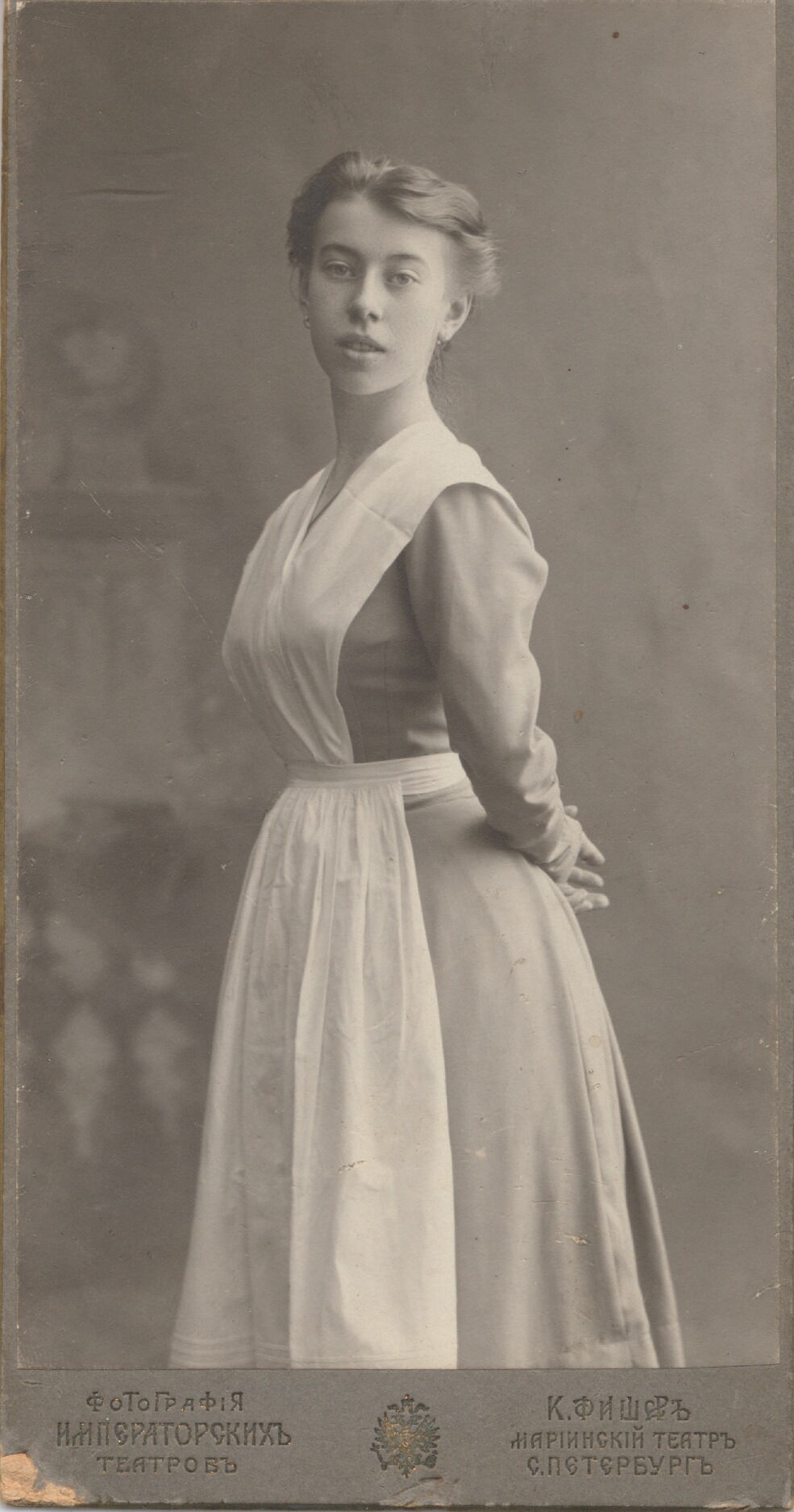
Bronislava Nijinska was born in Minsk in 1891 to Polish professional dancers who toured widely through the Russian Empire. After her mother moved the family to Saint Petersburg, Nijinska entered the Imperial Theatre School at nine and graduated in 1908, becoming an Artist of the Imperial Theatres. That schooling gave her rigorous grounding in late-imperial classical technique, but her artistic horizon expanded when she joined Serge Diaghilev's Ballets Russes in 1909, entering a company where choreography, music, painting, and design were being recombined for international audiences.
Her early performing career unfolded as a powerful, expressive technician willing to cross conventional gender and character boundaries. She worked in Michel Fokine's ballets and helped develop movement material while cultivating her own independent artistic identity. The First World War separated her from the western European company. In Kyiv, amid revolution and civil conflict, she founded a School of Movement in 1919, a space that retained ballet technique while treating movement itself, rather than the display of fixed poses, as the primary artistic material.
After leaving Soviet territory in 1921, Nijinska rejoined Diaghilev and became the Ballets Russes' principal choreographic voice of the early 1920s. Her decisive achievement was *Les Noces* (1923), set to Igor Stravinsky's score with designs by Natalia Goncharova. The ballet organizes dancers into hammering rhythms, compressed lines, stacked heads, and collective blocks, absorbing the bride and groom into the social machinery of the ceremony rather than psychologically individualizing them. The result is simultaneously ritualistic, modernist, and grounded in pointe technique.
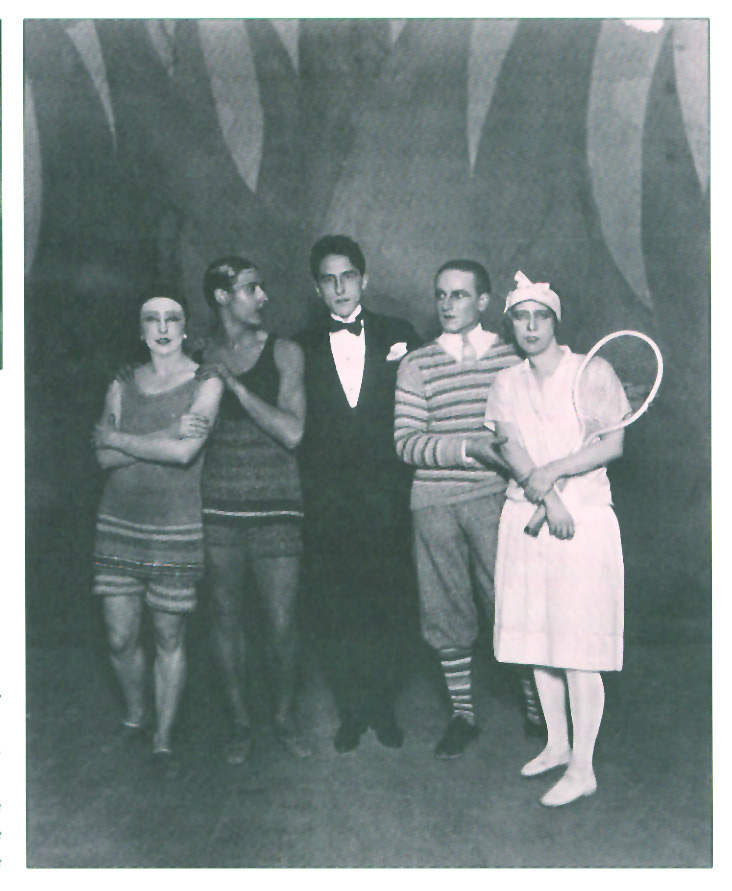
In 1924 she demonstrated a different range with *Les Biches* and *Le Train Bleu*. *Les Biches*, to music by Francis Poulenc with designs by Marie Laurencin, uses the polish of classical ballet to frame a cool, ambiguous social world. *Le Train Bleu*, with a scenario by Jean Cocteau, music by Darius Milhaud, and costumes by Gabrielle "Coco" Chanel, converts sport, fashion, and Riviera leisure into stylized movement. These works make clear that Nijinska's modernism was not a single manner: it could be architectural and severe, socially ironic, or briskly athletic.
Nijinska continued to build, direct, and choreograph for companies across Europe and the Americas. In 1937 she became artistic director of the Polish Ballet, creating works for a national company whose Paris exposition season won major recognition. The Library of Congress preserves a dedicated collection on that enterprise alongside her broader papers, which document the scale of a career extending well beyond the few Ballets Russes works most often revived. She later worked in the United States as a teacher, choreographer, and coach, including a demanding 1942 residency at Jacob's Pillow.
Late in life, Nijinska transmitted surviving works through direct coaching—a process crucial to her legacy because choreography is not preserved by score alone. Timing, weight, coordination, spacing, and intention must be embodied and taught. Her daughter Irina Nijinska also assisted in staging and preserving the repertory. Bronislava Nijinska died in 1972, leaving an archive that enabled later scholars and companies to reassess her as a central choreographer of twentieth-century ballet rather than a historical footnote.
Career Highlights
Graduated from the Imperial Theatre School in Saint Petersburg as an Artist of the Imperial Theatres. The Australian Ballet The Australian Ballet
Joined Diaghilev’s Ballets Russes, beginning a career that placed her inside the era’s most consequential ballet collaborations. The Australian Ballet The Australian Ballet
Founded the School of Movement in Kyiv, where she developed a training theory joining classical foundations to experimental movement research. The Australian Ballet Jacob’s Pillow The Australian Ballet
Returned to Diaghilev’s circle and began the period in which she became the Ballets Russes’ leading choreographer. Library of Congress Library of Congress
Choreographed Les Noces to Stravinsky’s score, with designs by Natalia Goncharova. Bibliothèque nationale de France / Commons Bibliothèque nationale de France / Commons
Choreographed Les Biches, a major modernist and early-neoclassical ballet set to Francis Poulenc. The Australian Ballet The Australian Ballet
Choreographed and performed in Le Train Bleu, collaborating with Jean Cocteau, Darius Milhaud, Henri Laurens, and Coco Chanel. The Australian Ballet Wikimedia Commons The Australian Ballet
Became artistic director of the Polish Ballet and created works for its international debut season. Library of Congress: Polish Ballet collection Library of Congress: Polish Ballet collection
Created and coached a concert of her ballets at Jacob’s Pillow, documented in the Pillow archives. Jacob’s Pillow Wikimedia Commons Jacob’s Pillow
Returned to repertory coaching late in life, including work connected with Les Biches. The Australian Ballet The Australian Ballet
Died in Pacific Palisades; her papers and surviving repertory became foundational evidence for later reassessment. Library of Congress Wikidata authority record Library of Congress
Gallery
Works
3 stage works credited to Bronislava Nijinska, 1922–1928 · 2 reached the screen.
- Renard (1922)Ballet · Choreographer
- Boléro (1928)Ballet · Choreographer · 2 screen versions
- Le baiser de la fée (1928)Ballet · Choreographer
Credits sourced from Wikidata (CC0), one citation per field. Works without a recorded premiere date are listed last. Titles link to the work in Limelight.
Legacy & Impact
Nijinska matters because she proved that ballet's inherited technique could be a medium for modernist thought rather than a constraint against it. Her choreography reorganized pointe work, gesture, rhythm, and ensemble structure to address collective ritual, sexual ambiguity, mass behavior, fashion, and modern leisure. The survival of *Les Noces* and *Les Biches*, together with her extensive archive, makes her both a canonical creator and a case study in how women's authorship can be obscured when history is organized around male impresarios, composers, and relatives.


Explore More Legends
Discover the dancers, teachers, choreographers, and cultural icons who shaped how the world moves.
Keep the thread going
Dance history, technique, and the occasional rabbit hole — in your inbox. Thoughtful, infrequent, unsubscribe anytime.
Free. No spam. One click to leave.