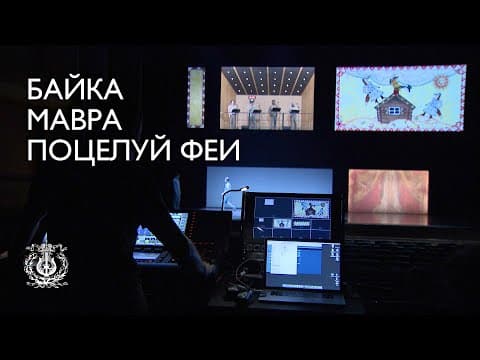
Renard is Stravinsky's 1916 chamber opera-ballet — a "burlesque tale sung and played" for four male voices and sixteen instrumentalists, based on a Russian folk tale collected by Afanasyev. It sat unperformed for six years after its private commission, then reached the stage in 1922 in a Ballets Russes production choreographed by Bronislava Nijinska, who also danced the title role, with décor by Mikhail Larionov.
What is danced
The article gives little technical detail, but what it does give is specific and unusual for the period: Stravinsky himself devised the staging plan explicitly to avoid "any resemblance to conventional operatic staging," building instead "a new form of theatre in which the acrobatic dance is connected with singing, and the declamation comments on the musical action." The singers are not attached to individual characters — they function, in Stravinsky's own later comparison to Les noces, as part of the orchestra rather than as onstage performers — which means the physical embodiment of Fox, Cock, Cat and Goat falls entirely to a separate corps of dancers moving to sung narration and commentary coming from the pit/ensemble.
Stravinsky records that Nijinska's 1922 choreography was "acrobatic" and that this "coincided with my ideas," adding a detail of stage business: "the animals saluted very like the Russian Army... and there was always an underlying significance to their movements" — suggesting a stylised, drilled, quasi-militaristic physical vocabulary layered over farmyard mimicry, in keeping with the piece's satirical intent. Beyond this, the article gives no set-piece breakdown, no named numbers, and no scene-by-scene choreographic account — the plot (Fox tricking and losing the Cock twice, then being strangled by Cat and Goat) is described only as narrative, not as danced incident.
The 1929 Lifar revival pushed the acrobatic element toward literal circus skill: Stravinsky complained it "was ruined chiefly by some jugglers Diaghilev had borrowed from a circus," indicating that at least one staging of this work incorporated actual circus performers rather than dancers trained in a stage idiom — a detail worth flagging for anyone reconstructing the work's movement history, though it describes a version the composer disowned.
Context
Renard belongs to the wartime and immediate postwar period of Stravinsky's Russian folk-material works (alongside Les noces, on which it is a direct precedent for using voices as instrumental colour rather than character). Its 1922 staging came from Diaghilev's Ballets Russes at a moment when the company was pairing radical short chamber works with grand revivals — the premiere shared a bill with Tchaikovsky's The Sleeping Beauty. Nijinska's choreography, built around acrobatic rather than balletic vocabulary and matched to Larionov's Cubo-Futurist-adjacent design sensibility, sits within her broader run of experimental Diaghilev commissions of the early 1920s.
Staging history
The piece had an unusually long gap between composition and stage life: commissioned in 1915 for Princesse Edmond de Polignac's private salon and completed in Morges in 1916, it was never in fact performed there, reaching the stage only in 1922. The premiere was given by the Ballets Russes on 18 May 1922 at the Théâtre de l'Opéra, Paris, conducted by Ernest Ansermet, choreographed by Bronislava Nijinska (who danced the title role), with décor and costumes by Mikhail Larionov. A revised version followed on 21 May 1929 at the Théâtre Sarah-Bernhardt, Paris, with new choreography by Serge Lifar; Stravinsky disliked this staging, blaming circus jugglers borrowed by Diaghilev, and separately noted his regret that Marc Chagall had declined a commission to design it.
How to watch it
Listen for the separation of labour: the singing does not belong to any single onstage figure, so the four dancers embodying Fox, Cock, Cat and Goat are acting out a story being narrated and commented on from elsewhere, not lip-syncing their own lines. Watch for stylised, drilled physical gestures rather than pantomime naturalism — Stravinsky specifically likened the animals' movement to a military salute — and for acrobatic rather than academic-balletic vocabulary, which was the choreographic idea he most praised in Nijinska's original production.
Credits
- composer: Igor Stravinsky
Related works
Other staged works in the register connected to this one by author or lineage.
 BoléroBallet · 1928Nijinska · video
 Le baiser de la féeBallet · 1928Nijinska · video
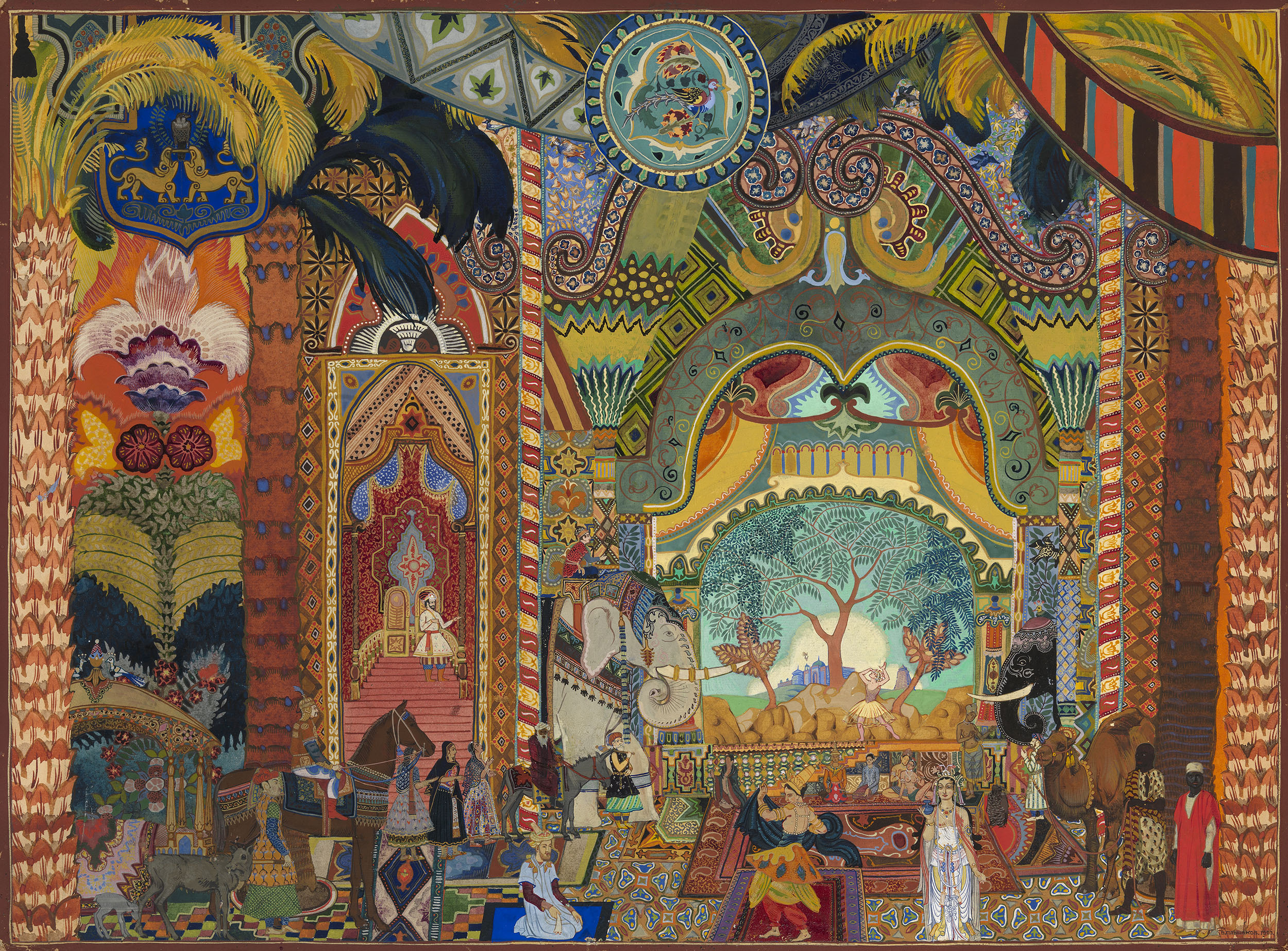 The FirebirdBallet · 1910Music by Stravinsky · video
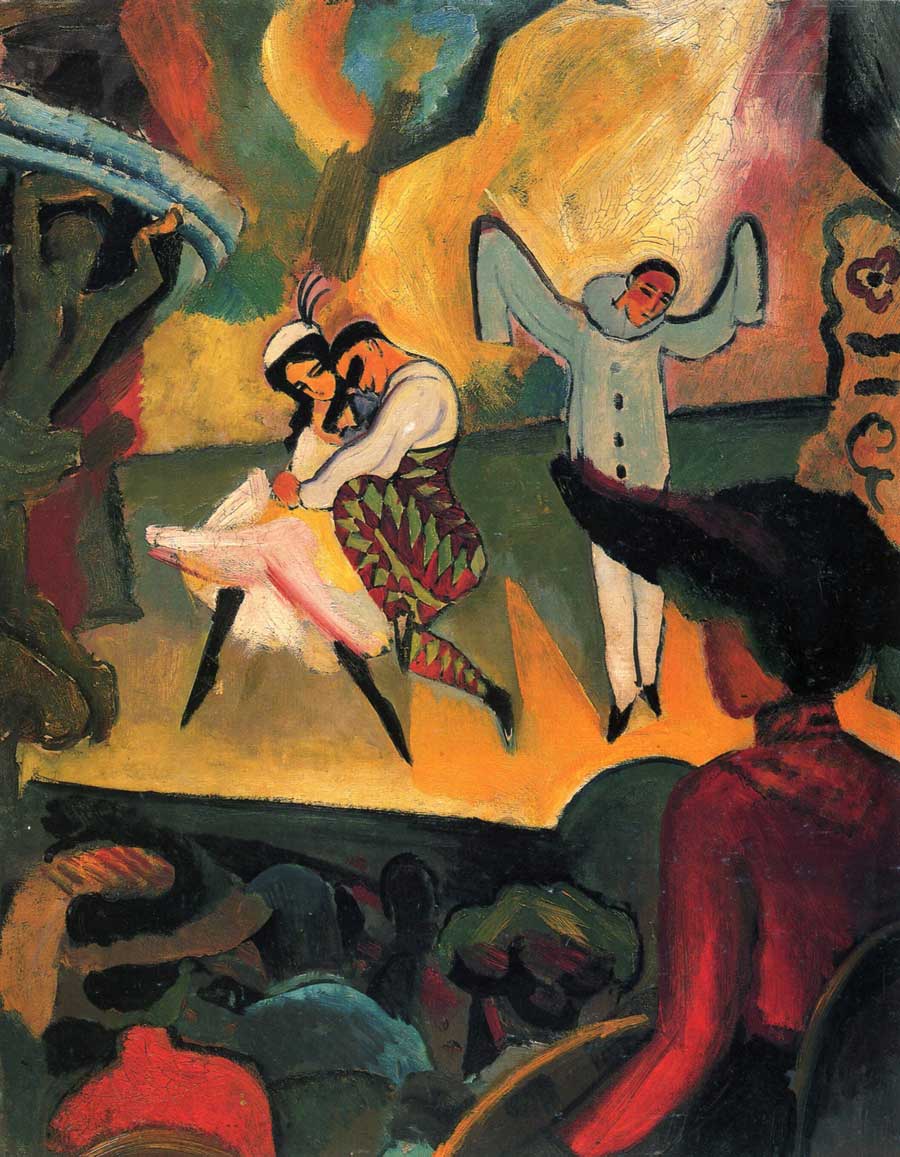 PetrushkaBallet · 1911Music by Stravinsky · video
 PulcinellaBallet · 1920Music by Stravinsky · video
 Les nocesBallet · 1923Music by Stravinsky · video
- TangoTangoBallet · 1982Music by Stravinsky
 Stravinsky Violin ConcertoBallet · 1972Music by Stravinsky · video