
Performer · Community Builder · Cultural Preserver · Popularizer
Crazy Legs
B-Boy President
Why They Matter
He helped transform breaking from a local street culture into a globally recognized art form and advocated for its legitimacy as dance.
Watch
B-BOYS: A History of Breaking, Episode 1 — Rock Steady Crew / The Origins
Crazy Legs / Rock Steady Crew
Extended practitioner account of Rock Steady origins, useful when paired with independent records.
BBOYS: A History of Breaking, Episode 3 — Rock Steady Crew
Crazy Legs / Rock Steady Crew
Continues the artist-controlled history series with crew-specific context.
Crazy Legs & Ken Swift — 1983
Crazy Legs / Rock Steady Crew
Rare movement evidence from the period of international expansion and early film visibility.
John Leguizamo vs. Crazy Legs: The History of Breaking in NYC
The Daily Show
Current mainstream presentation that lets viewers compare practitioner testimony and comic framing.
Breaking's history started in the Bronx, now making Olympic debut
USA TODAY
Connects early Rock Steady history with the Paris 2024 Olympic moment.
Richard “Crazy Legs” Colón — Rock Steady Crew Identity Project
Identity / institutional history project
Useful testimony on how practitioners distinguish generations and local styles.
Biography
Richard Colón, known as Crazy Legs, was born in the Bronx in 1966 and grew up in northern Manhattan. A Puerto Rican-American breaking pioneer, he became central to Rock Steady Crew during its early expansion into Manhattan and beyond. In his own 2001 account, Colón explained that Jimmy Dee, JoJo and Eazy Mike had formed Rock Steady in the Bronx before he and his cousin Lenny Len battled their way in. By 1981, when breaking began appearing in mainstream New York press, he was already recognized within a developed community of mentorship, ranking and named dancers.
Colón's prominence grew through early film and touring that brought breaking to audiences far beyond the city. He appeared in Charlie Ahearn's *Wild Style*, the PBS documentary *Style Wars*, and *Beat Street*. In *Flashdance*, he contributed a breaking body-double passage among several dancers on the film. In 1983, he traveled with the New York City Rap Tour, a collective presentation that joined breaking with DJing, MCing, graffiti art and the Fantastic Four Double Dutch Girls, alongside figures including Afrika Bambaataa, Grandmixer D.ST, Fab 5 Freddy and Futura 2000.
Rock Steady's work then moved into concert and theatrical settings. Colón performed in *So! What Happens Now?* in 1991, followed by *Concrete Jungle* at Lincoln Center in 1992 and the Ghettoriginal production *Jam on the Groove* in the mid-1990s. The Bessie Awards archive records Rhythm Technicians and Rock Steady Crew for collective work in 1992. Leadership extended beyond performance into teaching and community organizing both in New York and internationally. His work with Breakdance Project Uganda appeared in the 2010 documentary *Bouncing Cats*. In 2012, at Rock Steady Crew's 35th anniversary, he retired from competitive battling. The Smithsonian's acquisition of his customized denim jacket from the 1980s placed the material culture of breaking—clothing, lettering and self-fashioning—inside a national historical collection.
Public recognition continued through the Hispanic Heritage Foundation's 2018 Culture Award, presented at the Kennedy Center for his impact as a dancer, educator and humanitarian. He also served as a judge for breaking at the 2018 Youth Olympic Games in Buenos Aires, a precursor to the form's Olympic debut in Paris in 2024. Colón's career joins several decisive transitions: neighborhood cyphers to print journalism, crew battles to film, Bronx practice to international touring, and breaking to concert dance and museum collection.
Career Highlights
Born in the Bronx, according to the Smithsonian and Hispanic Heritage Foundation. Smithsonian
By his own 2001 interview account, he and Lenny Len battled their way into Rock Steady Crew after its original formation. 2001 interview account
Appeared in early mainstream reporting on breaking, including New York press descriptions of apprenticeship and Bronx folk culture.
Appeared in Charlie Ahearn’s Wild Style; release-year labeling varies by premiere and distribution source, so avoid false precision.
Appeared in Style Wars and Flashdance and joined the collective New York City Rap Tour in Europe.
Appeared as himself with Rock Steady Crew in Beat Street.
Performed in So! What Happens Now?, an important transfer of street-dance practice to a mainstream New York stage.
The Bessie Awards archive recognized Rhythm Technicians and Rock Steady Crew for collective work. Bessie Awards archive
Jam on the Groove presented Ghettoriginal’s hip-hop dance theater; its 1996 Drama Desk listing is a production-level choreography nomination.
Material connected to Crazy Legs entered the Smithsonian’s National Museum of American History collection.
Retired from competitive battling at Rock Steady Crew’s 35th anniversary, not from dance or cultural work.
Received the Hispanic Heritage Award for Culture and served on the breaking judging panel at the Youth Olympic Games in Buenos Aires. Hispanic Heritage Award for Culture
Crazy Legs on screen
Films and television featuring Crazy Legs, with the sequences we have indexed.
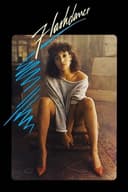
Poster artwork from TMDB.
 This site uses TMDB and the TMDB APIs but is not endorsed, certified, or otherwise approved by TMDB.
Legacy & Impact
Crazy Legs matters to breaking and dance history because his work crosses multiple decisive transitions—from crew cyphers to documented film, from neighborhood practice to international touring, and from street culture to concert stages and institutional memory. His most significant legacy is not solitary invention but rather transmission and institution-building: helping Rock Steady Crew remain a reference point across generations while demonstrating why hip-hop dance history must credit original founders, branches, collaborators and crews rather than individuals alone.


Explore More Legends
Discover the dancers, teachers, choreographers, and cultural icons who shaped how the world moves.
Keep the thread going
Dance history, technique, and the occasional rabbit hole — in your inbox. Thoughtful, infrequent, unsubscribe anytime.
Free. No spam. One click to leave.