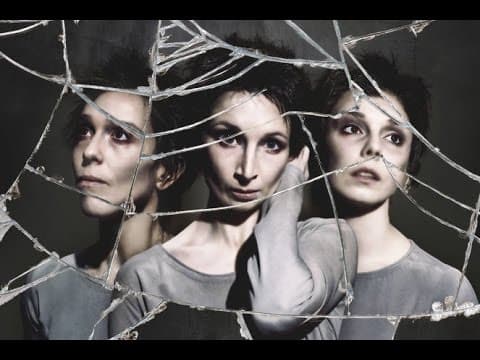
Anastasia is a narrative ballet by Kenneth MacMillan, built around the case of Anna Anderson, the woman who for decades claimed to be Grand Duchess Anastasia Nikolaevna, the youngest daughter of the last Russian tsar. MacMillan made a one-act version for the Deutsche Oper Ballet in Berlin in 1967, then expanded it into a three-act work for the Royal Ballet in 1971, folding the original single act in as the final act of the longer piece.
What is danced
The article gives production and casting history in detail but does not describe the choreographic vocabulary MacMillan used — no steps, holds, partnering or technical demands are named. What can be said with confidence, drawn from the synopsis rather than any movement description, is structural: the piece splits into a court-life section set to Tchaikovsky and an institutional/memory section set to Martinů and electronic sound, and the article explicitly frames this as a deliberate musical and dramatic contrast rather than a stylistic one. Because no passage in the source describes what the dancers actually do — no mention of pointe work, mime, pas de deux structure, or corps patterning — no coded style claims can be responsibly attached to this entry from the article alone.
Context
MacMillan created Anastasia in the late 1960s and early 1970s, a period in which he and other choreographers working with the Royal Ballet were pushing full-length narrative ballet toward psychologically driven, at times disturbing subject matter, departing from the fairy-tale and folkloric plots that had dominated the classical repertory. The use of a mixed score — a mid-century symphonic work, commissioned or found electronic/musique concrète material, and Tchaikovsky for contrast — reflects an experimental approach to structuring a full-evening ballet around a real, contested historical claim rather than a fixed literary source.
Staging history
The work began as a one-act piece for the Deutsche Oper Ballet in Berlin in 1967 with Lynn Seymour in the title role, and was expanded by MacMillan into three acts for the Royal Ballet at Covent Garden in 1971, again led by Seymour, with Barry Kay designing both productions. After MacMillan's death the ballet was revived under the supervision of his widow, Deborah MacMillan, in May 1996 with new designs by Bob Crowley, and the title role has since passed through a line of Royal Ballet principals including Viviana Durante, Leanne Benjamin, Gillian Revie, Mara Galeazzi, Lauren Cuthbertson, Laura Morera and Natalia Osipova; a 2016 production was filmed and released on DVD and later streamed by the Royal Opera House during the COVID-19 pandemic.
How to watch it
Because the piece is built on the ambiguity of whether Anderson truly was the Grand Duchess, watch for how the production handles the boundary between the 'privileged' pre-revolutionary acts and the institutional final act — the shift is carried by score (Tchaikovsky versus Martinů and electronic sound) as much as by design, and the article frames this contrast as intentional. Casting history matters here too: the title role has been a vehicle for successive generations of Royal Ballet leading dancers since Lynn Seymour created it.
Structure
- Act I-IIThe first two acts show Anastasia's life, or Anderson's mental image of it, in her privileged pre-revolutionary surroundings, set to Tchaikovsky.
- Act IIIThe final act (the original 1967 one-act ballet) depicts Anderson confined in a Berlin mental institution, painfully attempting to recover her memory, set to Martinů and electronic music.
Structure read from an encyclopaedia article, not from a libretto or score we hold. Confirm against a programme before treating the numbering as authoritative.
Credits
- composer: Bohuslav Martinů
- composer: Pyotr Ilyich Tchaikovsky
Related works
Other staged works in the register connected to this one by author or lineage.
 L'histoire de ManonBallet · 1974MacMillan · video
 MayerlingBallet · 1978MacMillan · video
 Winter DreamsBallet · 1991MacMillan · video
 Romeo and JulietBallet · 1965MacMillan · video
- La Fin du jourLa Fin du jourBalletMacMillan
 ConcertoBallet · 1966MacMillan · video
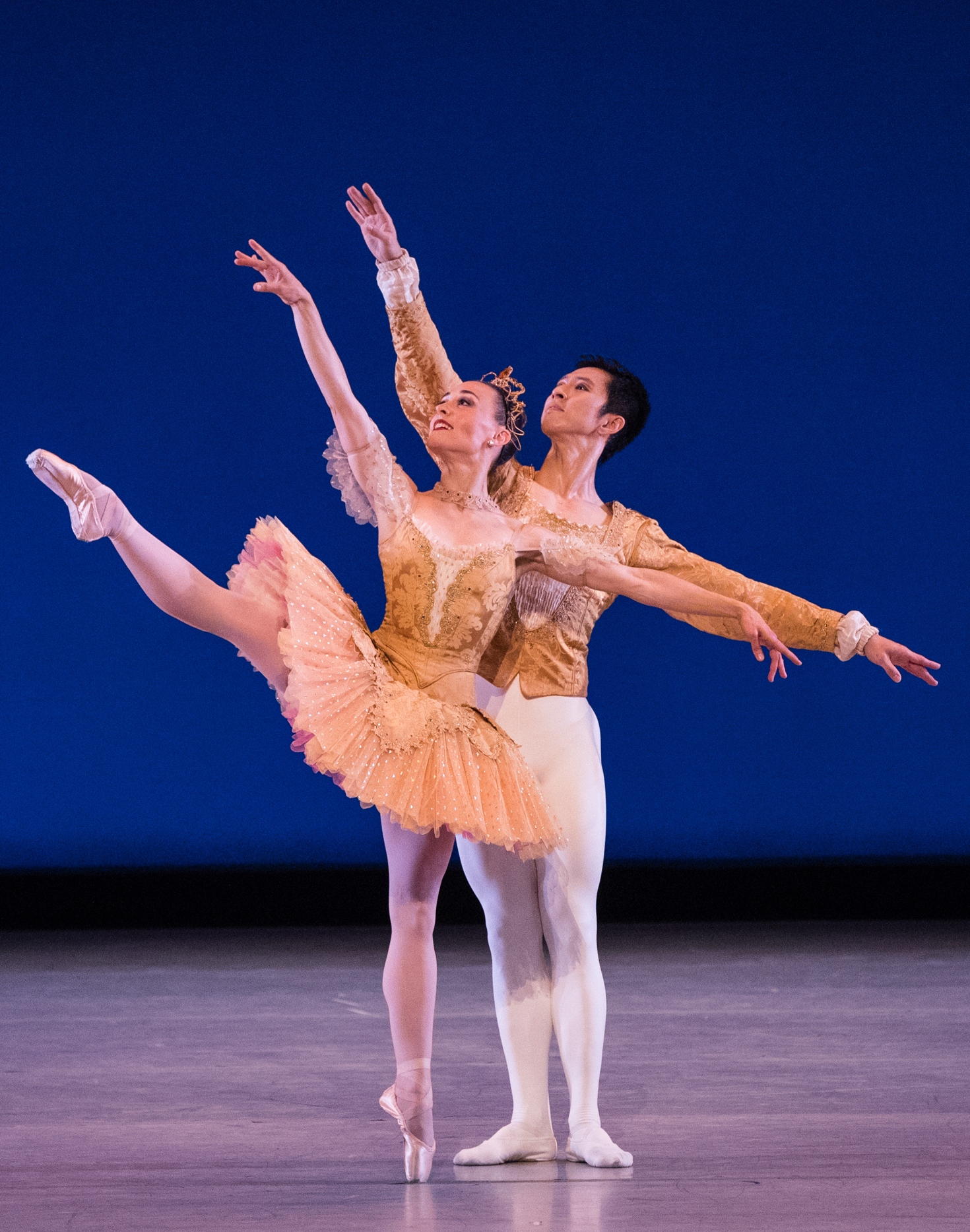 Theme and VariationsBallet · 1947Music by Tchaikovsky · video
 MozartianaBallet · 1933Music by Tchaikovsky · video