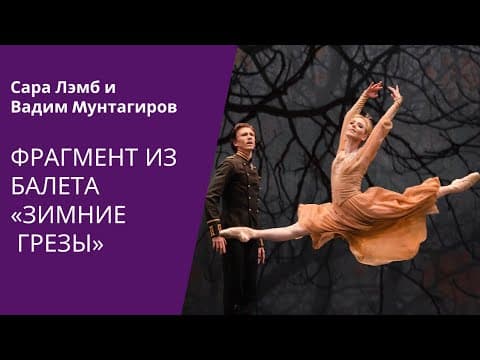
Winter Dreams is a one-act narrative ballet made by Kenneth MacMillan for The Royal Ballet, first given at the Royal Opera House on 7 February 1991. It draws on Chekhov's Three Sisters, using piano pieces by Tchaikovsky (arranged by Philip Gammon) alongside traditional Russian music arranged for guitar and mandolin ensemble by Thomas Hartman, with designs by Peer Farmer and lighting by Clive Thomas.
What is danced
The article gives a scenario and cast list but no description of steps, technique or set-piece choreography, so specifics of the movement vocabulary cannot be confirmed from it. What can be established structurally is that the piece is built around a set of named principal relationships — Masha and Vershinin's clandestine affair, Irina and Tuzenbach's aborted engagement, Andrey and Natasha's marriage — which in a MacMillan narrative ballet of this period would typically be carried through duet work (pas de deux) rather than mass ensemble, with a garrison setting implying scenes for a corps of soldiers (listed in the cast as four named 'Soldiers').
MacMillan's own description — that the choreography 'sometimes... reflects the inner life of the characters, at other times the narrative' — indicates the ballet alternates between psychologically expressive dance passages and more literal storytelling movement, a hallmark of his dramatic method, but the article does not itemise which scenes are which. Readers should treat any claim about specific steps or technique as unconfirmed by this source.
Context
The 1991 premiere places this among Kenneth MacMillan's final works for The Royal Ballet, made in the last full year before his death in 1992, and it followed his long run of large-scale narrative ballets (Romeo and Juliet, Manon, Mayerling) with a more compressed, one-act chamber treatment of literary source material. This is contextual framing from general knowledge of MacMillan's output rather than a claim drawn from the article itself.
Staging history
The article records only the original 1991 Royal Ballet production at the Royal Opera House and a DVD, distributed by Kultur International Films Ltd, of a BBC Television recording of the original cast made at Covent Garden in 1990 (produced and directed by Derek Bailey). No later revivals, companies, or restagings are mentioned.
How to watch it
Watch for the alternation MacMillan himself described between choreography that carries the plot (the duel, the affair, Natasha's rise in the household) and choreography meant to render a character's interior state rather than an event. Because the ballet does not restage the whole play, the character names and relationships (the source article's scenario) are the guide to what a given duet or scene is 'about' rather than a literal plot synopsis.
Credits
- composer: Pyotr Ilyich Tchaikovsky
Related works
Other staged works in the register connected to this one by author or lineage.
 L'histoire de ManonBallet · 1974MacMillan · video
 MayerlingBallet · 1978MacMillan · video
 AnastasiaBallet · 1967MacMillan · video
 Romeo and JulietBallet · 1965MacMillan · video
- La Fin du jourLa Fin du jourBalletMacMillan
 ConcertoBallet · 1966MacMillan · video
 Allegro BrillanteBallet · 1956Music by Tchaikovsky · video
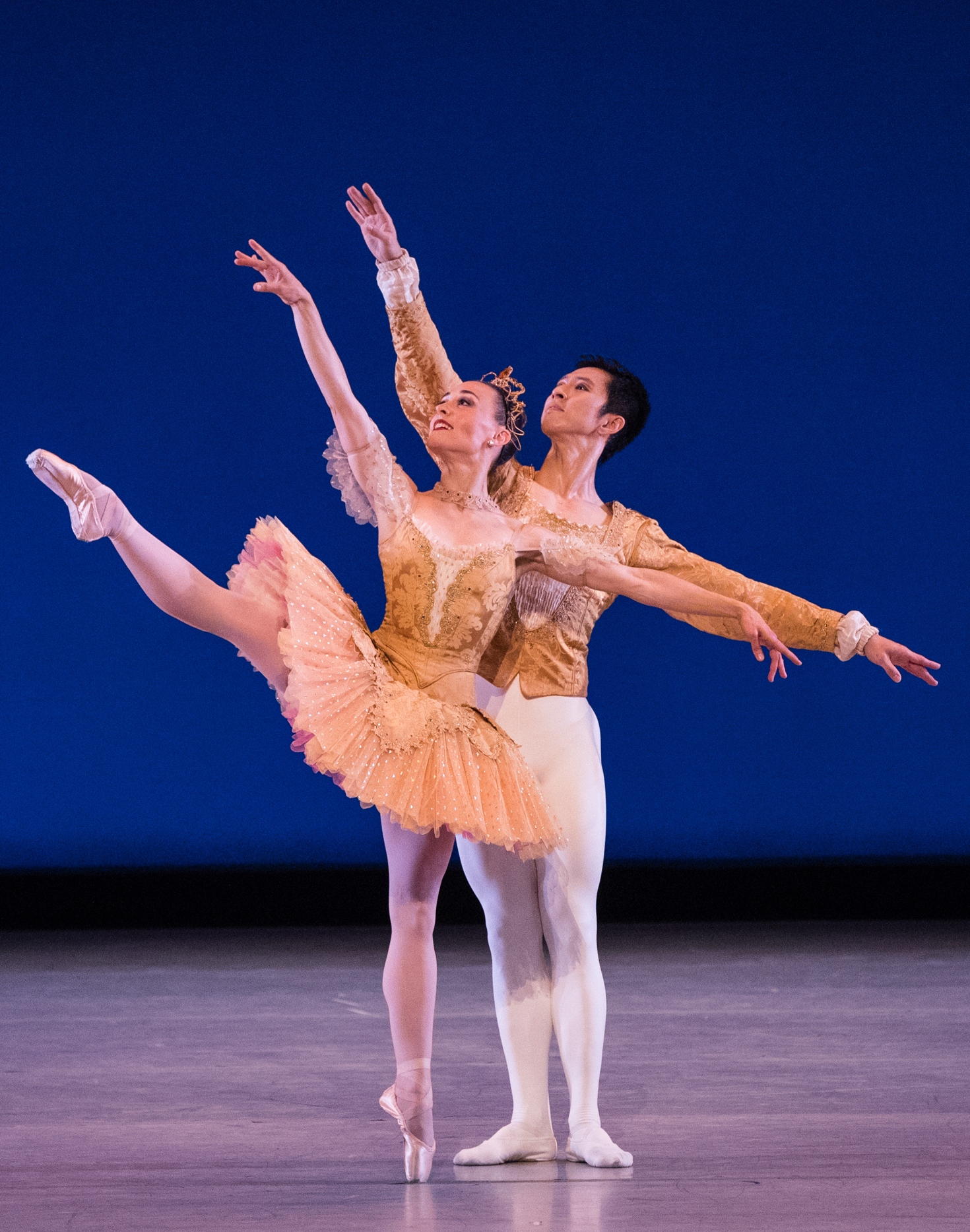 Theme and VariationsBallet · 1947Music by Tchaikovsky · video