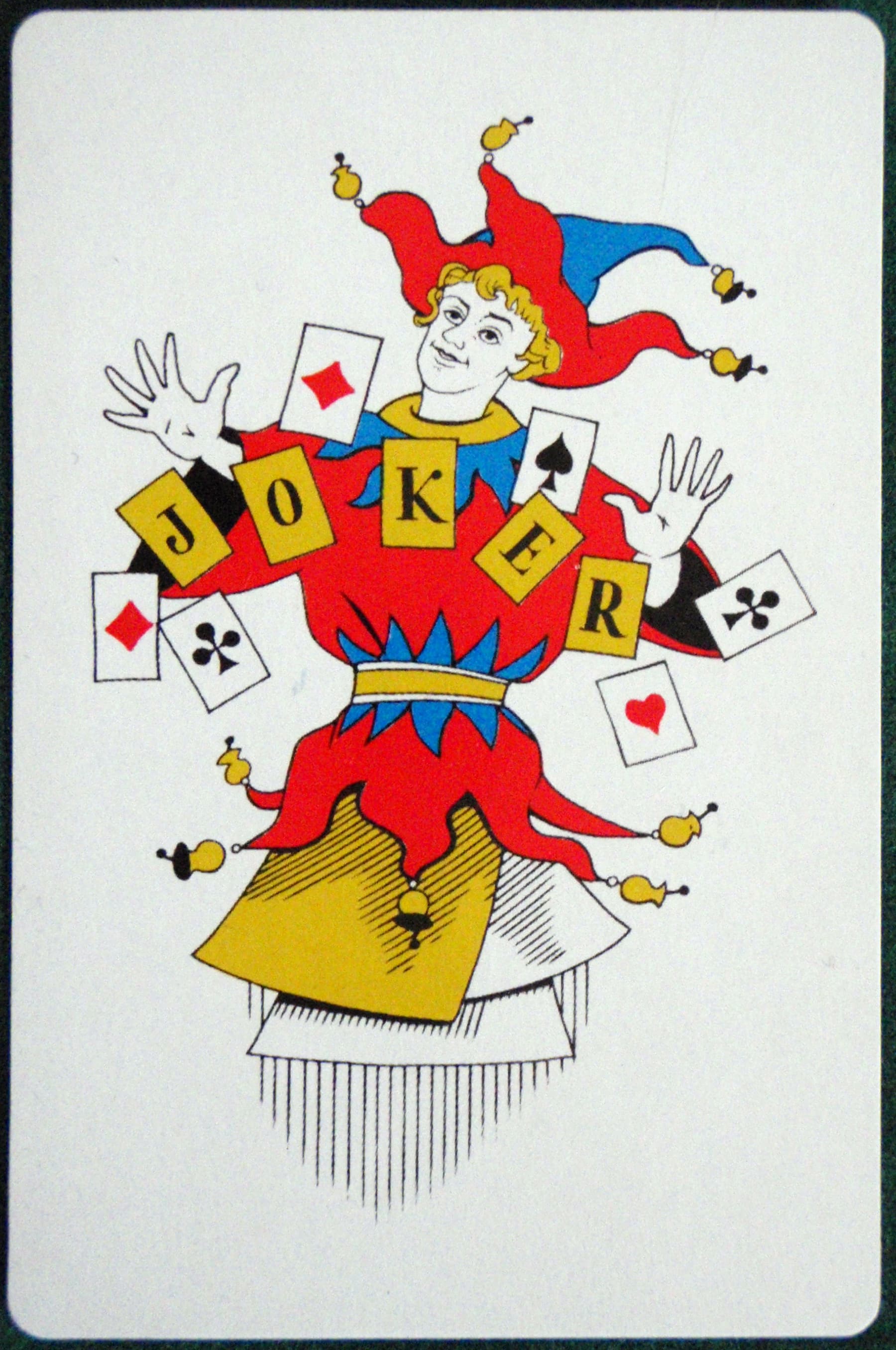
Teuxe — Own work · Public domain
Jeu de cartes is a ballet in three "deals" — the score's own term for its three scenes — with music by Igor Stravinsky and a libretto he co-wrote with Nikita Malayev, a friend of his eldest son Théodore. Commissioned in November 1935 and completed the following year, it was choreographed by George Balanchine and premiered on 27 April 1937 by the American Ballet at the old Metropolitan Opera House in New York, with Stravinsky himself conducting.
The ballet dramatises a game of poker, an idea Stravinsky settled on only after August 1936; its central figure is a deceitful Joker who believes himself unbeatable because he can transform into any card. It sits at the start of the long Stravinsky–Balanchine working relationship and is a document of the short-lived American Ballet company, the troupe Balanchine and Lincoln Kirstein built before it fed into what became New York City Ballet.
What is danced
The article does not describe steps, holds or technique — it gives the ballet's narrative premise (a card game, a shape-shifting trickster Joker) and its musical-structural division into three "deals" further partitioned by tempo markings, but no synopsis of what is actually danced in each deal survives in the source text as given. There is no cast-by-role breakdown beyond a bare list of five original dancers (Annabelle Lyon, Leda Anchutina, Ariel Lang, Hortense Kahrklin, William Dollar), so it is not even possible from this article to say which dancer played the Joker or which suits the others represented.
What can be said responsibly from the source is limited to structure and story: a plot built around a card table, told in three discrete "deals," with a recurring trickster character whose defining trait is transformation. Anyone wanting the actual choreographic vocabulary — how Balanchine translated card imagery, suits, and the Joker's shape-changing into steps — will need a source beyond this one; this article simply does not reach that level of description.
Context
The 1937 premiere places the work squarely in the American Ballet's brief New York seasons, before the company's personnel and repertoire fed into later Balanchine enterprises; the European premiere followed the same year at the Semperoper in Dresden under Karl Böhm. Nothing in the article characterises the choreography's place within 1930s ballet more specifically than this premiere history.
Staging history
The article records two premieres in 1937: the world premiere in New York on 27 April, danced by the American Ballet with Stravinsky conducting, and a European premiere on 13 October at the Semperoper in Dresden, conducted by Karl Böhm with the Staatskapelle Dresden. It also notes a review of the work by Anna Kisselgoff in The New York Times dated 30 May 1992, implying some later production or revival was reviewed then, though the article does not name the company, choreographer of record, or venue for that 1992 staging.
How to watch it
Track the three-"deals" structure as the organising principle of the evening rather than a conventional act division, since the article frames the whole ballet around that term. Watch for the Joker's recurring appearances and his conceit of being unbeatable through transformation, which the article identifies as the story's dramatic engine, even though it does not specify how that transformation is rendered physically.
Credits
- composer: Igor Stravinsky
More from George Balanchine
Other staged works in the register connected to this one by author or lineage.
 CoppéliaBallet · 1870Balanchine · video
 ApolloBallet · 1928Balanchine · video
 AgonBallet · 1957Balanchine · video
 Le chant du rossignolBallet · 1920Balanchine · video
 The Prodigal SonBallet · 1929Balanchine · video
 The Seven Deadly SinsBallet · 1933Balanchine · video
- RagtimeRagtimeBallet · 1966Balanchine
 Robert Schumann's DavidsbündlertänzeBallet · 1980Balanchine · video