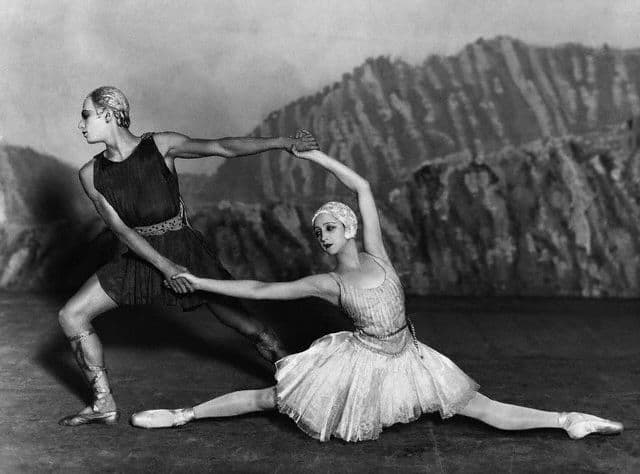
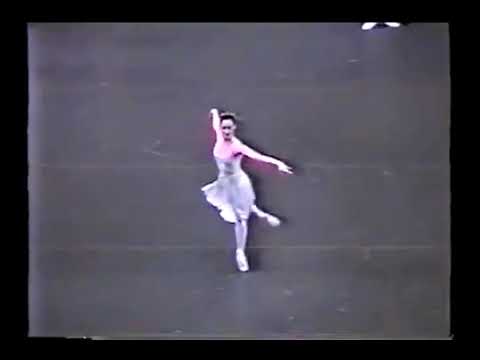
Unknown authorUnknown author — http://ballettalk.invisionzone.com/index.php?showtopic=21844 · Public domain
Apollo (originally Apollon musagète) is a neoclassical ballet in two tableaux, scored by Igor Stravinsky for a chamber string orchestra of 34 players and commissioned in 1927 by the American patron Elizabeth Sprague Coolidge for a Library of Congress festival. It exists in two distinct choreographic incarnations from the same year: an American premiere on 27 April 1928 with choreography by Adolph Bolm (who also danced Apollo), and a Ballets Russes production choreographed by the 24-year-old George Balanchine that opened in Paris on 12 June 1928, conducted by Stravinsky himself.
What it contains
- Classical Ballet · The whole ballet, per Stravinsky's and Balanchine's stated intent — Dancing kept 'essentially classical' throughout, with traditional tutus for the Muses and Apollo in toga and sandals, conceived as a ballet blanc. Source: "the style of dancing was essentially classical, and Stravinsky thought of "Apollon musagète" as a ballet blanc"
- Neoclassical Ballet · The whole ballet, both tableaux — Structured as a suite of solo variations and a pas de deux built on classical vocabulary but stripped of narrative, psychological or expressive intent, matched by monochrome costuming and bare staging. Source: "Apollo ... is a neoclassical ballet in two tableaux composed between 1927 and 1928 by Igor Stravinsky"
What is danced
The ballet traces the birth of Apollo and his instruction by three Muses -- Calliope (poetry), Polyhymnia (mime) and Terpsichore (dance and song) -- culminating in his ascent to Parnassus. The Balanchine version is built as a suite of variations: a prologue depicting the birth, a first variation for Apollo alone, a pas d'action bringing Apollo and the three Muses together, individual variations for each Muse, a second Apollo variation, a pas de deux (Apollo and Terpsichore), a coda, and a closing apotheosis. This variation-and-pas-de-deux architecture is classical ballet's standard grand-pas structure, repurposed without a narrative plot.
The article is explicit that "the style of dancing was essentially classical" -- Stravinsky wanted no expressive or psychological content, and Balanchine matched that with monochrome costuming (a reworked toga and laced sandals for Apollo, traditional tutus for the Muses) and largely bare staging, conceiving the whole as a ballet blanc. Beyond this the source gives no step-by-step technical detail (no named steps, holds, or partnering description), so a dancer researching actual vocabulary -- port de bras, the specific handling of the pas de deux lifts, the famous 'sunburst' or 'chariot' groupings later associated with Balanchine's staging -- will need to consult the Balanchine Trust materials or notated scores rather than this text alone.
The 1979 Baryshnikov revival cut Apollo's first variation and restaged the ending so that the Muses' rising arabesque 'peacock' tableau, originally placed earlier, became the final image instead of the ascent to Parnassus; the 1980 New York City Ballet staging then restored the first variation. Several companies (Suzanne Farrell's company in 2001, Dance Theatre of Harlem, Sarasota Ballet in 2015) have since restored the birth scene, indicating that what is danced at the opening has been an actively contested choice across stagings.
Context
Apollo was made in 1928, near the end of Diaghilev's Ballets Russes and at a pivot point in Balanchine's career -- he was 24 and this is treated as the work in which his mature, plotless, music-driven idiom first crystallized, moving away from the exoticism and psychological drama of earlier Ballets Russes productions toward what the article calls a deliberate 'reinvention of tradition' drawing on Baroque, Classical and rococo/galant models (Stravinsky himself returned to this Lullian source when writing Agon in 1957). The commission's constraints -- six dancers, small orchestra, under thirty minutes -- pushed both composer and choreographer toward economy and clarity rather than spectacle.
Staging history
The Bolm version, made for the U.S. premiere in Washington, D.C. in 1928 (with Ruth Page, Berenice Holmes and Elise Reiman as the Muses), is described as now 'practically forgotten,' since Stravinsky reserved European rights for Diaghilev and took no interest in the American staging. It is Balanchine's Paris production -- with Serge Lifar as Apollo, Alice Nikitina and Alexandra Danilova alternating as Terpsichore, Lubov Tchernicheva as Calliope and Felia Doubrovska as Polyhymnia -- that became the work's standard lineage, revived by American Ballet Theatre (1943), New York City Ballet (1951), The Royal Ballet (1966), the Australian Ballet (1991, staged by Karin von Aroldingen) and Birmingham Royal Ballet (2003), among others, with a first South American staging by Ballet Nacional del Peru in 2017 under Elyse Borne. Costume and structural choices have shifted across these stagings -- Chanel's 1929 redesign, the Baryshnikov-era cuts and restorations of 1979-1980, and later restorations of the birth-scene prologue by Farrell, Mitchell and Sarasota Ballet -- so 'Apollo' as performed today is not a fixed text but a lineage of Balanchine-authorized revisions.
How to watch it
Watch for the absence of narrative business: the piece is built as a sequence of formal variations (Apollo's own, then one for each Muse) followed by a pas de deux, coda and apotheosis, so the interest is in how the choreography treats music and geometry rather than storytelling. Note the monochrome, near-bare staging (a ballet blanc convention) and the toga-and-sandals costuming for Apollo against the Muses' tutus, and if you know a given staging's history, note whether it opens with the birth prologue and whether it closes with the ascent to Parnassus or with the Muses' 'peacock' arabesque tableau -- both endings are in active use.
Structure
- Act First tableau · Prologue: The Birth of ApolloApollo is born; this opening scene has been cut and restored across different stagings (e.g. restored by Farrell in 2001).
- Act Second tableau · Variation of ApolloApollo dances a solo variation, later omitted in the 1979 Baryshnikov staging and restored in 1980.
- Act Second tableau · Pas d'action (Apollo and the Three Muses)Apollo interacts with all three Muses together.
- Act Second tableau · Variation of Calliope (the Alexandrine)Solo variation for Calliope, muse of poetry.
- Act Second tableau · Variation of PolyhymniaSolo variation for Polyhymnia, muse of mime.
- Act Second tableau · Variation of TerpsichoreSolo variation for Terpsichore, muse of dance and song.
- Act Second tableau · Second Variation of ApolloApollo's second solo.
- Act Second tableau · Pas de deuxDuet, understood to be Apollo and Terpsichore.
- Act Second tableau · CodaClosing ensemble passage before the finale.
- Act Second tableau · ApotheosisApollo's ascent as a god to Mount Parnassus, though later stagings sometimes end instead on a 'peacock' tableau of the Muses.
Structure read from an encyclopaedia article, not from a libretto or score we hold. Confirm against a programme before treating the numbering as authoritative.
Credits
- composer: Igor Stravinsky
More from George Balanchine
Other staged works in the register connected to this one by author or lineage.
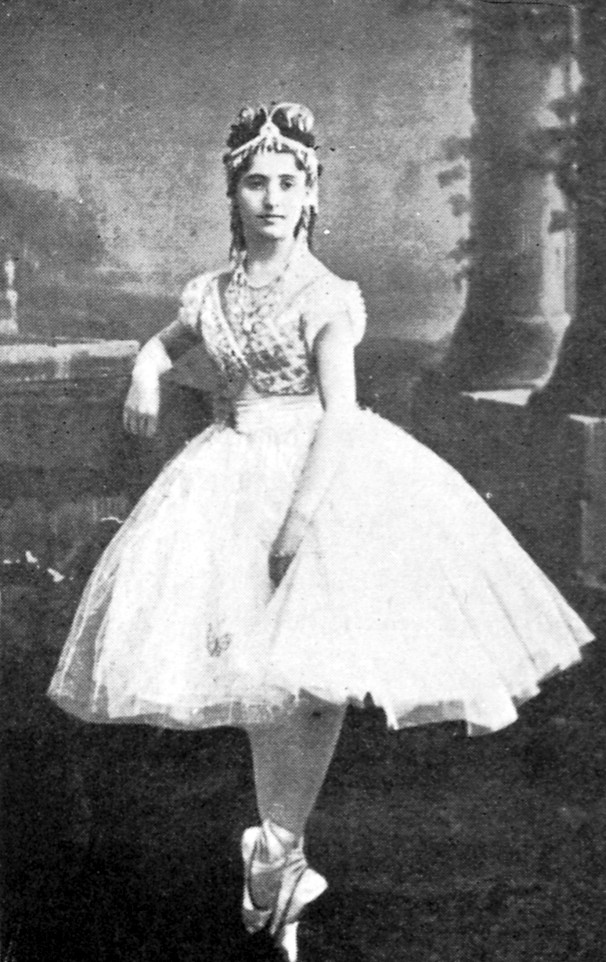 CoppéliaBallet · 1870Balanchine · video
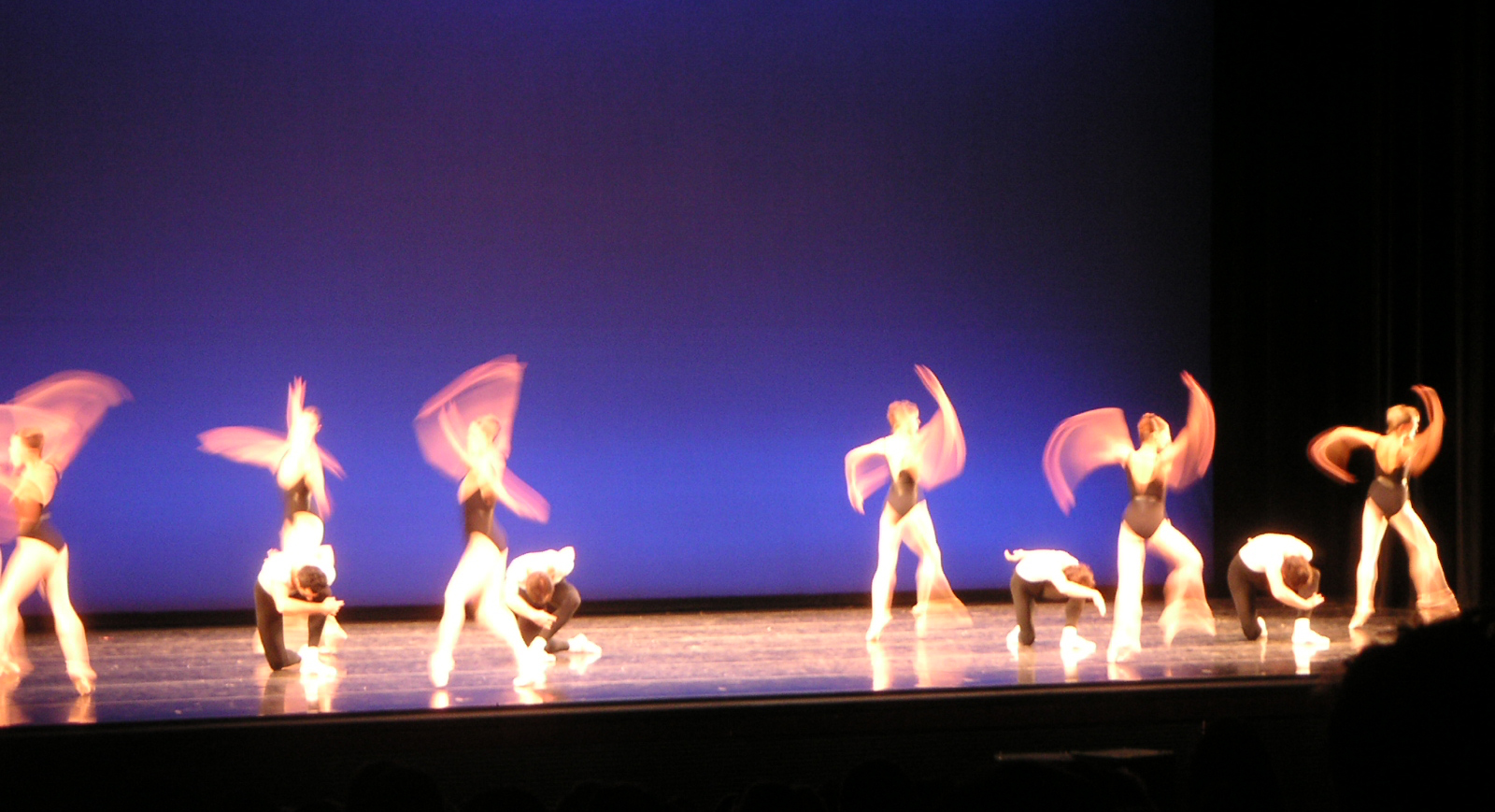 AgonBallet · 1957Balanchine · video
 Le chant du rossignolBallet · 1920Balanchine · video
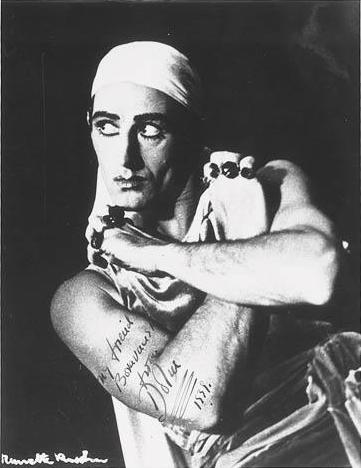 The Prodigal SonBallet · 1929Balanchine · video
 The Seven Deadly SinsBallet · 1933Balanchine · video
 Circus PolkaBallet · 1942Balanchine · video
 Tschaikovsky Piano Concerto No. 2Ballet · 1941Balanchine · video
 Square DanceBallet · 1957Balanchine · video