Khamma (1947)
Khamma is a score by Claude Debussy for a ballet set in ancient Egypt, commissioned around 1911–13 by the dancer Maud Allan, who co-wrote the scenario. Debussy left the orchestration unfinished and came to resent the commission; Charles Koechlin completed and orchestrated the music in January 1913, which is why the record credits both composers.
What it contains
- Sarabande — First dance: Sarabande · The first of the three dances in the concert suite, titled 'Sarabande', corresponding to Khamma's opening invocation before the statue — The movement is explicitly titled 'Sarabande', the slow ceremonial triple-metre courtly dance form; in the synopsis this section is where Khamma dances before the god's statue to implore his aid, matching the form's traditionally solemn, weighted character. Source: "follows the three dances of the second stage of the ballet... First dance: Sarabande"
What is danced
The article gives almost no description of actual choreography — no choreographer is named, and the only staged production it mentions (Paris Opéra-Comique) is noted purely as a premiere date and venue. What can be established is structural: the ballet's central action is a solo, danced three times by the title character, Khamma, in front of a cult statue of Amun-Ra, escalating from supplication to an 'ecstatic' and 'wild' final dance before her death. The concert suite drawn from the score preserves this three-part shape and labels the first of the three dances 'Sarabande' — the only place the article names an actual dance-form, tying this section (however loosely, since the label is musical rather than a choreographic direction on record) to the slow, ceremonial triple-metre vocabulary of that historic form.
Beyond that single labelled movement, the article gives no detail on steps, holds, or technique for the second and third dances, the final lament scene, or the corps material implied by 'the victorious defenders of the town.' A choreographer approaching this work has, on the documentary evidence here, a narrative shape (invocation, apparition, ecstasy, death, communal mourning) and one concrete historical dance-form marker, but not a received or recorded vocabulary.
Context
The commission dates from a period, roughly 1910–1913, when Paris theatrical dance was absorbing both the Ballets Russes' impact and a vogue for exoticist and 'ancient world' solo concert-dance associated with independent performers rather than the classical ballet establishment; Maud Allan, the commissioning dancer, worked in that free-dance, orientalising tradition rather than as a company ballerina. Debussy's own late style was moving toward the sparer, more ambiguous textures later heard in Jeux (1913), and the writer quoted in the article situates Khamma there, hearing 'possible echoes of Stravinsky's Petrushka' alongside 'pre-echoes of his own Jeux' in its orchestral colour and rhythm.
Staging history
The music went unperformed as a ballet during Debussy's lifetime. It first reached an audience in 1924 as a concert piece, given by the Concerts Colonne in Paris under Gabriel Pierné. The stage version — originally planned under the title Isis — was not mounted until 1947, at the Opéra-Comique, more than three decades after the commission and over Debussy's own objections to the project.
How to watch it
Listen for the shift from the slow, weighted ceremony implied by the 'Sarabande' opening toward the described 'ecstatic' and 'wild' final dance, since the score's own architecture — three escalating solo dances followed by catastrophe and communal lament — is the only staging blueprint the record supports. Because no choreographer or company tradition is documented here, treat any given production's actual steps as a modern reconstruction rather than an inherited convention.
Structure
- First dance: SarabandeThe first of the three dances Khamma performs before the statue of Amun-Ra, imploring the god's aid for the besieged town.
- Second danceThe second of Khamma's three dances before the statue; no further detail is given.
- Third danceAfter the three dances the statue is seen to move, and Khamma dances 'ecstatically' and 'wildly' until a flash of lightning and thunder kills her.
Structure read from an encyclopaedia article, not from a libretto or score we hold. Confirm against a programme before treating the numbering as authoritative.
Credits
- composer: Charles Koechlin
- composer: Claude Debussy
More from Claude Debussy
Other staged works in the register connected to this one by author or lineage.
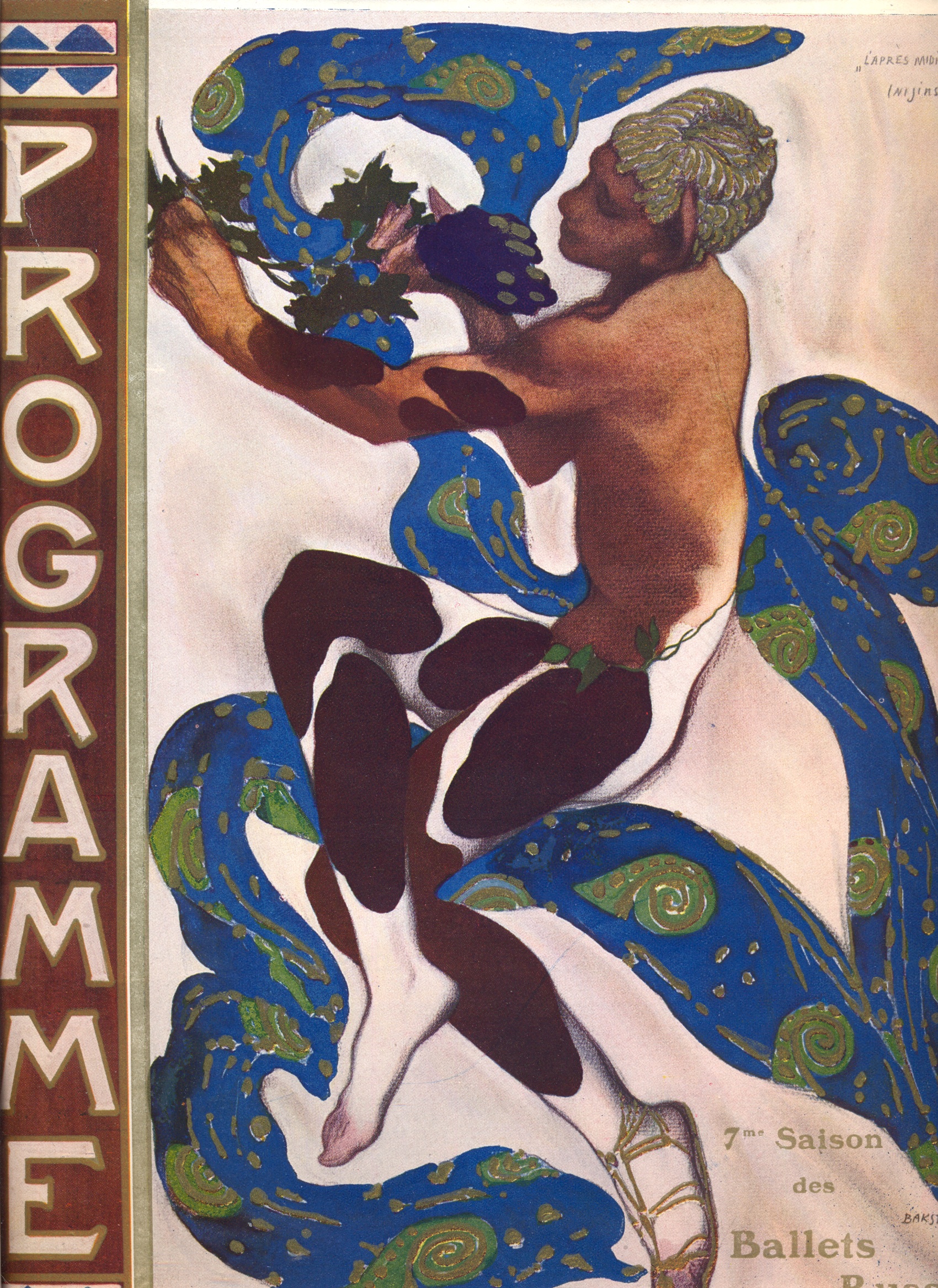 Afternoon of a FaunBallet · 1912Music by Debussy · video
 JeuxBallet · 1913Music by Debussy · video
 Afternoon of a FaunBallet · 1953Music by Debussy · video
 La boîte à joujouxBallet · 1919Music by Debussy · video
 Antique EpigraphsBallet · 1984Music by Debussy · video
 AgonBallet · 1957Same lineage · video
- Le Petit Elfe Ferme-l'œilLe Petit Elfe Ferme-l'œilBallet · 1924Same lineage
 L'éventail de JeanneBallet · 1929Same lineage