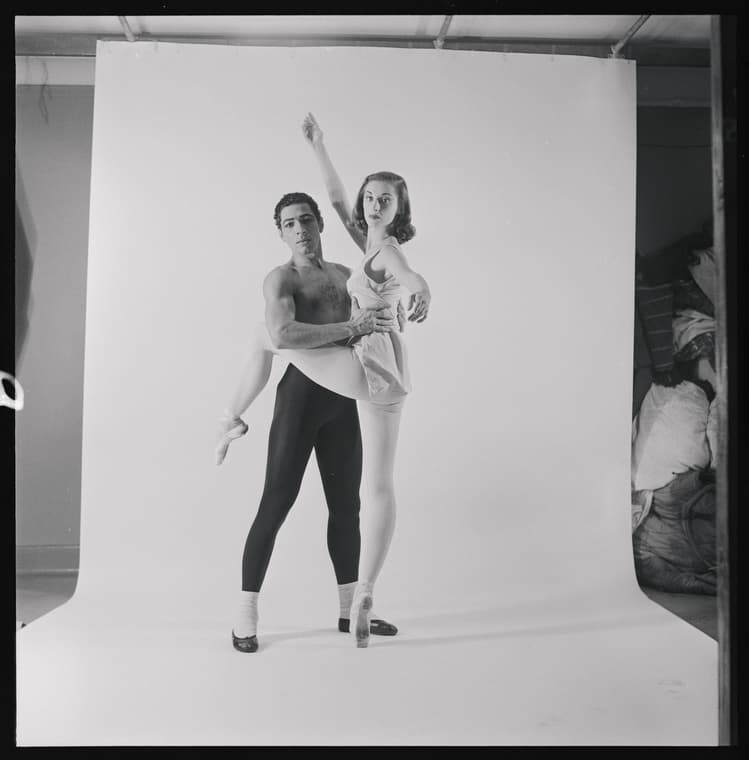
Frederick Melton — https://digitalcollections.nypl.org/items/461eff80-d354-0137-de9c-7f70161c6c28 · Public domain
Afternoon of a Faun (1953)
Afternoon of a Faun is a one-act neoclassical ballet made by Jerome Robbins in 1953 for New York City Ballet, set to Debussy's Prélude à l'après-midi d'un faune. It relocates the erotic encounter of Nijinsky's 1912 ballet of the same score from a mythic Greek glade to a modern dance studio, replacing the faun and nymph with two young dancers who meet, partner briefly, and part, watching themselves throughout in a mirror that is, for the audience, the fourth wall.
What it contains
- Neoclassical Ballet · The entire one-act ballet, from the man's opening solo sleep through the pas de deux to the closing kiss and return to sleep — Barre warm-up, restrained partnering without lifts or bravura steps, and gestures drawn from real rehearsal-room behaviour rather than classical mime or pantomime; the piece is explicitly identified as neoclassical in construction and stripped of narrative flourish. Source: "Afternoon of a Faun is a neoclassical ballet choreographed by Jerome Robbins to Claude Debussy's Prélude à l'après-midi d'un faune."
What is danced
The ballet opens with the man asleep on the studio floor; a woman enters and begins warming up at the barre before the two dance together, their gaze fixed on the imagined mirror rather than on each other. The vocabulary is deliberately unshowy: the article quotes Amanda Vaill describing it as 'deliberately devoid of flashy steps or complicated lifts; spare and poetic,' and Robbins himself intended the woman's movement to read as private practice-room preening rather than performance for an audience. Francisco Moncion, the original male lead, linked specific gestures to Mallarmé's poem, describing movement 'evocative of Mallarmé's faun - such as pushing through the reeds on a hot humid afternoon,' while Tanaquil Le Clercq noted that many of her own natural, off-hand gestures were absorbed directly into the choreography. The pas de deux ends with a single kiss on the cheek, after which the woman leaves and the man returns to sleep - there is no grand finish, lift, or exit step typical of a classical adagio.
Context
Robbins made the work eight years after founding New York City Ballet alongside Balanchine, and five years into establishing himself there as both dancer and resident choreographer. He had already parodied Nijinsky's scandalous 1912 original in a 1940 sketch titled PM of a Faun, and returned to the same score in 1953 with a fully serious treatment that stripped away the mythological apparatus - nymphs, Arcadian setting, the faun's overt sexuality - in favour of the rehearsal-studio realism and self-watching interiority that became a hallmark of American neoclassical ballet in this period. The choice of a plain English title over the French of the poem and score signalled the same move away from Romantic and Symbolist trappings toward a contemporary, unadorned frame.
Staging history
The ballet premiered with Tanaquil Le Clercq and Francisco Moncion and has remained continuously in New York City Ballet's repertory since. Robbins' own touring company, Ballets: USA, carried it internationally between 1958 and 1961, notably pairing the black dancer John Jones with white partners Wilma Curley and Kay Mazzo during State Department tours - a casting choice that echoes the racial tensions Robbins had navigated (and, by most accounts, lost, via Balanchine's intervention) when considering Louis Johnson for the original male role. From the 1970s the ballet entered other major companies' repertories, including The Royal Ballet (1971, with Antoinette Sibley and Anthony Dowell), The Australian Ballet (1978), and later the Bolshoi, San Francisco Ballet, Paris Opera Ballet, American Ballet Theatre, Royal Danish Ballet, La Scala Ballet, National Ballet of Canada and Dance Theatre of Harlem; Robbins also waived royalties for Valery Panov to perform it.
How to watch it
Watch where the dancers actually look: both performers play to an invisible mirror positioned where the real audience sits, so their absorption is meant to exclude the viewer rather than invite them in - the opposite convention from a classical presentational pas de deux. Note the restraint of the partnering (no overhead lifts, no bravura steps) and the single closing gesture, a kiss on the cheek, which carries the entire emotional weight of the piece.
Credits
- composer: Claude Debussy
More from Claude Debussy
Other staged works in the register connected to this one by author or lineage.
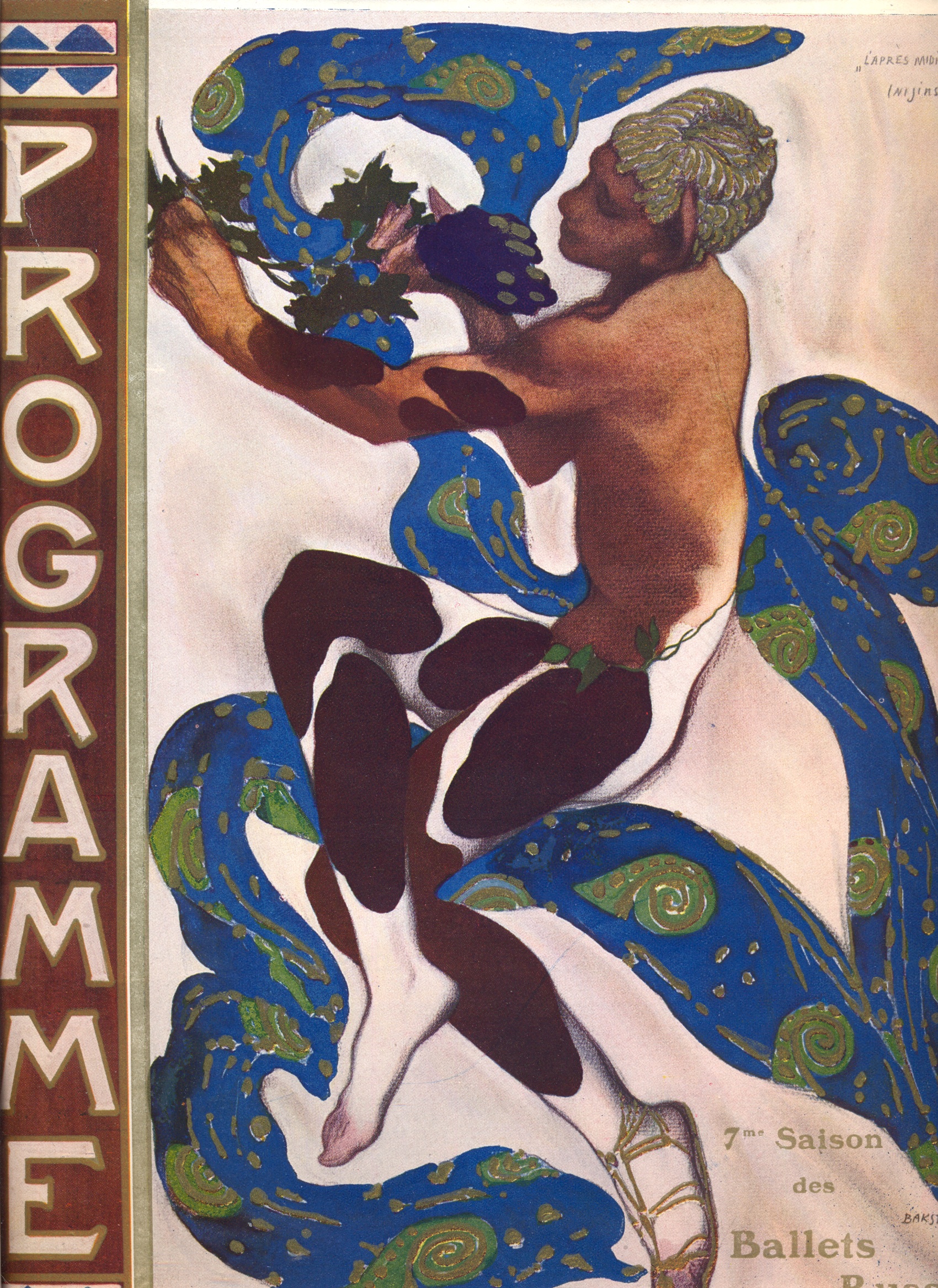 Afternoon of a FaunBallet · 1912Music by Debussy · video
 JeuxBallet · 1913Music by Debussy · video
- KhammaKhammaBallet · 1947Music by Debussy
 La boîte à joujouxBallet · 1919Music by Debussy · video
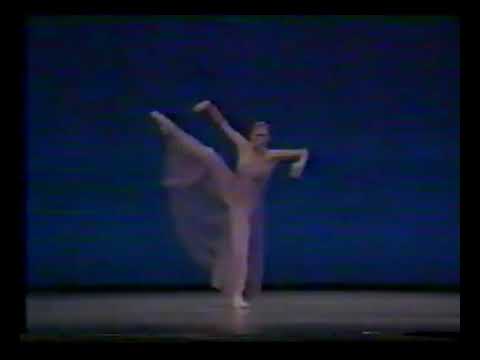 Antique EpigraphsBallet · 1984Music by Debussy · video
 ApolloBallet · 1928Same lineage · video
 Stravinsky Violin ConcertoBallet · 1972Same lineage · video
 IvesianaBallet · 1954Same lineage · video