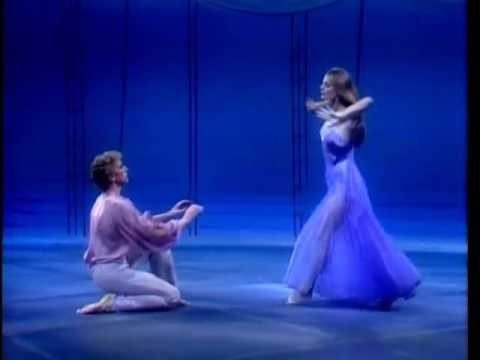
Tschaikovsky Suite No. 3 is a plotless, four-movement ballet George Balanchine made for New York City Ballet to Tchaikovsky's Suite No. 3 for Orchestra in G major, Op. 55 (1884), premiered on 3 December 1970 at the New York State Theater with scenery and costumes by Nicolas Benois. It belongs to Balanchine's line of large-scale, non-narrative works built directly on a symphonic score rather than a libretto, in which the choreography's structure follows the composer's movement divisions.
What is danced
The article does not describe the choreography's vocabulary or steps for any of the four movements in detail. What it does establish is a structural fact: the final movement is not new choreography made in 1970 but Balanchine's own 1947 work Theme and Variations, made originally for Ballet Theatre, carried into this suite 'substantially unchanged' as the fourth and closing section, sometimes billed on its own as Tema con variazioni. That reuse means the ballet's climax is a piece with its own independent performance history and reputation, now recontextualized as the culmination of a longer, four-movement frame rather than a standalone curtain-raiser.
Context
The 1970 premiere came at the New York State Theater, the Lincoln Center home NYCB had occupied since 1964, whose larger stage and pit supported the kind of expanded, full-orchestra suite ballets Balanchine was building through this period. Setting an entire Tchaikovsky suite, rather than isolating one movement as he had in 1947, reflects Balanchine's practice at NYCB of returning to and enlarging earlier successes into bigger architectural statements built on a whole score.
Staging history
The article traces one clear line of custody: the fourth movement began life in 1947 as Theme and Variations for Ballet Theatre, and was folded into the present four-movement ballet at its 1970 NYCB premiere. Beyond that, and the existence of a Balanchine Trust page for licensing, the article gives no account of later revivals, cast changes, or other companies staging the full suite.
How to watch it
Watch for the seam between old and new material: the first three movements were made fresh for this 1970 suite, while the fourth is a preserved 1947 work now serving as finale, so its choreographic voice may read as distinct from what precedes it. The piece works as a suite in the classical sense — a sequence of self-contained movements unified by the shared score rather than by story.
Structure
- Theme and Variations (Tema con variazioni)The suite's closing movement is Balanchine's 1947 Theme and Variations, made originally for Ballet Theatre, carried into this ballet largely as it originally stood.
Structure read from an encyclopaedia article, not from a libretto or score we hold. Confirm against a programme before treating the numbering as authoritative.
Credits
- composer: Pyotr Ilyich Tchaikovsky
More from George Balanchine
Other staged works in the register connected to this one by author or lineage.
 CoppéliaBallet · 1870Balanchine · video
 ApolloBallet · 1928Balanchine · video
 AgonBallet · 1957Balanchine · video
 Le chant du rossignolBallet · 1920Balanchine · video
 The Prodigal SonBallet · 1929Balanchine · video
 The Seven Deadly SinsBallet · 1933Balanchine · video
 The Boys from SyracuseMusical theatre · 1938Balanchine · video
 Stars and StripesBallet · 1958Balanchine · video