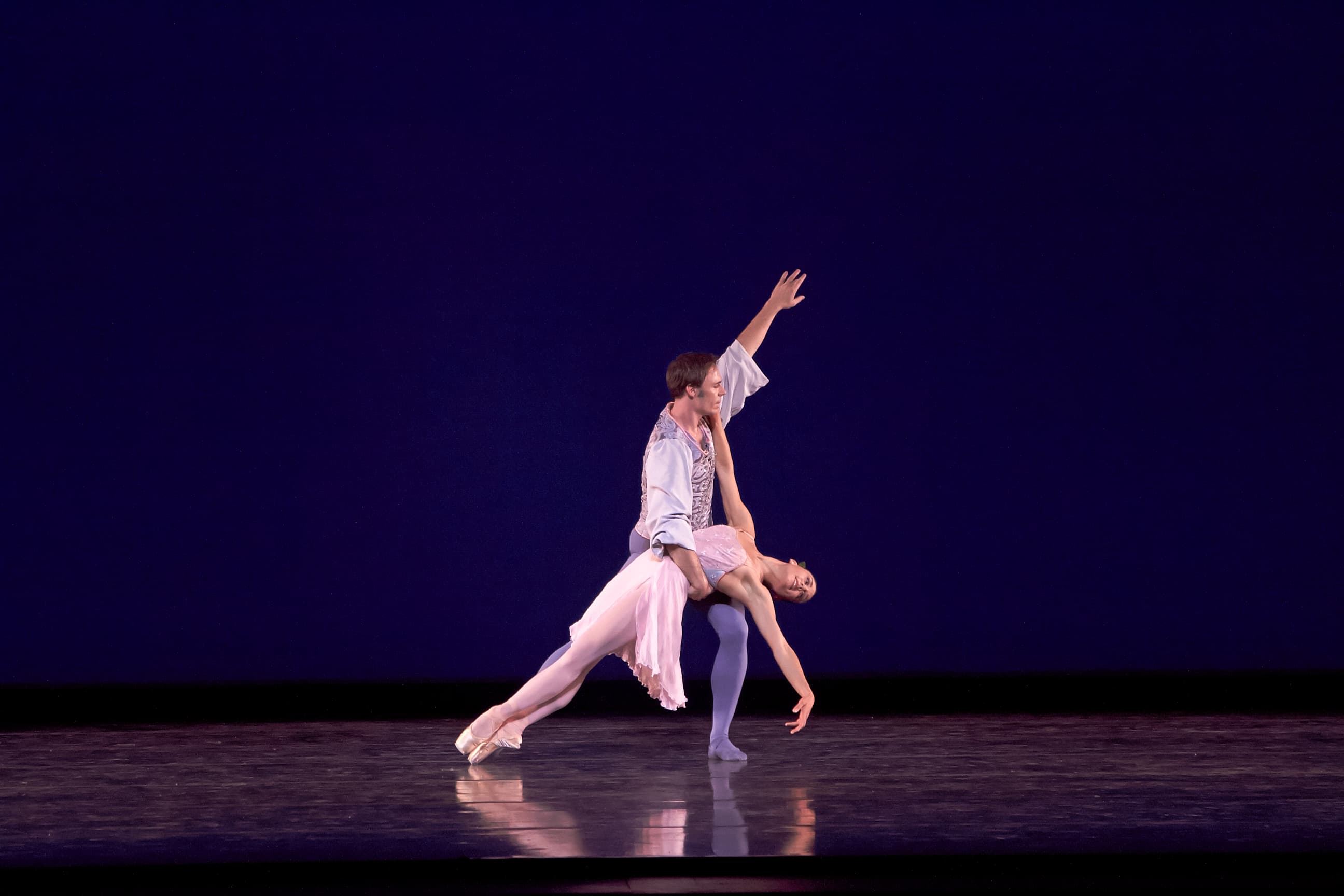
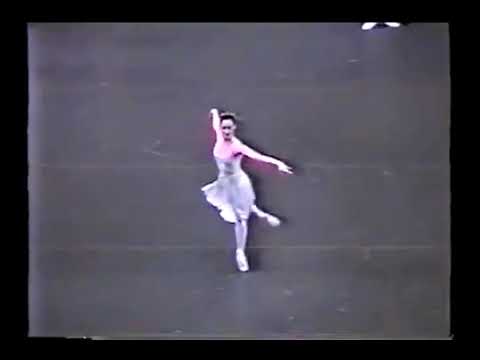
KCBalletMedia — https://www.flickr.com/photos/67555847@N06/10212627775/ · CC BY 2.0
Allegro Brillante is a plotless, one-movement ballet Balanchine set to the first movement of Tchaikovsky's Piano Concerto No. 3, made for a lead couple and a corps de ballet of only eight. It runs about thirteen minutes and was created for New York City Ballet, premiering March 1, 1956 at the City Center of Music and Drama with Maria Tallchief and Nicholas Magallanes.
It belongs in the catalogue as one of Balanchine's own touchstone statements on abstract, music-driven ballet: he called it a work that 'contains everything I knew about classical ballet' compressed into a single short movement, with no narrative intent beyond matching the dancers to the score.
What it contains
- Balanchine Method · the entire ballet, principal couple and corps of eight — fast turns, beats and pirouettes demanding exactness and control beneath apparent freedom, described by the originating dancers as requiring 'strong, broad dancing spaced in very little time' Source: "There's a lot of strong, broad dancing spaced in very little time. The gestures have to be big, ample, spacious, and they have to look free."
- Neoclassical Ballet · the entire ballet, a single continuous movement — plotless choreography built directly to concerto structure, with continuous, musically-driven phrasing described as 'dancey and flowing' rather than narrative or mimed Source: "I had no narrative idea for the work, only wishing to have the dancers complement the music as best I could."
- Classical Ballet · the entire ballet — Balanchine described the work as a distillation of the full range of classical technique compressed into one short concerto movement Source: "the ballet "contains everything I knew about classical ballet – in thirteen minutes.""
What is danced
The ballet is built around a single principal couple set against a small corps of eight, with the ballerina's dancing keyed directly to the piano line: Balanchine said she 'follows the piano in the cadenza,' while her partner and the corps carry the surrounding musical argument. Violette Verdy, who danced the lead, described the demands as 'strong, broad dancing spaced in very little time' requiring gestures that are 'big, ample, spacious' yet controlled underneath — precise pirouettes, beaten steps, and fast turns performed at speed without letting the difficulty show.
Nancy Reynolds's assessment that the ballet is 'dancey and flowing' despite an 'impossibly difficult' tempo points to continuous, musically driven phrasing rather than set pieces or mime. The article notes Balanchine placed exits strategically so the corps's load feels lighter than the tempo suggests, which is a structural, not merely aesthetic, choice — practical stagecraft built into the choreography itself. There is no synopsis or scene breakdown to draw on: the work is a single continuous movement with no internal divisions given in the source, so no sectional structure is offered here.
Context
The ballet was made in 1956 for New York City Ballet, the company Balanchine had built as a home for his own brand of plotless, symphonic choreography following his earlier Tchaikovsky-score ballet Ballet Imperial (set to the Piano Concerto No. 2). It arrived at speed, as a replacement for a cancelled Jerome Robbins premiere, and Balanchine used it to restate, in miniature, his approach to classicism stripped of narrative — dancers answering the structure of a virtuoso piano concerto rather than illustrating a story.
Staging history
Allegro Brillante has remained a regular part of New York City Ballet's repertory since its 1956 premiere and, because of its short length and small cast, is often used as a middle work on mixed bills. It has since been staged by companies including Sadler's Wells Royal Ballet, San Francisco Ballet, Royal New Zealand Ballet, Morphoses, American Ballet Theatre, Stuttgart Ballet, Les Grands Ballets Canadiens, National Ballet of Canada, Ballet BC, Royal Winnipeg Ballet, Miami City Ballet, Pennsylvania Ballet, Washington Ballet, Suzanne Farrell Ballet, Dance Theatre of Harlem, Kansas City Ballet, Ballet Arizona, BalletMet and Ballet West, as well as by students of the School of American Ballet in its annual workshop. Two filmed performances are documented: a 1979 PBS Great Performances broadcast led by Suzanne Farrell and Peter Martins, and a 2017-filmed archival video led by Tiler Peck and Andrew Veyette, released online by NYCB in 2020 after a season cancelled by COVID-19.
How to watch it
Watch how closely the ballerina's phrasing tracks the piano's cadenza passages rather than the orchestra, and notice how quickly the choreography moves between exposed solo moments and passages where the corps of eight absorbs the musical argument. The demand described by dancers is to make very fast, technically exact work — turns, beats, pirouettes — read as free and unforced rather than effortful; a performance that lets the difficulty show is, by the dancers' own account, doing it wrong.
Credits
- composer: Pyotr Ilyich Tchaikovsky
More from George Balanchine
Other staged works in the register connected to this one by author or lineage.
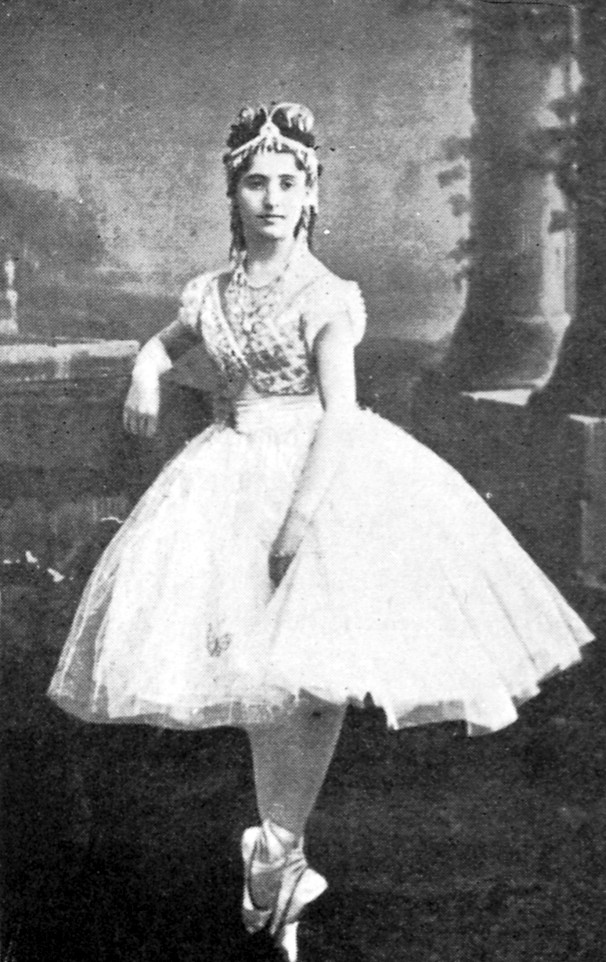 CoppéliaBallet · 1870Balanchine · video
 ApolloBallet · 1928Balanchine · video
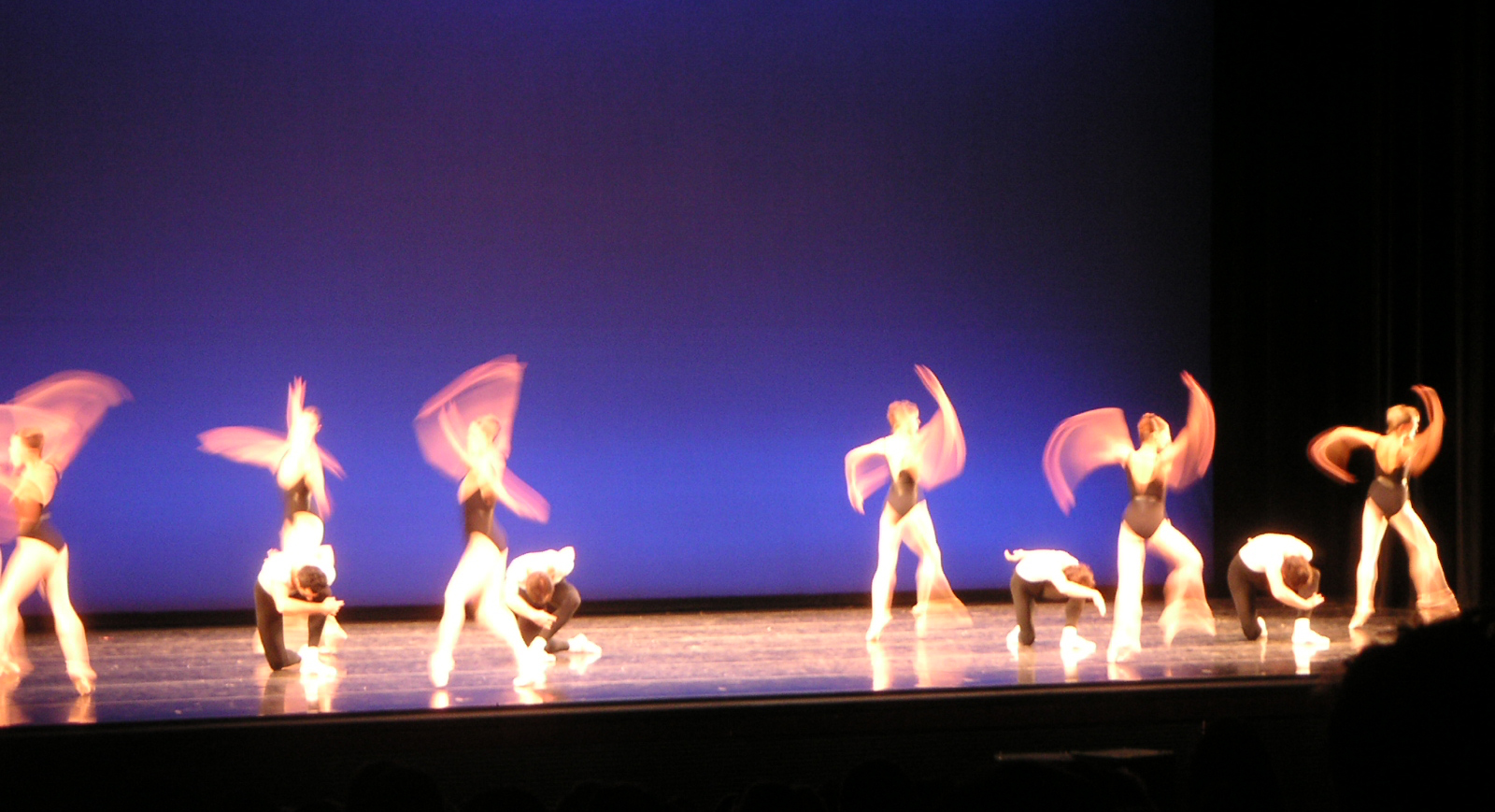 AgonBallet · 1957Balanchine · video
 Le chant du rossignolBallet · 1920Balanchine · video
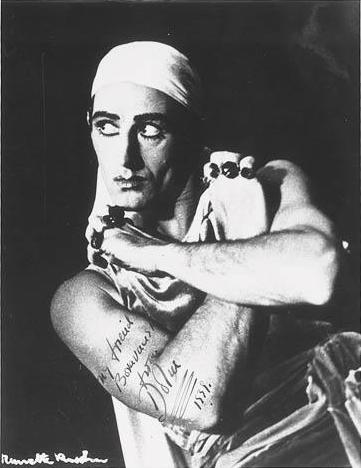 The Prodigal SonBallet · 1929Balanchine · video
 The Seven Deadly SinsBallet · 1933Balanchine · video
 Tschaikovsky Piano Concerto No. 2Ballet · 1941Balanchine · video
 Jazz CalendarBallet · 1968Same lineage · video