Year of the Rabbit is a plotless ballet made in 2012 by Justin Peck, then a 25-year-old corps de ballet dancer at New York City Ballet, set to an orchestrated arrangement of Sufjan Stevens's electronic album Enjoy Your Rabbit. It was Peck's first ballet to reach the Manhattan stage of NYCB (his earlier In Creases had premiered that summer in Saratoga Springs), and it marked the arrival of a choreographic voice that would go on to shape the company's repertory for the following decade.
What it contains
- Contemporary Ballet · The whole ballet, an eighteen-dancer plotless work — Structurally intricate ensemble dancing described as combining 'the stimulation of structure and detail' with 'stylized athleticism,' built to flatten hierarchy between corps and principals rather than showcase a narrative or divertissement structure. Source: "the stimulation of structure and detail, but also of stylized athleticism"
What is danced
The ballet is built for eighteen dancers, six of them singled out as leads, and Peck has said he set out 'to create a sense of equality between the corps and the principal dancers' rather than building a conventional hierarchy of soloists against ensemble. The DanceTabs review characterises the piece as being 'about the excitement of working in a ballet company and teasing out the things that ballet is capable of, the stimulation of structure and detail, but also of stylized athleticism' — language that points to intricate group patterning and a physically driven, athletic classical vocabulary rather than a mimed or narrative one.
The article does not give a step-by-step account of the choreography (no pas de deux, adagio or variation is individually described), so specifics of partnering, footwork or lift work cannot be drawn from it with confidence. What can be said is that the music's electronic score required unusually careful metric work: Peck and conductor Michael P. Atkinson reportedly spent two hours working out 'just how to count it for the dancers,' which signals a score-driven, rhythmically exacting choreographic approach rather than a purely lyrical one.
Context
The ballet arrived at a moment when New York City Ballet was actively cultivating choreographic talent from inside its own ranks through the New York Choreographic Institute, the workshop where Peck had already made an earlier version of this material (Tales of a Chinese Zodiac) before expanding it into Year of the Rabbit for the main company. Its score also represents an unusual crossing of indie/electronic music into the ballet house: Stevens, known for folk songwriting, had made Enjoy Your Rabbit as what he called 'sort of a hobby' and did not initially think of it as ballet music, only coming around to the medium after Peck showed him Balanchine's Agon.
Staging history
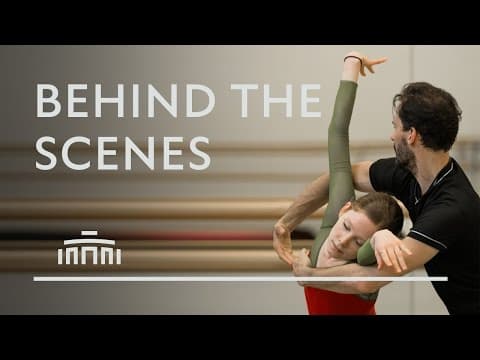
Beyond its NYCB premiere, the ballet has entered the repertory of Dutch National Ballet, Pacific Northwest Ballet, Joffrey Ballet and Houston Ballet, staged in later productions by original cast members Craig Hall and Janie Taylor.
How to watch it
Watch for how the choreography distributes weight between the six named leads and the twelve-dancer ensemble — Peck explicitly aimed to flatten the usual soloist/corps hierarchy, so attention worth paying to whether individual dancers emerge from or dissolve back into group formations. Given the unusual electronic score, also listen for how sharply the ensemble's timing locks to the music's beat structure, since the choreographer and conductor treated the counting itself as a major technical problem to solve.
Credits
- composer: Sufjan Stevens
More from Justin Peck
Other staged works in the register connected to this one by author or lineage.
 In CreasesBallet · 2012Peck · video
 Pulcinella VariationsBallet · 2017Peck · video
 The Times Are RacingBallet · 2017Peck · video
 West Side StoryMusical theatre · 1957Same lineage · video
 SylviaBallet · 1876Same lineage · video
 Carmen SuiteBallet · 1967Same lineage · video
 IvesianaBallet · 1954Same lineage · video
- Carnival of the AnimalsCarnival of the AnimalsBalletSame lineage