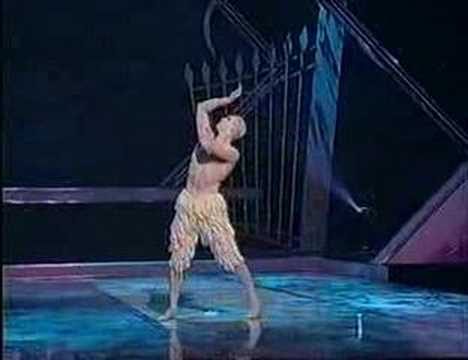
Matthew Bourne's Swan Lake is a contemporary ballet retelling of the Petipa/Ivanov classic, using Tchaikovsky's score (reordered and trimmed) but replacing the fairy-tale plot with the story of an emotionally neglected prince who is saved from suicide, and ultimately destroyed, by his relationship with a male Swan. Produced by Bourne's company Adventures in Motion Pictures, it premiered at Sadler's Wells in November 1995 and became one of the most commercially successful and widely toured dance-theatre works of the last thirty years, transferring to the West End and Broadway and touring internationally for decades.
What it contains
- Contemporary Ballet · The whole production — Retains the Tchaikovsky score and pas-de-deux structure of classical Swan Lake while reworking it in modern narrative and physical terms, including barefoot, bare-chested male swan choreography rather than classical pointe/tutu vocabulary. Source: "Matthew Bourne's Swan Lake is a contemporary ballet based on the Russian romantic work Swan Lake, from which it takes the music by Tchaikovsky and the broad outline of the plot."
- Contemporary Ballet · Act II, the lake scene and Swan/Prince pas de deux — Bare-chested, barefoot male dancers perform the swan corps and a sensual pas de deux with the Prince, replacing pointe-shoe/tutu vocabulary with grounded, muscular contemporary-ballet partnering. Source: "This Act contains the most talked-about element of the ballet in which bare-chested, barefoot male dancers play the swans, and it contains a very sensual pas de deux between the lead Swan and the Prince."
- Romantic Ballet · Act I, Scene 3, the theatre-box ballet-within-the-ballet — A staged ballet performed for the onstage royal audience deliberately imitates the ornate costumes, backdrop and acting style of nineteenth-century Romantic ballet as a parody within the larger work. Source: "The ballet's backdrop (from a design for Castle Falkenstein by Christian Jank), ornate costumes, and acting parody the romantic ballets of which the original Swan Lake was an example."
What is danced
The production runs on a spine of classical-ballet convention that Bourne deliberately bends rather than discards: it keeps the pas de deux structure of the original (Swan/Prince duets recur in Act II and Act IV, echoing the white-swan adagios of the Petipa version) and stages a formal ballet-within-the-ballet in Act I that knowingly parodies the tutu-and-tulle aesthetic of nineteenth-century Romantic ballet. Against that, the article describes a deliberate break in vocabulary in the Act I nightclub scene ('Swank Bar'), where the choreography 'veers from classical ballet, with jazz forms and modern dance dominating' -- the only place in the synopsis where a shift of idiom is named outright.
Context
Bourne made this Swan Lake in 1995 after earlier contemporary-ballet reworkings of The Nutcracker and La Sylphide, scaling his small company from six to thirty-two dancers for the production; it sits in a mid-1990s moment of narrative-driven, theatrically literal reworkings of the classical repertory rather than abstract postmodern deconstruction. Its most consequential intervention on the genre was recasting the swan corps as bare-chested male dancers, which reframed a stock Romantic-ballet image of powerless femininity as a study in repressed male desire, and which the article credits with a lasting reputation for radicalism within ballet's gender conventions.
Staging history
The work premiered at Sadler's Wells on 9 November 1995, toured the UK in 1996, then moved to the Piccadilly Theatre in the West End for a 120-performance run described as the longest ever for a full-length ballet in London; it played the Ahmanson Theatre in Los Angeles in 1997 and opened on Broadway at the Neil Simon Theatre in 1998, running 124 performances with the original cast. It has since returned repeatedly to Sadler's Wells and UK tour (1999, 2004-05, 2006, 2009-10, 2018-19, and a 2024-25 'Next Generation' tour), toured internationally to the US, Japan, Australia, China and elsewhere, and been filmed as a stage production three times (1998, 2012 in 3D, 2019).
How to watch it
Watch for the deliberate contrast Bourne sets up between formal, presentational court choreography (the Act I ballet-within-a-ballet, the Act III ballroom formalities) and the looser, more vernacular movement of the nightclub and asylum scenes. Pay attention to the swan corps' bare feet, bared chests and attacking, muscular unison -- a direct rejection of pointe-shoe femininity -- and to how the classical grand-pas-de-deux convention (search, resistance, surrender) is retained but redirected between two male dancers in Act II and Act IV.
Structure
- Act I · Scene PrologueThe child Prince, woken by a nightmare of a swan, is briefly comforted by his mother.
- Act I · Scene 1The Prince is dressed for official duties by chambermaids and valets.
- Act I · Scene 2The adult Prince performs bored ceremonial duties while neglected by his mother and is introduced to the Girlfriend.
- Act I · Scene 3The royal party watches a staged ballet-within-the-ballet that parodies Romantic-era ballet conventions, disrupted by the Girlfriend's behaviour.
- Act I · Scene 4A near-violent pas de deux between the Prince and his mother in his private chambers.
- Act I · Scene 5-6 · Swank BarThe Prince goes to a 1970s-style disco where the choreography shifts to jazz and modern dance idioms and he is thrown out after a fight.
- Act I · Scene 7The Prince discovers the Girlfriend was paid off, resolves to kill himself, and has a first vision of swans.
- Act IIAt the lake the Prince is saved by the lead Swan; the two fall in love in a sensual pas de deux danced by bare-chested, barefoot male dancers.
- Act III · Scene 1European princesses and escorts arrive at the palace ball; the Girlfriend sneaks in among them.
- Act III · Scene 2A grand ball degenerates into a debauched party with national dances and group numbers; the Stranger seduces the guests and the Queen, ending in a shooting.
- Act IVIn an asylum the Prince is attacked and reunited with the Swan in dream sequences before dying; a final tableau reunites Prince and Swan.
Structure read from an encyclopaedia article, not from a libretto or score we hold. Confirm against a programme before treating the numbering as authoritative.
More from Matthew Bourne
Other staged works in the register connected to this one by author or lineage.
 The Red ShoesBallet · 2016Bourne · video
 West Side StoryMusical theatre · 1957Same lineage · video
 GiselleBallet · 1841Same lineage · video
 La SylphideBallet · 1832Same lineage · video
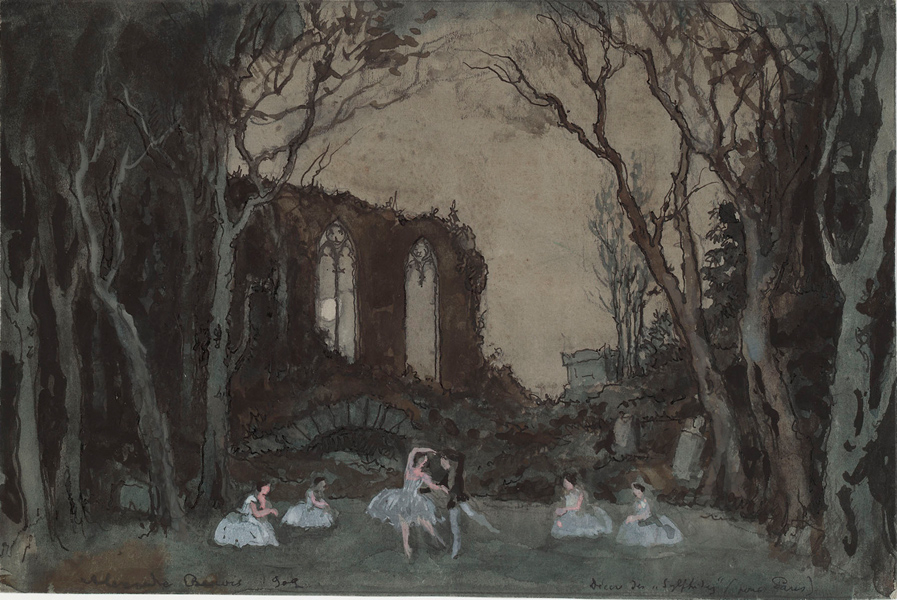 Les SylphidesBallet · 1908Same lineage · video
 SylviaBallet · 1876Same lineage · video
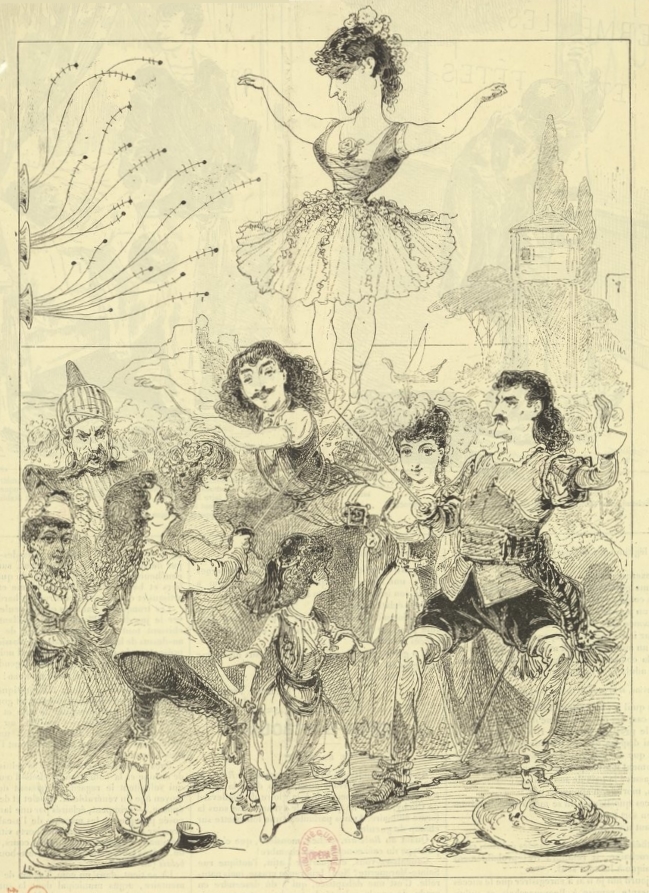 NamounaBallet · 1882Same lineage · video
- Carnival of the AnimalsCarnival of the AnimalsBalletSame lineage