Corde Lisse (Aerial Rope)
Also known as: Aerial Rope, Vertical Rope, Smooth Rope, Corde Verticale
History & Cultural Context
Corde lisse, French for smooth rope, is aerial acrobatics on a single vertically suspended rope, known in English simply as aerial rope. The apparatus is typically soft cotton around thirty to thirty-five millimetres thick, rigged from a single point and worked barehanded. Its vocabulary is built from climbs, wraps around the leg, hip, waist or neck, held postures, rolls and controlled drops in which stored wraps release under body weight. Performers work without a net or safety line, relying entirely on their own strength and technique to prevent a fall, so grip endurance, wrap accuracy and the ability to arrest a descent are the core competencies. The discipline is closely related to Spanish web, which adds a hand loop and a ground-based rotator, and to aerial silks, which substitute two strips of fabric for the rope and allow slower, more forgiving wraps; rope is the less compliant apparatus and rewards precision over cushioning. Corde lisse appears throughout contemporary circus repertoire, including Cirque du Soleil productions, and is taught as a standard aerial discipline at schools such as Cirkus Cirkor.
Cultural Significance
Rope is among the older aerial disciplines and sits squarely in the traditional circus canon, while having been fully absorbed into contemporary circus and into studio aerial dance culture since the 1990s.
Characteristic Movement & Technique
Climbs and inversions, single- and double-leg wraps, hip keys, meat hooks, held straddles and controlled drops. Sequences alternate static shapes with dynamic descents that unwind stored rope.
Partnering Dynamics
Usually a solo discipline, though doubles work exists in which performers occupy different heights on the same rope or hang from one another, demanding precise weight-sharing and management of rope tension and spin.
Competitive Context
Status is established mainly through professional casting, festival programming and circus school assessment rather than sport competition, though aerial arts competitions do run rope divisions.
Regional Variations
French and Quebecois contemporary circus training emphasises choreographic integration and dramaturgy, while traditional circus lineages favour trick density, height and the spectacle of the drop.
Common Misconceptions
Rope is often assumed to be an easier entry point than silks. In practice it offers less friction and no fabric padding, and rope burns and bruising are routine while wrap technique is being learned.
Peak Popularity
Notable Codifiers
- Cirque du Soleil
- Cirkus Cirkor
- Ecole nationale de cirque
Corde Lisse (Aerial Rope) Music & Tempo
Drawn from 17 Corde Lisse (Aerial Rope) tracks in the LODance music library.
Example tracks at practice tempo
- 551 — Dessa85 BPM
- White Rabbit — Emilíana Torrini114 BPM
- Numb — Hayden James feat. GRAACE76 BPM
- Teardrop — Massive Attack77 BPM
- Goodbye — Apparat87 BPM
- Cherry Bomb — Joan Jett & the Blackhearts128 BPM
Who governs Corde Lisse (Aerial Rope)
Federations, councils and examining bodies with a recorded role in this style. No single organisation can tell you this — each one knows only itself.
Legends of Corde Lisse (Aerial Rope)
Dancers, choreographers and teachers whose work shaped this style.
Sources & Further Reading
Cultural & Historical Context
Corde Lisse (Aerial Rope) emerged from France and continental European circus tradition during the 1900s—present day. Understanding the cultural roots, musical traditions, and social circumstances of this era enriches appreciation for the dance's characteristics and significance.
Formative Influences
Codifiers & Standardizers:
Cirque du Soleil, Cirkus Cirkor, Ecole nationale de cirque
Primary Source Documents
The Library of Dance contains public-domain primary sources for dance history. Copyrighted modern syllabi are indexed with purchase links to their respective copyright owners. Search by dance name or codifier to discover primary source documents.
Last reviewed: September 2026 — This dance profile synthesizes historical research, cultural documentation, and contemporary practice knowledge to provide authoritative context.
More in Aerial Dance
Aerial Silks
Dance and acrobatics performed while climbing, wrapping, suspending from, and dropping on two lengths of fabric hung from a single point.
Aerial Lyra (Hoop)
Dance and poses performed on and around a suspended steel hoop, spinning or static, blending circus skill with choreographed movement.
Aerial Hammock (Sling)
A loop of fabric (both ends rigged together) forming a hammock/sling that cradles the body for poses, rolls, and gentler aerial dance.
Aerial Straps
An aerial discipline using two suspended fabric or webbing straps looped around the wrists, built on gymnastic strength holds, swings and high-speed rotational sequences.
Corde Lisse (Aerial Rope) in art
Browse the gallery →Works our catalogue identifies as depicting corde lisse (aerial rope).
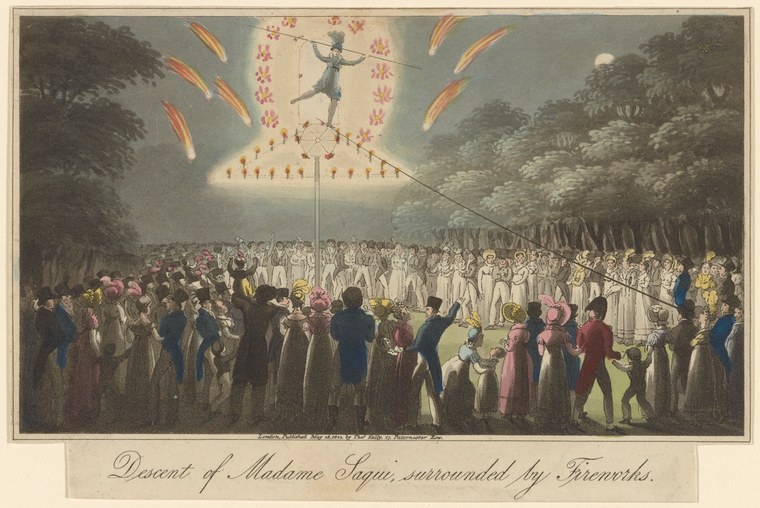
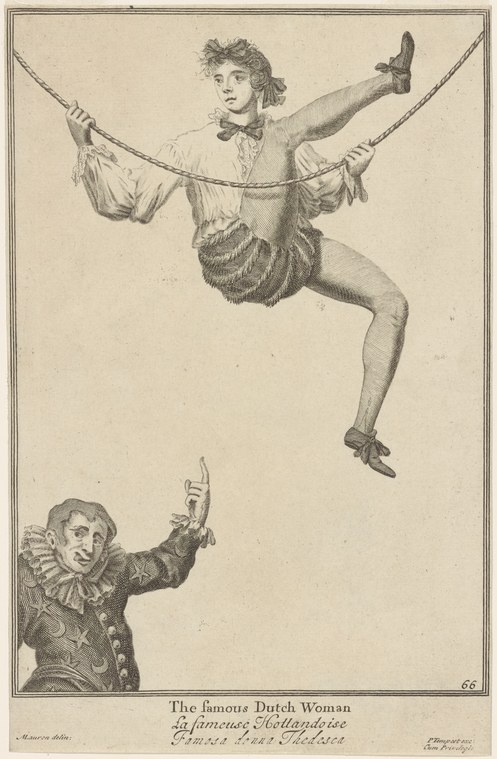
The famous Dutch woman
Unknown artist
Public Domain
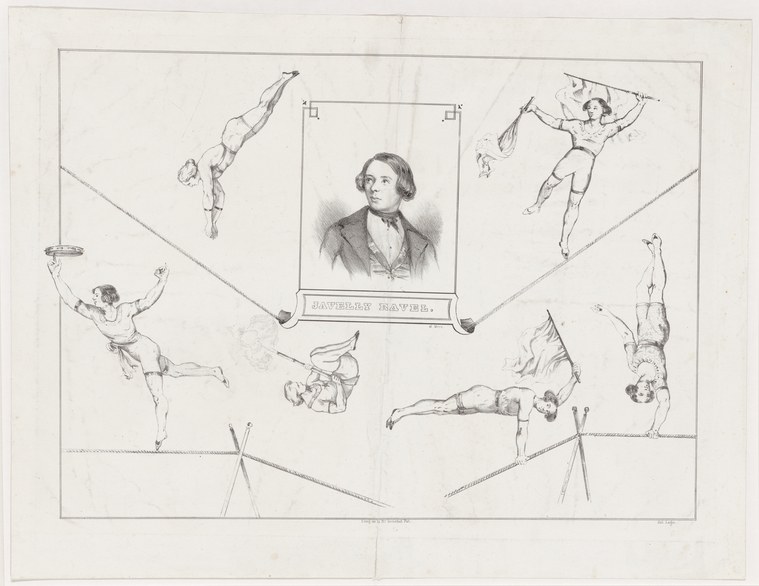
Rope dancing
Unknown artist
Public Domain
Continue Exploring
Lineage of Dance
500 years of dance evolution
Champions of Dance
Winners of marquee national & world titles
Language of Dance
161 dance terms & translations
Listening of Dance
Tempo, timing & musicality tools
Gallery of Dance
5,700+ artworks from museum collections
Attire of Dance
Evolution of dance dress across eras
Keep the thread going
Dance history, technique, and the occasional rabbit hole — in your inbox. Thoughtful, infrequent, unsubscribe anytime.
Free. No spam. One click to leave.