Aerial Straps
Also known as: Sangles Aeriennes, Straps, Aerial Webbing, Duo Straps
History & Cultural Context
Aerial straps, or sangles aeriennes, use two suspended cotton or nylon webbing straps whose ends wrap around the performer's hands and wrists, leaving the body free to hold, swing and rotate. The technical vocabulary is closest to men's gymnastic rings: iron crosses, front and back planches, levers and balance positions, joined to circus-specific rotational elements. Historical accounts trace strap-like apparatus to China, where straps appeared as a performance discipline during the Qing dynasty as a repertory of static vertical figures, possibly derived from riding reins, and Chinese acrobatic companies developed the work through the 1950s; the Beijing Circus performed an influential straps act in France in 1956. The modern idiom was defined in the 1970s by twin brothers Yury and Valery Panteleenko, trained by Vladivien Levshin, who debuted their duo act in 1972, won the Soviet All-Union Circus Competition in 1973 and performed at the closing ceremony of the 1980 Moscow Olympic Games. Their contribution was to replace static posing with continuous swinging, circular travel and lyrical partner work, the template for essentially every contemporary straps act.
Cultural Significance
Straps carry a Chinese and Soviet circus inheritance and have become a signature of large-scale contemporary circus, where the apparatus's capacity for sustained flight and rotation suits arena-scale staging.
Characteristic Movement & Technique
Strength holds derived from rings work, including crosses, planches and levers, combined with swinging arcs, high-speed rotations and dynamic releases. The wrists and shoulders carry nearly the entire load.
Partnering Dynamics
Duo straps is a major variant, with one performer on the apparatus supporting a second in the air. The Panteleenko brothers' identical-twin duo established the form's lifting, counterweight and mirroring conventions.
Competitive Context
There is no standardised sport ladder. Status has historically been conferred by circus festival awards, including the Soviet All-Union competition and major European circus festivals, and by professional company engagement.
Regional Variations
Chinese acrobatic troupes retain a more static, figure-based emphasis, while the Russian and Quebecois lineages favour swinging, rotational and choreographically integrated approaches.
Common Misconceptions
Straps are frequently read as an inherently male strength act. The discipline is open to all performers, and the real constraint is trained shoulder, wrist and grip capacity rather than gender.
Peak Popularity
Signature Figures
- Yury Panteleenko
- Valery Panteleenko
- Vladivien Levshin
Notable Codifiers
- Moscow State Circus
- Ecole nationale de cirque
- Cirque du Soleil
Aerial Straps Music & Tempo
Drawn from 15 Aerial Straps tracks in the LODance music library.
Example tracks at practice tempo
- Ulysse — Cirque du Soleil72 BPM
- Créature de Siam — Cirque du Soleil85 BPM
- Misha — Cirque du Soleil89 BPM
- Once Upon a Time — Cirque du Soleil108 BPM
- Prendersi per mano — Cirque du Soleil97 BPM
- L'oiseau — Cirque du Soleil119 BPM
Who governs Aerial Straps
Federations, councils and examining bodies with a recorded role in this style. No single organisation can tell you this — each one knows only itself.
Aerial Straps on screen
Films and television where Aerial Straps appears, with the sequences worth watching for.
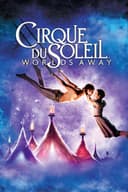
Poster artwork from TMDB.
 This site uses TMDB and the TMDB APIs but is not endorsed, certified, or otherwise approved by TMDB.
Aerial Straps in performance
6 staged works in the Limelight catalogue contain Aerial Straps, 1990–2008 — 5 of them in a named act or number.
- Zumanity2003Cirque · defining styleStraps
Straps solo act — A solo performer uses leather aerial straps to move from bound restraint into free-flying aerial maneuvers. Source: "All the while she watches her bonds ease into auto-erotic aerial maneuvers."
- Kà2004Cirque · defining styleScene 11 · The Forest
The Forest scene — Firefly Boy's rescue and duet with the Twin Sister (2007–present) — The Firefly Boy 'swoops down' on straps to rescue the falling Twin Sister and then dances with her aerially 'within the trees,' accompanied by a singer suspended in the v…
- CirqueAerial straps
Aerial straps act, performed to 'L'oiseau' — A solo male performer suspended on two hanging leather straps spins, flips and hangs in the air, the core vocabulary of aerial straps work. Source: "A muscular man approaches two leather straps hanging from the c…
- Saltimbanco1992CirqueAerial straps
the rotational Aerial straps act — A performer holds and moves through sustained shapes on straps, using upper-body strength for controlled poses. Source: "A performer swung on these straps and would use upper body strength to create many dangerous poses."
- Zed2008CirqueStraps
Straps act — Two performers execute synchronised aerial strap tricks, holding and releasing tension in the straps while positioned as representatives of opposing worlds. Source: "Straps: Two women, each representing the different worlds performed tricks in…
- Koozå2007Cirque
Aerial Straps, listed among retired acts — Suspended strap work requiring wrapped holds, drops and controlled extensions in the air; this act is no longer part of the current running programme. Source: "Solo Trapeze Aerial Straps Aerial Silks Icarian Games…
Every claim above is quoted from a cited source and names where in the work the style appears. Claims we could not place or could not quote are held back from this list and shown on the work’s own page instead. Browse the full performance catalogue →
Sources & Further Reading
Cultural & Historical Context
Aerial Straps emerged from Soviet Union, developing from earlier Chinese acrobatic practice during the 1970s—present day. Understanding the cultural roots, musical traditions, and social circumstances of this era enriches appreciation for the dance's characteristics and significance.
Formative Influences
Codifiers & Standardizers:
Moscow State Circus, Ecole nationale de cirque, Cirque du Soleil
Signature Movement Vocabulary:
Yury Panteleenko, Valery Panteleenko, Vladivien Levshin
Primary Source Documents
The Library of Dance contains public-domain primary sources for dance history. Copyrighted modern syllabi are indexed with purchase links to their respective copyright owners. Search by dance name or codifier to discover primary source documents.
Last reviewed: September 2026 — This dance profile synthesizes historical research, cultural documentation, and contemporary practice knowledge to provide authoritative context.
More in Aerial Dance
Aerial Silks
Dance and acrobatics performed while climbing, wrapping, suspending from, and dropping on two lengths of fabric hung from a single point.
Aerial Lyra (Hoop)
Dance and poses performed on and around a suspended steel hoop, spinning or static, blending circus skill with choreographed movement.
Aerial Hammock (Sling)
A loop of fabric (both ends rigged together) forming a hammock/sling that cradles the body for poses, rolls, and gentler aerial dance.
Corde Lisse (Aerial Rope)
An aerial circus discipline performed on a single vertically hung soft rope, combining climbs, wraps, held shapes and controlled drops without a safety line.
Aerial Dance in art
Browse the gallery →Works from the wider Aerial Dance tradition — we have not yet identified enough that depict Aerial Straps specifically.
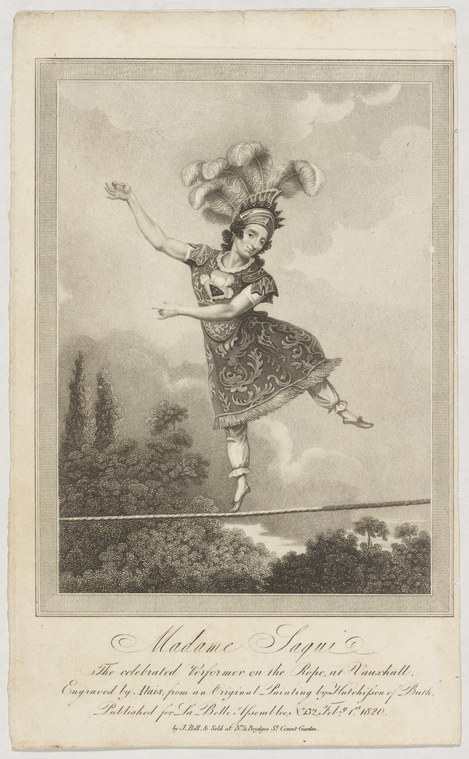
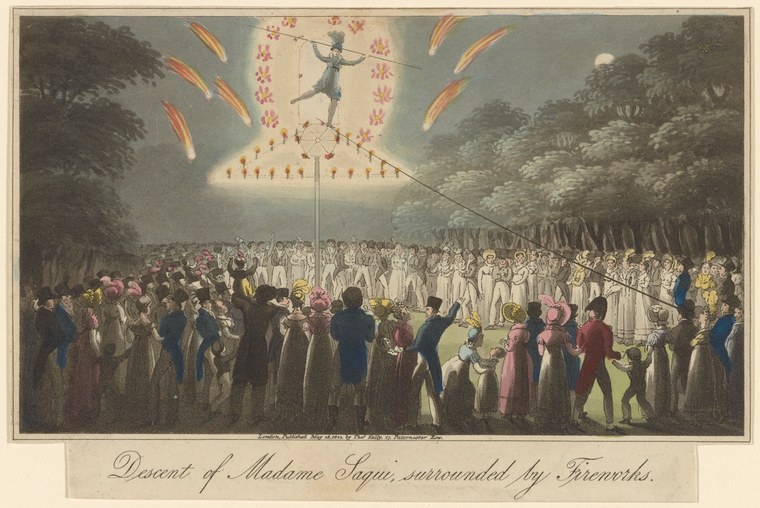
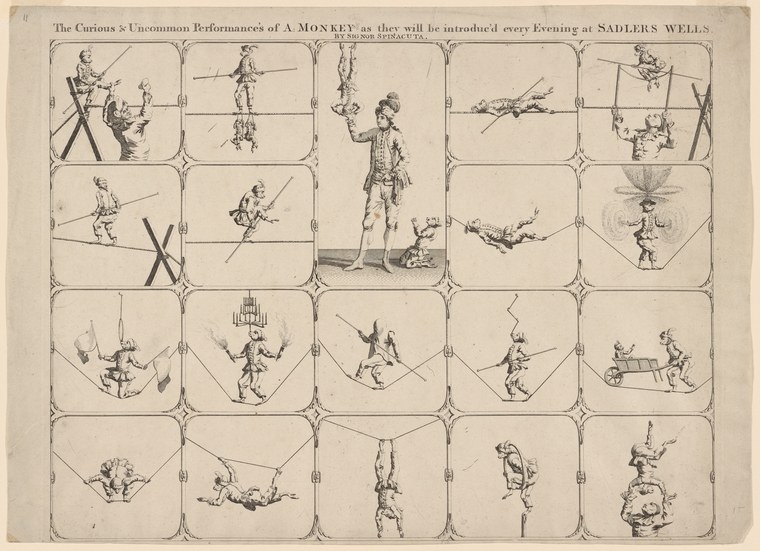
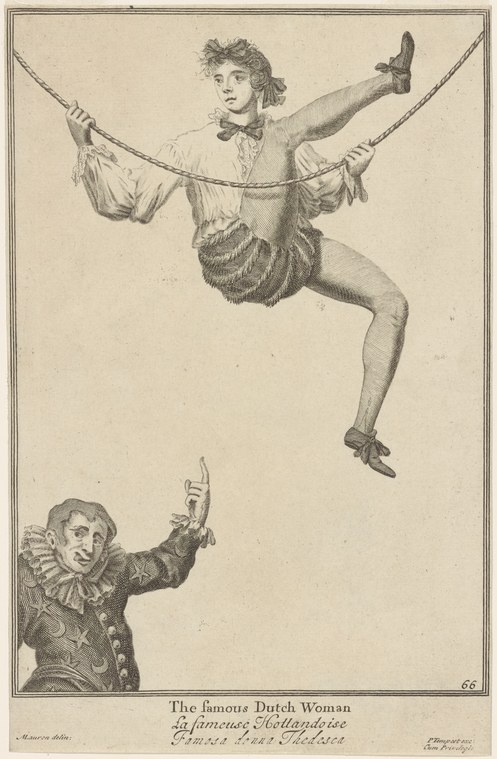
The famous Dutch woman
Unknown artist
Public Domain
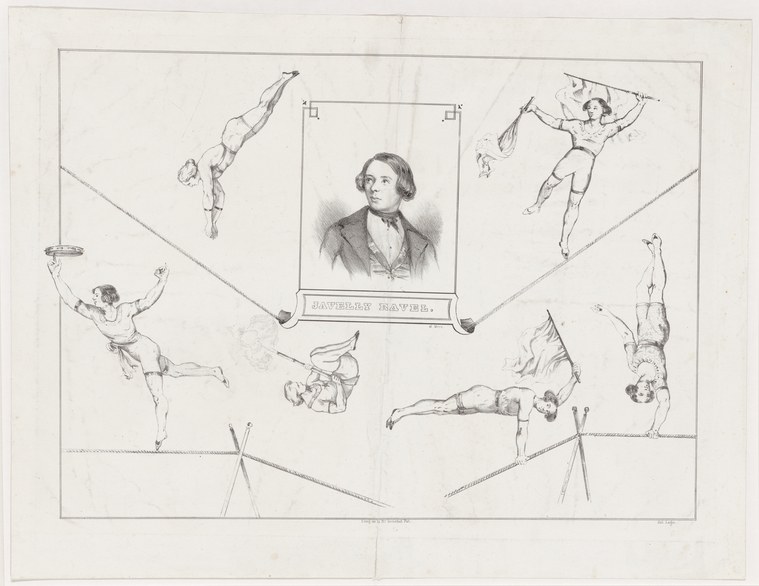
Rope dancing
Unknown artist
Public Domain
Festivities and spectacles
Unknown artist
Public Domain
Continue Exploring
Lineage of Dance
500 years of dance evolution
Champions of Dance
Winners of marquee national & world titles
Language of Dance
161 dance terms & translations
Listening of Dance
Tempo, timing & musicality tools
Gallery of Dance
5,700+ artworks from museum collections
Attire of Dance
Evolution of dance dress across eras
Keep the thread going
Dance history, technique, and the occasional rabbit hole — in your inbox. Thoughtful, infrequent, unsubscribe anytime.
Free. No spam. One click to leave.